Skip to content

Body contouring marketing that books the device without promising weight loss

The FDA says non-invasive body contouring will not result in weight loss. Meta rejects weight-loss ads that show fat being pinched, and fat frozen today takes two to three months to clear. Plenty of studios trip over all three in a single ad. We sell what the device actually does, a smaller bulge in a named area over a planned number of sessions, and time the spend so results land before the date your clients have in mind.

Taking on new body contouring studios now

Reviewed by Niomi Ascot on

Studios that want the device busy outside of spring

FDA describes fat-freezing devices as for prescription use only, and who may run a radiofrequency or ultrasound device is left to each state. The businesses below have that settled already, which is what lets their marketing name the clinician and the device.

The physician-led practice with a device that sits idle in July

A fat-reduction system, perhaps a skin-tightening or muscle system beside it, full from January to March and quiet by midsummer. The Aesthetic Society's monthly split of liposuction, the closest published proxy, bottoms out in July at 6.5% of the year. A holiday campaign started in September and second-area offers to past clients even out the calendar.

The franchise location that needs local demand of its own

National ads build the brand name, but they do not decide which location in a metro gets the consult. A map listing, reviews from your own clients and consults tracked to your own line do. We work inside the franchise agreement and the operator rules your state already holds you to.

The weight-loss practice whose patients now ask about contour

In the American Society of Plastic Surgeons' 2024 report, 41% of GLP-1 patients under its members' care were considering a nonsurgical procedure. A practice that prescribes and also contours has an obvious next step to offer, as long as the medication program and the contour work each make their own supportable claims.

The aesthetics practice where contouring is the biggest ticket

ASPS reports an average fee of $1,157 for nonsurgical fat reduction. At that size the client books a consult, goes home and compares, so the conversation after the consult decides more sales than the first ad. That is usually where we start.

Who we would point elsewhere. Studios whose pitch depends on weight loss, guaranteed inches or a beach result sold in May. FDA says the treatment will not result in weight loss, and the FTC's weight-loss guide says a reference to inches or dress size can suggest substantial weight loss, which needs proof. We would also point elsewhere an operator running a device outside its cleared use or without the supervision the state requires: better marketing makes that problem louder, not smaller.

Where contouring clients come from, and what each place lets you show

Ordered by how many consults each usually brings a studio, in our experience. The first is also the strictest about what a contouring ad may picture.

  1. Instagram and Facebook

    Contouring is sold with pictures, and Meta restricts the pictures. Its Health and Wellness policy, updated July 23, 2026, bans weight-loss service ads that show a close-up of a body area with fat being pinched, bans timeframe promises without qualifiers, and requires both weight-loss and cosmetic procedure ads to target people 18 or older. Show the device, the treatment room and the clinician instead.

  2. Google Search and the map pack

    Searches for a device brand plus "near me," "body contouring" plus a city, or a treatment plus "cost" come from people already comparing studios. We found no Google ad rule aimed at non-invasive contouring devices. Diet add-ons are another matter: Google bans products containing hCG in relation to weight loss.

  3. GLP-1 patients and referring practices

    In ASPS's 2025 report, 82% of member surgeons said they had received consultation requests related to GLP-1 use. Treat this as a referral relationship and a message to your own patient list, not an ad audience: Meta's personal attributes policy does not allow ads that imply knowledge of a viewer's medical information.

  4. Reviews and AI review summaries

    BrightLocal's 2026 survey found 85% of consumers more likely to use a business after positive reviews, 77% put off by negative ones, and 82% reading the review summaries AI tools now write for them. The reviews that help a contouring studio mention the clinician, the number of sessions and how long the result took to show.

  5. The client choosing a second area

    Someone pleased with one area often asks about the next at the result check, which falls around the two to three months FDA gives for fat to clear. In our experience it is the cheapest consult a studio books, and the easiest one to forget to schedule.

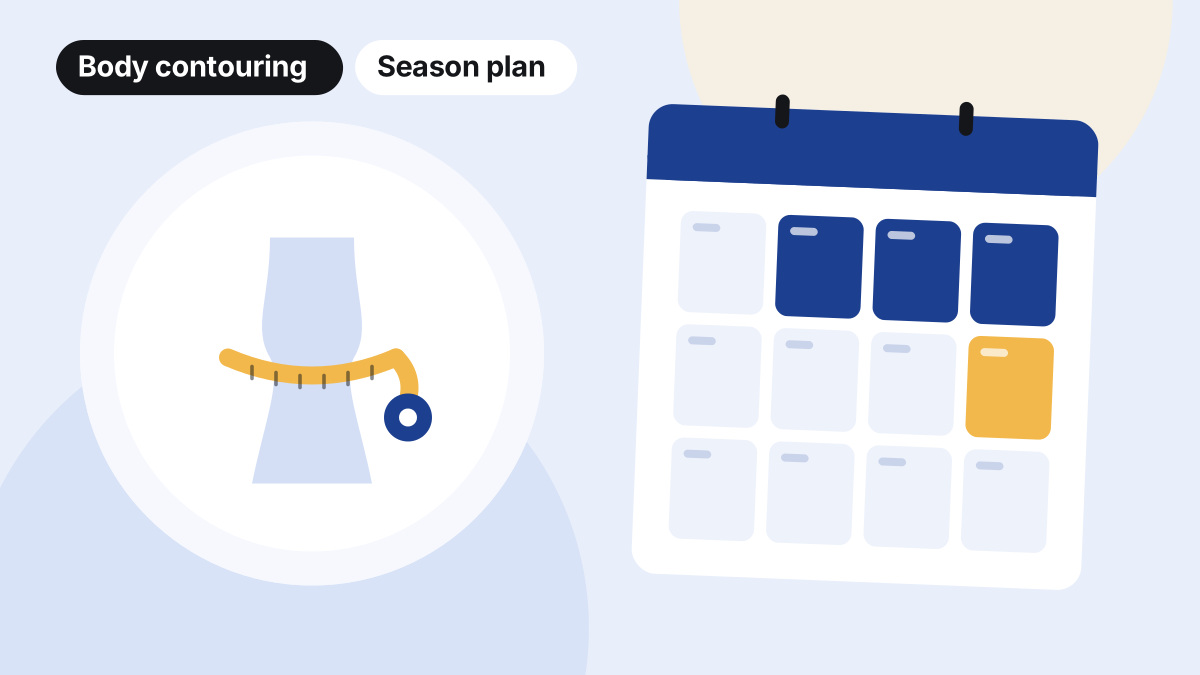
Treated fat clears in two to three months, so January sells summer

No source publishes month-by-month demand for non-invasive contouring. The closest is The Aesthetic Society's 2023 share of liposuction by month, a surgical proxy, which we read alongside FDA's two to three month clearance time. Device demand in your market may run differently, and in warm-weather markets the summer pull usually starts earlier and lasts longer.

Demand through the year for body contouring studios
  1. January: Peak
  2. February: Busy
  3. March: Peak
  4. April: Busy
  5. May: Busy
  6. June: Steady
  7. July: Slow
  8. August: Slow
  9. September: Steady
  10. October: Steady
  11. November: Busy
  12. December: Steady
January
New Year plans and 9.6% of the year's liposuction in the proxy. A fat-freezing session in January has usually cleared by spring. Have the consult page, the risks page and recent reviews in shape before New Year's Day, not after.
March
The proxy's busiest month at 10.0%, and in practice the last start for a June result. Summer campaigns for fat reduction should be winding down here, not launching.
May
ASPS surgeons warned in June 2026 that devices such as CoolSculpting do not show final or even good results at one to two weeks. A May client is a fall client: sell the plan and the date the result will show, not a summer promise.
July and August
The proxy's slowest stretch, with July at 6.5%. FDA says light-based procedures may not suit anyone tan or planning to be in the sun in the two weeks afterward, so use these weeks for review requests, result-check photos and the fall campaign.
September and October
A start now clears in time for holiday events, and October is the last month that timing works for December. This is the second campaign window of the year.
November
The proxy climbs back to 8.9%. Year-end packages and gift cards sell, and the January campaign should be written, policy-checked and approved before the holiday weeks.

Why the consult and the proof come before more traffic

Meridian builds its four jobs in the order Found, Chosen, Kept, Clear. For a contouring studio we change it: a client weighing a four-figure treatment with a slow result decides at the consult, and buying more clicks before that is fixed pays for traffic that books down the road.

Chosen

Being the one they pick once they have found a few.

FDA tells consumers to ask how many treatments they will need, how long the effects last and how devices are cleaned between patients. A site and a consult that answer those first, name the supervising clinician and explain the rare side effects plainly win the clients a cheaper studio loses.

Clear

Knowing which work produced which jobs.

The click comes in February, the consult in March, the package after a week of thinking and the result months later. Unless consults and packages are logged against their source from the first week, every channel looks like it failed before the result has even shown.

Found

Being the company that shows up when someone searches.

Campaigns aimed at the next start window rather than the current month: January to March for summer, September and October for the holidays. Meta creative built to its weight-loss rules from the first draft, and brand-name searches checked against your device agreement.

Kept

Turning one job into the next one and the referral.

The result check, with photos taken under the same light and angle as the first set, is when a second area and a review get asked for. A client who saw the result is the best-qualified consult you will ever book.

Weeks 1 to 2

A claims audit of every ad, post, page and profile: weight-loss wording, inches promised, pinch photos, timeframes, and "results may vary" lines asked to do work they cannot do. Consult and package tracking set up by source.

Weeks 3 to 6

A candidacy and risks page: who treats, which device and what it is cleared for, how many sessions, when results show, who should not book. The consult follow-up and a review request at the result check.

Weeks 7 to 12

Meta and Google campaigns built to policy and pointed at the next start window, a second-area offer to past clients, and the first monthly report on consults, packages and cost per package by source.

The consult went well, so why did she buy across town?

Contouring is a considered purchase: a request, a consult, a week of thinking, then a package. A studio loses most of its paid-for clients in that week, and in the minutes after the first request, not at the ad.

The consult request sits until someone is free

In Invoca's May 2026 survey of US consumers who had made a high-stakes purchase, typically over $500, 56% said they expect a reply within an hour of filling out a lead form and only 36% said they got one. Those are stated expectations across industries such as healthcare and home services, not contouring data, but a client who has filled out three studios' forms tends to book with the first one that calls.

The fix. Aim for a call within five minutes of a request during opening hours, made by whoever is free rather than by one coordinator. Send an instant text that names a person and a time: "Thanks, this is Dana at the studio. I'll call you in the next few minutes to find a consult time." On the call, ask which area bothers them and what date they have in mind before talking about devices, then offer two consult times.

A good consult, a plan in hand, and no second contact

At an average ASPS fee of $1,157 for nonsurgical fat reduction, most clients go home to think, and the studio that keeps the conversation going usually gets the package. Our experience with consult-led practices is that the plan that gets one polite email and nothing else goes cold inside two weeks.

The fix. Run four touches on every open plan. Same day: the clinician texts a short summary in the client's words ("the lower belly bulge, two sessions, result by August"). Day 2: a call asking whether anything in the plan was unclear. Day 7: something useful, such as FDA's list of questions to ask, answered for your device. Day 14: "Shall I keep this plan open, move it to the fall, or close it?" Send texts only to clients who agreed to them.

"As low as $99 a month" in the ad and nothing else

Federal credit advertising rules treat a monthly figure as a trigger. Once a contouring ad names a payment amount, a count of payments or a deposit, Regulation Z requires the full set beside it: what is due upfront, how repayment runs and the APR. It binds a studio advertising a lender's plan as much as the lender. Deferred-interest offers carry their own wording rule, with "if paid in full" and the promotional period placed next to each "no interest" claim. A quote handed to one client is not an ad; a package post or an email blast to the list is.

The fix. Either advertise the plan without numbers ("payment plans available, ask at your consult") or print the lender's full approved example, with the down payment, number of payments and APR side by side. Ask the lender whether the product is deferred interest and use its copy word for word. An in-house plan of four or fewer interest-free payments generally sits outside these triggers. Not legal advice; check with counsel before a financing promotion runs.

Reviews requested only from the clients who loved their result

It is tempting to ask at the result check and skip the client who saw less change. Google's policy bars selectively asking for positive reviews, and the FTC's Endorsement Guides say inviting only purchasers who gave very positive feedback may be unfair or deceptive. The FTC's 2025 order against NextMed bans that kind of selective asking. If the studio is a HIPAA covered entity, a reply that confirms someone was treated is its own problem.

The fix. Send the same request to every client after the final session, whatever the result: "Would you share an honest review of your experience with us?" with the direct Google link and nothing offered in return. Reply to each one within a business day without naming a treatment or an area, and invite unhappy clients to call the practice manager by name. Ask counsel whether HIPAA applies to the studio before setting the reply wording.

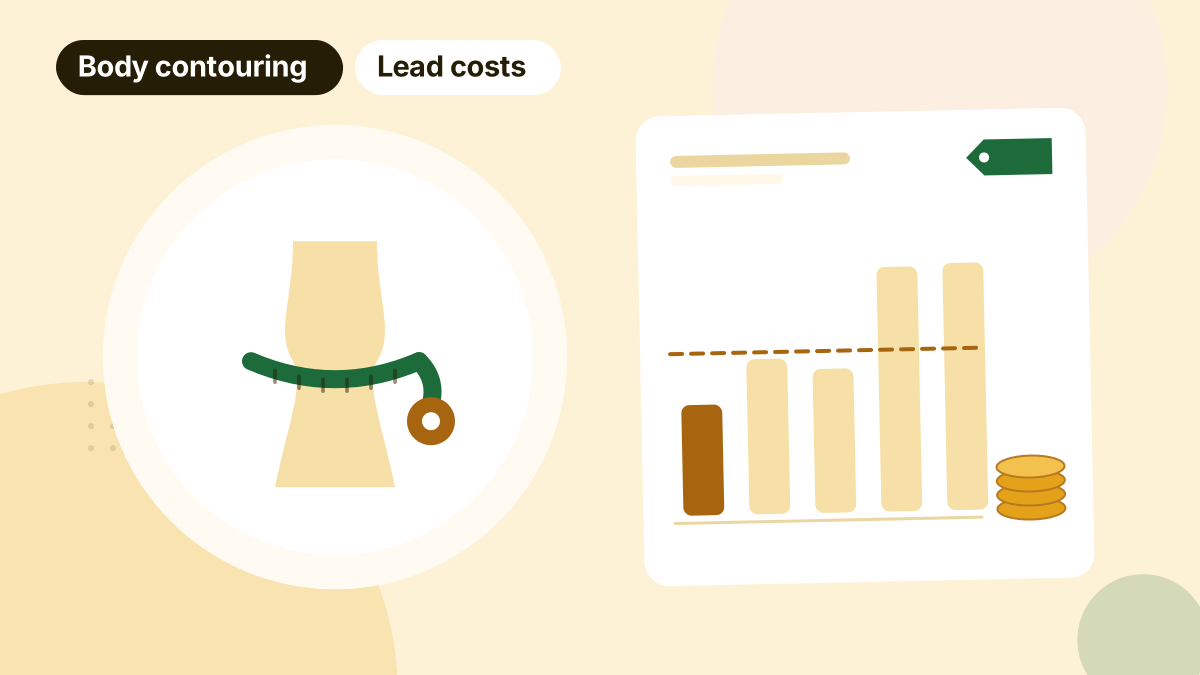
A contouring lead costs more if you sell as a surgical practice

No benchmark source has a body contouring category, so these are the categories it falls between: Plastic & Cosmetic Surgery for a physician-led practice, Beauty & Personal Care for a non-medical studio, with Health & Fitness alongside. They are medians across many advertisers, not our results, and they should be judged against a package, not a single session.

$102.51
What the middle Plastic & Cosmetic Surgery advertiser paid per Google search lead, October 2024 to September 2025: the nearest category for a physician-led practice
LocaliQ, 2025
$39.25
What the middle Beauty & Personal Care advertiser paid per Google search lead, April 2025 to March 2026: the nearest category for a studio without a medical brand
WordStream by LocaliQ, 2026
$1,157
Average cost of nonsurgical fat reduction published by the American Society of Plastic Surgeons; year not stated, related expenses excluded
ASPS
2 to 3 months
How long the body usually takes to clear the fat cells a fat-freezing treatment damages
FDA
Median cost per lead in the categories contouring sits between
  • Google search, Oct 2024 to Sep 2025, Plastic & Cosmetic Surgery$102.51
  • Google search, Apr 2025 to Mar 2026, Health & Fitness$67.36
  • Facebook, leads objective, Apr 2025 to Jun 2026, Beauty & Personal Care$50.91
  • Google search, Apr 2025 to Mar 2026, Beauty & Personal Care$39.25
  • Facebook, leads objective, Apr 2025 to Jun 2026, Health & Fitness$27.11

Which row applies depends on how you present the studio, not only on who supervises it. Facebook form leads cost less and usually need a call or two before anyone books a consult. Sources: LocaliQ; WordStream by LocaliQ; WordStream by LocaliQ.

Our plans are affordable for a single-location studio running one or two devices, and they are scoped to your two campaign windows and the treatments you want booked, not to a package. Before any of that, the free plan sets out in writing which device, which season and which page we would work on first.

Get your free plan

Meta ads, Google search or your own clients, for a contouring studio

Google offers body contouring no Local Services Ads category. Its closest, Weight loss service, is described as guidance and meal plans, so a studio's paid choices are Meta and Google search, alongside the profile and client list it owns.

QuestionInstagram and Facebook adsGoogle search adsYour site, profile and past clients
What the ad may showNo close-up of pinched fat in weight-loss ads; before-and-after transformations allowed for cosmetic procedures shown to adultsText plus your landing page, which is where the results gallery and the risks belongYour consented results gallery, the clinician and the device, with typical results stated
Who sees itPeople 18 and older; no copy that implies you know a viewer's medical informationPeople searching a device name or treatment in your area this weekPeople who already chose to look you up, and clients you have treated
Median cost per leadBeauty & Personal Care $50.91, Health & Fitness $27.11, for Apr 2025 to Jun 2026 campaigns (WordStream by LocaliQ)WordStream by LocaliQ: Beauty & Personal Care $39.25 (Apr 2025 to Mar 2026). LocaliQ: Plastic & Cosmetic Surgery $102.51 (Oct 2024 to Sep 2025)Nothing per click; the cost is staff time for photos, reviews and result-check follow-ups
How close to a consultEarly: form leads need follow-upCloser: they are comparing studios nowClosest: referrals and second-area clients
What gets an ad stoppedPinching, inferiority wording, an unqualified timeframe, or targeting under 18We found no rule aimed at contouring devices; hCG weight-loss products are banned, so check any diet add-onNothing is stopped, but the FTC rules on testimonials still apply
Best atStarting interest in the weeks before a campaign windowCatching people choosing a studio this weekSecond areas, referrals and the client who checks you after seeing an ad

In August 2026 Google began folding Local Services Ads into Google Ads. With no category that fits, contouring studios sit outside that change and buy search and Meta ads directly.

Five contouring ad habits that get rejected, or disappoint the client at week two

Selling the treatment as weight loss

FDA says non-invasive contouring does not treat obesity, does not improve health and will not result in weight loss. The FTC's guide to false weight-loss claims adds that inches, dress sizes and body fat can all suggest substantial weight loss. Say instead what it does: reduces a stubborn bulge in a named area, over a stated number of sessions.

The pinch photo

A hand squeezing a roll of belly fat is the most familiar contouring image there is, and Meta bans it in weight-loss ads by name. Use the device, the room, the clinician and consented before-and-after photos in cosmetic procedure ads aimed at adults.

A summer campaign that starts in May

FDA says the body clears treated fat usually within two to three months, and ASPS surgeons say fat-freezing results are not even good at one to two weeks. Run the summer push from January to March and sell May clients a fall result.

One session, guaranteed

FDA says many contouring procedures give temporary improvement and more than one treatment may be needed. The FTC says "individual results may vary" does not change how a standout testimonial is read. Show typical outcomes and the plan, with the session count stated.

Leaving the risks off the page

FDA names paradoxical adipose hyperplasia, where fat grows instead of shrinking, appearing two to five months after fat freezing and sometimes needing surgery. A client who has read that page trusts the studio that mentions it first.

What a fat-freezing clearance lets you say, and what it does not

Fat freezing reached the market through a De Novo request. On August 24, 2010, FDA granted Zeltiq’s application for its dermal cooling device and created a new Class II category, “contact cooling system for aesthetic use,” with special controls. CoolSculpting clearances followed from 2012, and openFDA lists 14 clearances under that product code. A clearance covers a device and an intended use. It is not permission to say anything you like about the result, and FDA’s own consumer page draws the lines many contouring ads cross.

It is not weight loss. FDA says non-invasive body contouring does not treat obesity or improve health, and will not result in weight loss or the health benefits that come with it. A headline that leads with the scale is arguing with the regulator.

It is a prescription device. FDA describes cryolipolysis devices as for prescription use only, and says the safety and effectiveness of home fat freezing has not been established. Who may operate a device, and under whose supervision, is set state by state, and we have not found one rule that covers every device. California’s medical board requires physician ownership for any business selling laser and other cosmetic medical services, and says estheticians may not perform laser or IPL treatments under any circumstances. Texas leaves lasers and pulsed light devices to the Department of State Health Services, and allows a physician to hand medical acts to trained staff working under that physician’s supervision. Florida registers laser devices through its Bureau of Radiation Control. For fat freezing and radiofrequency, confirm your own state’s rule before an ad names who treats.

Some areas are off the menu. FDA says no non-invasive body contouring device is cleared or approved for treating the breasts, in men or women. Any offer to contour the chest needs a hard look before it runs.

The rare side effect has a name. Paradoxical adipose hyperplasia, in FDA’s words, is fatty tissue that grows instead of shrinking in the treated area. The cases FDA describes appeared two to five months after treatment, the condition does not go away on its own, and it may require surgery.

The marketing that follows from all this is simple to describe and rare to find: name the device and what it is cleared for, name the clinician, give the session count and the timeline, and put the risks where a client can read them before the consult. A client who has read FDA’s page will notice which studio says the same things it does.
What a body contouring studio gets in the free plan

Any contouring studio that contacts us gets the first consult free, our straight view of its marketing, and a plan on paper that stays with the studio even if we are never hired. For a body contouring business, that plan covers:

Get your free plan
  • Where you appear for your device's brand name, "body contouring" and fat reduction cost searches in your city, and which studios hold the map pack.
  • Every live ad, post and page read for weight-loss wording, promised inches, pinch photos and timeframe claims that Meta or the FTC would flag.
  • Your consult path: how fast a form or message is answered, whether candidacy and risks are explained, and whether the supervising clinician is named.
  • Your reviews beside the two or three studios you lose consults to, including how many mention the result and how long it took.
  • A budget calendar built on your next campaign window, and the first 90 days in order.

What contouring studio owners ask before they hire us

Can our ads say clients lose weight?

No. FDA states that non-invasive body contouring will not result in weight loss, and the FTC's weight-loss guide treats inches, dress sizes and body fat as ways of suggesting it. Say what the treatment does instead: it reduces a stubborn bulge in a named area over a stated number of sessions.

Why does Meta keep rejecting our contouring ads?

Usually because of a pinch photo, a result promised within a set time without qualifiers, or a statement of inferiority about how someone looks, all named in Meta's Health and Wellness policy. A question such as "Struggling with stubborn belly fat?" also reads, to us, as implying knowledge of the viewer's body, which Meta's personal attributes policy does not allow. How we build Meta campaigns that pass review.

Are before-and-after photos allowed in contouring ads?

Yes on Meta, in cosmetic procedure ads shown only to people 18 and over, with the client's written consent. The FTC says a line like "results not typical" does not fix a photo that shows an unusual result, so use pictures of the typical outcome, taken at the point the result actually shows.

When should a contouring studio spend the most?

From January to March for summer results, and in September and October for holiday events. FDA says treated fat usually clears within two to three months, so a fat-reduction campaign that starts in May is selling a result that arrives in August.

Should we advertise to GLP-1 patients?

Through referrals and your own patient list, yes; through targeted ads, carefully. ASPS reported that 41% of GLP-1 patients under its members' care were considering a nonsurgical procedure, but Meta does not allow ads that imply they know a viewer's medical condition. If you also prescribe, keep that program under the prescriber with its own claims: the FTC's 2025 case against telehealth firm NextMed, over unsubstantiated weight-loss claims and fake testimonials, ended in an order requiring a $150,000 payment.

Can a body contouring studio run Local Services Ads?

No. Google has no body contouring category, and its Weight loss service category is described as guidance and meal plans. Search ads and the map pack do that job instead. How we run Google search for consults.

Can we bid on our device's brand name?

Often, but read your device agreement first. Device names are trademarks, and in our experience manufacturers set their own rules for how providers use them in ads and listings. We check the agreement before a brand campaign runs.

How do we compete with a studio running half-price offers?

With the answers FDA tells consumers to look for: who does the treatment, which device, how many sessions, how long results last and how the device is cleaned between clients. A studio that answers all of those on its site and in the consult rarely needs to match a discount.

Can you track a package sold weeks after the ad?

Yes, if every consult and package sale is logged in the CRM against the source of the lead. Here that matters more than for most aesthetic treatments, because the client books after a consult and sees the result months later. How we set up the CRM.

See how your studio reads to a client who has read the FDA page

Tell us the studio, the city, the devices you run and who supervises them. You get back where you rank for your device and treatment searches, which of your ads and pages Meta or the FTC would trouble, how your consult path and reviews compare with the studios nearby, and when your next campaign should start.

  • A free consult. A real conversation about your business, your area and what is not working yet.
  • An honest evaluation. Where you stand in search, ads and follow-up next to the businesses you lose customers to.
  • A plan you keep. What we would fix first and why. It is yours whether or not you work with us.

Form not loading? Email hello@beyaoshy.com and we will reply within one business day.

Sources

The figures on this page come from these published sources, checked on October 3, 2026. Benchmarks are averages across many advertisers; your market will differ, which is what the free plan is for.

Agencies with body contouring studios among their clients: see the partner model.