Med spa marketing that turns a scroll into a booked consult
See which spas take your treatments in the map and on Instagram, and which of your ad ideas are likely to clear Meta's review, in a free check with a plan you keep.
- Meta and Google ads written to pass health and personal-attribute review from the first draft
- DMs, website chat and texts answered in seconds with your booking link, and missed calls texted back
- Rebooking timed to how long each treatment lasts, so clients are back on the calendar before it wears off
- An honest evaluation, with no obligation to hire us
- You own every account, domain, profile and CRM
- One team since 2015, nothing subcontracted
- 4,700+ businesses served
For med spa owners and practice managers: injectables, laser and body contouring. Agencies with aesthetics clients, see the partner model.

The road from a saved post to a paid consult.
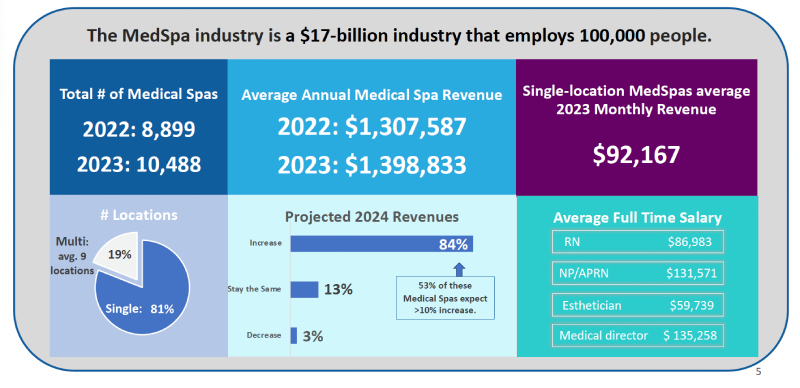
Aesthetics clients buy on trust and convenience. They research more than most patients do, they compare providers by name, and they leave the moment booking gets hard. They also have more spas to compare: the American Med Spa Association's 2024 industry summary counted 10,488 med spas in 2023, up from 8,899 the year before, and 81% of them run a single location.
They see it first
On Instagram, in a friend's story, or in an ad that shows a real provider and a real room. Or they search "lip filler near me" from a phone.
They look you up
Your name on Google. The map listing, the rating, the photos inside the reviews, and whether the hours match what the post said.
They check the provider
Who does the injecting, what their credentials are, what real results look like, and roughly what it costs. If the site does not say, they ask a friend instead.
They book, or they drift
Online booking with a deposit and a time this week wins. A "call during business hours" line loses the client who is researching at 10 pm.
They rebook, or someone else does
Neurotoxin wears off in three to four months. The spa that texts at the right time gets the rebook. The one that waits gets replaced.
How a booked consult quietly turns into nothing.
Ads rejected, or written to say nothing
Meta and Google restrict how cosmetic results and personal attributes can appear in ads: Meta allows before-and-after creative only in ads shown to adults, and "look ten years younger" style claims get pulled. We build Meta and Google campaigns for the review process from the first draft, so they run.
DMs answered tomorrow
A client asks about pricing in an Instagram DM at 9 pm and hears back at 11 the next morning, after she booked elsewhere. An AI chat agent answers in seconds and sends the booking link, and a call that rings out during a treatment goes to an AI receptionist that answers, offers consult times and texts the same link.
Clients who were due in month three
The neurotoxin client from March does not remember to rebook in June, and nobody reminded her. Follow-up timed to each treatment, membership offers and review requests after the visit turn one appointment into a client.
Everything we manage for a med spa.
Every card below feeds the same calendar, which is how a spa gets off the promotion-to-promotion cycle and books weeks ahead.
Meta Ads
Instagram and Facebook campaigns that show the provider, the room and the experience, written to Meta's health and personal-attribute rules so they run instead of getting rejected.
How it worksGoogle Ads
Search campaigns on treatment plus city terms, "lip filler near me", "laser hair removal cost", with landing pages that book a consult and every call traced to the search that produced it.
How it worksReviews & Reputation
Review requests sent after the visit while the result is fresh, photos included where the client is happy to share them, and replies that sound like your front desk.
How it worksGoHighLevel Buildouts
Deposit and reminder texts, missed-call text-back, and reactivation timed to the cycle: a neurotoxin client hears from you in month three, not never.
How it worksLocal SEO
Show up in the map for the treatments you want more of, with a profile that lists services, providers and real photos, and treatment pages that answer the cost question.
How it worksWebsites & Conversion
A treatment menu with price ranges, provider bios with credentials, a consent-based results gallery, and a booking button that takes a deposit on a phone.
How it worksA neurotoxin client and a body contouring client are won differently.
Treatment, ticket size and how often it repeats all move the channel mix. Below is where the budget usually leans for each, until your own booking data says otherwise.
Injectables: neurotoxin and filler
Recurring every three to four months, so the money is in retention. Instagram creative with the provider front and center, a fast booking path with a deposit, memberships, and reminders timed to when the last treatment wears off.
Laser: hair removal, resurfacing, IPL
Sold as a package of sessions. Search on treatment plus city, a page that explains the series and the price range, and a follow-up sequence that keeps every session on the calendar.
Body contouring
High ticket, and the decision takes time. A consult funnel: Meta and Google to a consult page, financing explained plainly, retargeting over the weeks they think about it, and a pipeline that keeps every undecided consult on someone's list.
Skin, facials and memberships
The entry point. Local SEO for the neighborhood, reviews that mention the experience, a membership that smooths the month, and an upgrade path to the higher-value treatments.
When each client is due back, by treatment.
The clock starts at the client's last visit, not at your last promotion. Each track below runs one year from that visit: the shaded stretch is when the treatment is due again by the source named, and each star is a message we schedule. The message timing is our planning default, adjusted to your own rebook data after the first quarter.
- Week 10 Rebook text with two openings
- Week 14 Second nudge if nothing is booked
- Week 18 Onto the reactivation list
Hyaluronic acid filler
- Week 2 Result check and review request
- Week 22 Touch-up reminder
- Week 39 Second reminder
Laser hair removal
A series of sessions about 4 to 6 weeks apart, per ASPS and AAD
- Week 5 Session two
- Week 10 Session three
- Week 15 Session four
- Week 20 Session five
- Week 25 Session six
- Week 52 Maintenance check
Fat freezing
- Week 9 Result-check visit
- Week 13 Consult on the next area
Find the clients who are already due back
Send us the treatments you sell most. The free plan shows how many past clients are past their rebook window with nothing booked, which of your ad ideas are likely to clear review, and how calls are answered during treatments.
- A free consult. A real conversation about your business, your area and what is not working yet.
- An honest evaluation. Where you stand in search, ads and follow-up next to the businesses you lose customers to.
- A plan you keep. What we would fix first and why. It is yours whether or not you work with us.
Form not loading? Email hello@beyaoshy.com and we will reply within one business day.
What Google, Meta, the FTC and state boards let a med spa ad say.
Four sets of rules sit over every injectables or device ad, and a campaign has to clear all of them at once. This is our summary of the published rules as we read them in October 2026, each linked to its source.
| Rule | What it means for your ads |
|---|---|
| Google: neurotoxin brand names | Allowed in ad text and on the landing page for US campaigns. Bidding on "botox", "dysport" or "xeomin" as keywords needs a Google healthcare certification, under its restricted drug terms policy. |
| Google: client lists and remarketing | Google's personalized ads policy names injections in its Health category, so injection campaigns cannot be aimed at your client list or at people who visited a treatment page. Rebook reminders run from your own CRM instead. |
| Google: PRP | The speculative and experimental treatments policy does not allow ads promoting platelet-rich plasma, so PRP stays out of Google ad text and the pages those ads send people to. |
| Meta: cosmetic procedures | Ads must be shown only to people 18 and over. The health and wellness standard, in its July 23, 2026 version, lists before-and-after transformations among what those ads may show, and rejects copy that tells the viewer something is wrong with how they look. |
| Meta: naming the drug | An ad that promotes a prescription drug needs LegitScript certification plus Meta's own authorization, under its drugs and pharmaceuticals standard. Most spas sell the treatment and the injector instead of the brand. |
| Devices: lasers and contouring | FDA classes laser hair removal lasers as Class II devices it clears rather than approves, so the accurate word is "FDA-cleared". FDA also says non-invasive body contouring will not result in weight loss, which rules out pounds and dress sizes in the ad. |
| FTC: endorsements and results | The Endorsement Guides treat a featured result as a claim about what other clients can expect, and "results may vary" does not cure a result that is not typical. An influencer paid in free treatments has to say so. |
| FTC: reviews | The rule announced August 14, 2024 bans fake reviews and testimonials and any reward offered for a review that says something positive. |
| Texas Medical Board | Its February 2025 Bulletin says advertising for medical spas and IV hydration clinics must feature the supervising physician's name. |
| California, Section 651 | California's medical advertising law requires exact prices, which rules out "as low as" and "and up", and before-and-after photos with comparable poses and lighting plus a statement that results may differ. |
| Florida, free and discounted offers | An ad for a free or discounted exam or treatment by a covered licensee prints a set statement in capitals that gives the patient refund rights on other paid services within 72 hours, under section 456.062. |
This is not legal advice. Medical board rules on who may inject, supervise and advertise differ by state and change often; confirm any ad, offer or before-and-after with your medical director and a health care attorney before it runs.
Audit, build, then a monthly read on consults and rebooks.
Spa audit
We map how your spa shows up for the treatments you want more of, what your ads are allowed to say, and what happens to a DM or a call after hours. There is no fee, and the notes are yours to keep.
Build for review
Ads built for review, profile and treatment pages, booking with deposits, the reviews flow and the CRM sequences, starting with whatever is losing the most consults today.
Run and measure
Consults booked by source, show rate, rebook rate and cost per booked consult, with a note each month on what changed and what we are changing next.
The questions that come up first.
Why do our ads keep getting rejected?
Almost always because the creative shows an idealized result, implies something about the viewer ("tired of your wrinkles?"), or promises an outcome. Meta and Google both enforce health and personal-attribute policies on cosmetic services, and the first reviewer is usually automated. We write copy and design creative to pass those checks from the first draft, and we appeal properly when a good ad is caught by mistake.
Can we show before-and-after photos?
On your website and your Google profile, yes, with the client's written consent and no retouching. In ads it depends on the platform. Meta's health and wellness policy, as updated in July 2026, allows cosmetic procedure ads that show a before-and-after transformation when they are shown only to adults 18 and over, and it rejects copy that makes people feel bad about how they look. On Google we keep the results gallery on the page the ad sends people to, and the ad itself shows the provider, the room and the experience.
We get most clients from Instagram. Do we still need Google?
Yes. The client who found you on Instagram searches your name on Google before she books, and she reads the reviews there. Treatment plus city searches such as "laser hair removal near me" are also people ready to book this week. Local SEO and Google Ads catch the demand that Instagram creates.
How do you handle DMs and calls when the front desk is busy?
An AI chat agent answers Instagram DMs, website chat and texts in seconds, handles the common questions within limits you set, and sends the booking link. Calls the front desk cannot take go to an AI receptionist that answers, books the consult and sends the deposit link, and anything either one cannot handle goes to a person with the conversation attached. For spas that are HIPAA covered entities, we sign a business associate agreement that includes the receptionist and call tracking.
Can you connect to our booking software?
We work with the booking and point-of-sale tool the spa already uses, so consults from ads, the site and the agent land where your team works, and deposits are taken the way you take them now. If you do not have online booking with deposits yet, we will recommend a setup that fits.
We are a single-provider studio. Is this too much for us?
No. A one-injector studio starts with the pieces that book consults soonest, usually the booking path, the Google profile and the rebook sequence, and adds ads when the calendar can take them. A multi-provider spa usually starts with ads and the consult pipeline. The visibility check tells you which you are.
Can our Google ads say Botox?
In the ad text and on the landing page, yes, for US campaigns. Bidding on "botox", "dysport" or "xeomin" as keywords is the part Google restricts: those are on its list of prescription drug terms that need a healthcare certification. Most spa campaigns spend on treatment and provider searches instead. How we build med spa search campaigns.
Can we give a discount to clients who leave a review?
No. Google removes reviews posted in return for an incentive, discounts included, and the FTC rule announced in August 2024 bans rewards offered for a review that says something positive. Ask every client the same way after the visit, with a direct link, and answer every review. Our review request writer checks the wording for you.
Playbooks by treatment
Separate pages for the treatments that sell differently, each with its own season, rules and questions.
Injectors
Botox and filler marketing for injectors: ads inside drug-term rules, credentials in plain view, rebooks on the 3 to 4 month cycle.
Read the injectors playbookLaser clinics
Laser hair removal marketing for the fall start window: search, Instagram and series booking, inside Texas, California and Florida rules.
Read the laser clinics playbookBody contouring
Body contouring marketing that never sells weight loss: Meta and Google ads built to pass review, timed to the result window.
Read the body contouring playbookIV therapy
IV therapy marketing for storefront and mobile clinics: same-day booking, the map pack and drip menus kept inside FTC and state rules.
Read the IV therapy playbook
See how your spa shows up before the next promotion.
List the treatments you want to sell more of and the area you draw from. We come back with the spas taking those clients in the map and on Instagram today, which of your ad ideas are likely to clear Meta's review, and where your booking path loses people before the deposit.
- A free consult. A real conversation about your business, your area and what is not working yet.
- An honest evaluation. Where you stand in search, ads and follow-up next to the businesses you lose customers to.
- A plan you keep. What we would fix first and why. It is yours whether or not you work with us.
Form not loading? Email hello@beyaoshy.com and we will reply within one business day.
Sources
19 cited
Platform policies and state rules change; each link goes to the page we read in October 2026.
- American Med Spa Association, 2024 industry summary (2022 and 2023 data)
- Google Ads, restricted drug terms policy and certification
- Google Ads, list of restricted prescription drug terms
- Google Ads, Health category for personalized ads
- Google Ads, speculative and experimental medical treatments
- Google Maps, content policy on incentivized reviews
- Meta, health and wellness ad standard (July 2026 version)
- Meta, drugs and pharmaceuticals ad standard
- FDA, product classification GEX (laser surgical instrument)
- FDA, non-invasive body contouring technologies
- FDA, Botox Cosmetic prescribing information
- Mayo Clinic, dermal fillers
- American Society of Plastic Surgeons, laser hair removal
- AAD, answers to common laser hair removal questions
- FTC, Endorsement Guides: what people are asking
- FTC, final rule banning fake reviews and testimonials (August 14, 2024)
- Texas Medical Board, February 2025 Bulletin
- California Business and Professions Code section 651
- Florida Statutes section 456.062 (2026)