Skip to content

Custom home builder marketing for clients with a lot, a lender and months to decide

A custom home is the biggest contract most clients will ever sign. Census put the median at $404,000 for contractor-built homes started in 2025, and the average build ran 10.5 months once ground was broken. Nobody signs that from an ad. They hear your name from an architect, a lender or a parade visit, then study your portfolio, process and license for months. We build the pages and the follow-up that carry that decision, inside the license and housing ad rules builders work under.

Taking on new custom home builders now

Reviewed by Niomi Ascot on

How a family with a lot and a lender finds its builder

We rank these by how much signed work each tends to bring a custom builder. The ranking comes from experience; every figure quoted comes from a source listed below. A family usually meets you through more than one of them before picking up the phone.

Past clients, architects, lenders and lot sellers

Still where most contracts start for the builders we talk to. At five starts a year, the NAHB median, a few referrals fill the calendar and a few going quiet empty it. Every referred family checks the website before calling, so the referral and the portfolio work as one channel.

Google search, the map pack and your portfolio

Searches such as "custom home builder near me" or "build on my lot" with a county name. After reading good reviews, 54% of consumers go on to the company's website, according to BrightLocal's 2026 survey, and for a builder that visit lands on the portfolio. Floor area, lot, build time and scope under each home answer more than ten extra photos.

Parade of Homes and builder association tours

Free, self-guided tours of finished houses, run by local builders associations. In the Twin Cities the 2026 fall tour covers four weekends, from September 11 to October 4. The house does its own selling on the day; the months of follow-up afterward are where an entry earns its cost.

Search ads on build terms

Worth running on "build on your lot", county and design-build searches. Google's personalized advertising policy bars housing ads in the US and Canada from targeting by age, gender, parental status, marital status or ZIP code. Ads for houses for sale plainly fall under it; ads for building on a client's lot may not, so we set campaigns up to pass either way.

Instagram, Houzz and AI assistants

Portfolio platforms and social feeds keep finished homes in front of people through a long planning stretch. The same BrightLocal survey found the share of people asking ChatGPT or another AI tool for local recommendations jumped to 45%, from 6% a year earlier. What those tools can say about you depends on what your site and reviews already say.

Local Services Ads under General contractor

Google has no home builder category. The nearest is General contractor: Google checks the business and the owner, wants proof of general and professional liability cover, and verifies the state license where one is required. In our experience its leads lean toward small remodels, so builders who try it watch the job types every week.

The year-long sale a custom builder can lose at any step

A custom home sale runs through a lot, a design, a lender and a contract, and a builder can lose it at any one of them. These leaks all happen after the inquiry has already been paid for.

Our ad shows what the house costs per month

Regulation Z's official interpretation names home builders explicitly among the advertisers who must follow its credit advertising rules even though they are not lenders. A payment amount, a loan term or a down payment stated in an ad brings the full set of disclosures with it: the APR, the repayment schedule and the down payment.

The fix. Keep payment examples off the website, the social posts and the parade signage unless your lender supplies approved copy with the full disclosure. Send buyers to the lender for numbers, and have counsel confirm any financing wording before it runs.

Inquiries stall on the lot or the lender, and we wait

We know of no published study of custom builder sales cycles we would quote, so this rests on our work with builders: an inquiry rarely says no. It stops at a step (a lot appraisal, a design revision, a construction loan approval) and nobody asks whether that step finished.

The fix. Give each inquiry a stage (lot, design, lender, contract) and one next step with a date. Call when the step should be done, "Did the appraisal on the lot come back?", and close the file only after a clear no, with the reason logged.

We sign homes our subs can't staff on time

Among firms with openings in the AGC and NCCER 2026 workforce survey, 81% struggled to fill electrician jobs, 77% HVAC technician jobs and roughly three-quarters plumber jobs, and worker shortages led the causes of delay at 42%. The respondents are mostly commercial firms, but your subcontractors hire from the same pool.

The fix. Publish start windows by quarter only after your key subs confirm them, and ask those subs every quarter how many starts they can take. If the next open start is a year away, say so on the first call; in our experience the buyer who learns it at contract is the one who walks.

Web inquiries wait for the weekly sales meeting

In a 2011 Harvard Business Review study of 1.25 million leads at US companies, firms that tried to reach a lead within an hour were nearly seven times as likely to qualify it as firms that waited an hour longer. The authors blamed daily batch pulls from the CRM and rules meant to share leads fairly. Those were phone-sales operations, not builders, so take the direction, not the multiple.

The fix. Route each website and parade inquiry straight to whoever is on duty, with a first call inside the hour during working time, and drop any rotation that holds a lead until a particular salesperson is free.

Design meetings in winter, starts in spring, parade crowds in the fall

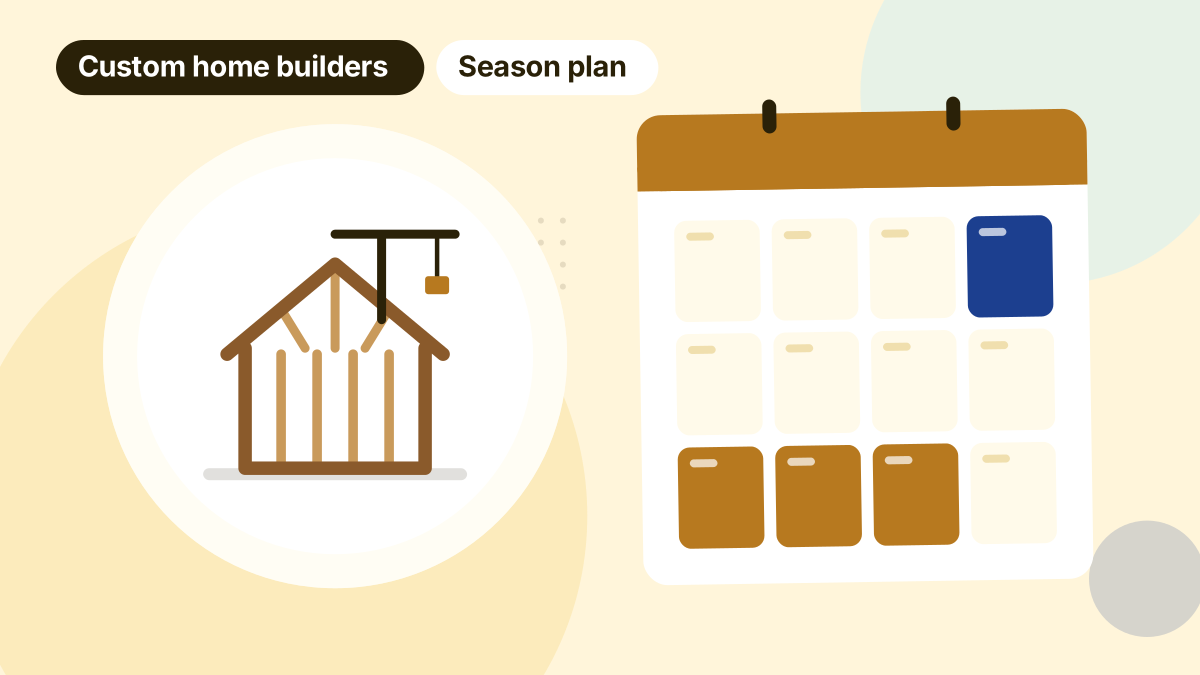
The ratings blend two clocks: when clients call and plan, which is our experience, and when homes break ground, which Census counts. From 2023 to 2025 contractor-built starts ran 24,000 to 25,000 in the first quarter and 33,000 to 38,000 in the second. Design, financing and permits come first, so the calls arrive months ahead of the excavator.

Demand through the year for custom home builders
  1. January: Busy
  2. February: Busy
  3. March: Peak
  4. April: Peak
  5. May: Busy
  6. June: Busy
  7. July: Steady
  8. August: Steady
  9. September: Busy
  10. October: Busy
  11. November: Slow
  12. December: Slow
January and February
Planning season for spring starts. Census put the average gap from permit to start at 1.4 months for contractor-built homes in 2025, and design and lender work come before the permit, so a family that wants to dig in April is choosing its builder now. Process pages, budget guidance and finished-home photos should be live before the first call.
March and April
Starts climb into the year's biggest quarter and spring tours open; the Twin Cities spring parade is set for March 12 to April 11, 2027. A builder with a tour house needs its landing page and visitor follow-up ready before opening day, not during it.
May to August
Crews are stretched and inquiries thin out. Third-quarter starts ran 32,000 to 35,000 from 2023 to 2025. Use the stretch to photograph finished homes and collect reviews from the spring move-ins.
September and October
Fall parade season, with the Twin Cities tour running September 11 to October 4 in 2026. Many visitors are planning for the following year, in our experience. Collect names with consent at the door, then follow up through the winter design months.
November and December
The phone goes quiet. NAHB finds custom building less sensitive to interest rates than other home building and more sensitive to household wealth and stock prices, so a strong market year and year-end bonuses can turn into January calls. Keep the site current and the review requests going.
Any month
The build itself: 10.5 months on average from start to completion in 2025, against 6.1 months for homes built for sale. A house started in spring is usually finished the following year, which is when its move-in review and finished photos arrive.
Licensed builders who sign a few homes a year on land their clients own

NAHB defines custom building as homes built under contract, where the builder holds no tax basis in the structure during construction, and says it is almost always done by smaller, private firms. Its builder members started a median of five housing units in 2025, so one signed family can be a fifth of the year.

The five-houses-a-year builder living on referrals
The owner sells, estimates and walks every site. Work comes from past clients and an architect or two, and a quiet season shows up a year later as an empty schedule. A portfolio that does the explaining and a pipeline that follows every inquiry usually come first.
The build-on-your-lot firm selling against spec inventory
NAHB put the 2025 custom median at $171 per square foot against $152 for spec homes with lot value excluded, a 12.6% premium and the widest since 2011. In the Pacific division it ran the other way, with custom about a quarter below the $227 spec median. Where your numbers favor building, the site should show the math.
The parade entrant who wants design meetings, not foot traffic
The Twin Cities Parade of Homes has run for nearly 80 years, with hundreds of new and remodeled houses open free over several weekends each season. In our experience many visitors are a year or more from building, so the job is capturing them at the door and staying in touch through design season.
The builder working above 5,000 square feet
NAHB counted 27,000 homes of that size started in 2025, 2.9% of all new homes. The buyers are few and well connected, so the plan leans on architects, lenders and a portfolio that reads like a project file, with broad ads a small part of it.

Who we would point elsewhere. Production builders moving spec inventory at volume. That is a housing sales job, with Google's housing ad restrictions and a different set of tools, so it needs a different plan from the one on this page. We would also wait with a builder whose license does not cover the homes they want to show. In North Carolina a limited license stops at a single project value of $750,000, and an ad for a larger house creates a problem no campaign can fix.

No one publishes a home builder lead cost, so here is the nearest one

LocaliQ's 2025 home services benchmarks have no category for builders. The closest, Construction & Contractors (General), turned the fewest clicks into leads of any home service category in the report and carried one of the highest costs per lead. These are market medians, not our results, and beside a $404,000 contract the figure that matters is how many inquiries reach a design agreement.

$404,000
Median contract price for a contractor-built single-family home started in 2025
Census Bureau, 2025
10.5 months
Average time from start to completion for contractor-built homes in 2025, against 6.1 months for homes built for sale
Census Bureau, 2025
$165.67
Median cost per Google search lead in Construction & Contractors (General), the nearest category to builders, April 2024 to March 2025
LocaliQ, 2025
32%
Share of calls a person picked up in the Construction group, the worst of the nine home service groups in the report
Invoca, 2026
What one inquiry costs in the published categories nearest a builder
  • Construction & Contractors (General) on Google, 12 months to March 2025$165.67
  • All home services combined on Google, 12 months to March 2025$90.92
  • Real Estate on Google, 12 months to March 2026$102.51
  • Home & Home Improvement on Facebook lead forms, 15 months to June 2026$42.95
  • Real Estate on Facebook lead forms, 15 months to June 2026$13.74

Real estate form leads look cheap because, in the campaigns we have seen, most come from people browsing listings. An inquiry about building on a lot costs more and is worth far more when it signs. Sources: LocaliQ; WordStream by LocaliQ; WordStream by LocaliQ.

Our plans are affordable for a builder starting a handful of homes a year. We size them to the houses you want to break ground on next season, and the free plan lays out the first moves on paper before you commit a dollar.

Get your free plan

Google's closest ad category, a parade house or your own site

Three ways a custom builder pays for a first conversation. They do different jobs, and builders who pay for leads at all usually end up running two of them.

QuestionLocal Services Ads (General contractor)Parade of Homes and builder toursYour own site, profile and search ads
How you payPer valid lead, against an average weekly budgetEntry terms set by your local builders association; get them in writingNo media cost for the site and profile; search ads charge per click
What arrivesCalls and messages from people looking for building work, often smaller jobs in our experienceFamilies walking through a finished house, many still a year or more from buildingInquiries from people who have already seen your portfolio and process
Paperwork firstBackground checks on the company and its owner, proof of general plus professional liability cover, a state license check where applicable and a verified profile; about three to four weeks of screening on averageWhatever the association asks of entrantsA verified Business Profile, plus the license number your state wants on ads
Targeting rulesGoogle matches leads by category and service areaNone; the visitor comes to the houseIf Google treats the ad as housing: no age, gender, parental status, marital status or ZIP code targeting
Trust signalThe Google Verified badge, Google's only badge for these ads since October 2025The house itself, with you standing in itYour portfolio, reviews and license number
Best atShowing in Maps when there is no builder category to chooseMeeting a family face to face months before they signTurning a referral or a parade visit into a design meeting

Since August 2026 Google has been converting these ads into Performance Max campaigns inside Google Ads, still charged per lead. The first wave named trades such as plumbing and roofing; general contractors were not on that list, and Google expects every remaining category to follow in 2027. Lead pricing and the badge survive the move, while manual maximum bids go away.

Why a builder's plan starts with the portfolio, not the ad budget

Most local trades start with being found. A custom client spends months deciding before a contract, so the order changes: what they read about you first, then tracking that follows an inquiry across quarters, then traffic.

Chosen

Being the one they pick once they have found a few.

At a $404,000 median contract the client reads everything. Each home in the portfolio gets its floor area, lot, build time and what the contract covered, and a process page explains design, lender, permit and build in order. Recent reviews and your license number sit beside them.

Clear

Knowing which work produced which jobs.

An inquiry in January may start in spring and finish ten and a half months later, so a month-by-month cost report misleads. Every inquiry is tracked through lot, design, lender and contract, and calls get answered: Invoca's 2026 home services report found construction firms picked up only 32% of calls, the weakest showing of any group it tracked.

Found

Being the company that shows up when someone searches.

Your Google Business Profile, a page for each county or town you build in, search campaigns kept inside Google's housing targeting limits, and a landing page for every parade or open house you enter.

Kept

Turning one job into the next one and the referral.

Past clients are the referral engine. Warranty check-ins, a note on the move-in anniversary and an ask when the keys are handed over keep them talking, and at five homes a year a handful of referrals is most of the next one.

Weeks 1 to 3

Portfolio and process pages rebuilt from your project files, the license number added to every page, profile and ad where your state requires it, and a budget guidance page you sign off on.

Weeks 3 to 6

Call tracking, a text back for missed calls, and a CRM pipeline with the stages your sales really pass through: inquiry, lot, design, lender, contract.

Weeks 5 to 10

Business Profile cleanup, county and town pages, and a search campaign on build terms with targeting that stays inside Google's housing rules.

Weeks 8 to 12

A follow-up sequence for parade and open house visitors, review requests to clients from recent years and a warranty check-in calendar for every family you have built for.

Where a build-on-your-lot client slips away before the first design meeting

A gallery of exteriors with nothing written under them

A family facing a ten-month build and a six-figure contract wants floor area, lot, timeline and what was included. Twenty photos with no words answer none of it. Two homes written up properly do more than a gallery of fifty.

Leaving the license number off the ad

California's Class B general building license covers structures that need at least two unrelated building trades or crafts, which takes in a house, and the code requires the license number in every form of advertising a contractor runs. Florida wants the registration or certification number on every offer, bid, contract or advertisement in any medium, and its board issues a notice of noncompliance for a first offense before fines.

Housing ads aimed by age or ZIP code

Google bars both for housing ads in the US and Canada, along with gender, parental status and marital status. A spec home or a move-in-ready listing is plainly housing. Build the campaign without those settings from day one rather than rebuilding it after a disapproval.

Judging the marketing one month at a time

An inquiry in January, a permit in spring, a start about 1.4 months later on average and a finish some 10.5 months after that. A monthly cost-per-lead report calls that a failure for most of a year. Follow each inquiry to a signed contract and judge channels by the season.

Treating the parade as four weekends and done

A fall tour like the one in the Twin Cities spans four weekends, and that is the start of the work. In our experience the visitors who sign are the ones who heard from the builder again in November and January. Plan the follow-up before the doors open, and collect contact details with consent at the door.

The lot and the loan decide when a client can sign

A custom client cannot sign with you until two things are settled: the land and the money. Both sit outside your control, and both shape what your marketing should say and when it should say it.

The lot comes first. Fannie Mae’s rules for construction-to-permanent financing say the borrower must hold title to the lot, either owned already or bought as part of the same transaction, and the loan can close once or in two separate closings. That is why so many first calls are really land questions. Is this parcel buildable, what will the site work cost, can I buy it and build with one loan? A builder whose site answers those questions gets the call before the family has met anyone else. In September 2026, 42% of builders in NAHB’s monthly survey rated current lot availability as poor, which makes a client who already owns land worth extra attention.

Rates move the spec market more than yours. NAHB’s research finds custom building less sensitive to the interest rate cycle than other home building and more sensitive to household wealth and stock prices. Rates still set the mood. Freddie Mac’s 30-year average reached 7.28% on October 1, 2026, up from 6.34% a year earlier, after the Federal Reserve raised its target range to 3.75% to 4% in September, and NAHB’s builder confidence index fell to 32 that month. Expect families to spend longer with lenders and to ask harder budget questions before they commit to design fees.

What that changes on your site and in your pipeline:

  • A page on choosing and buying a lot, written from your own site work: soils, utilities, setbacks and what each tends to add.
  • A plain explanation of one-closing and two-closing construction loans, naming the lenders you work with if they agree to it.
  • Budget guidance by size or finish level, so a family can test the numbers before calling you.
  • A “waiting on lender” stage in the CRM, so those families get a check-in every few weeks rather than silence.

The families worth most to a custom builder are the ones with land and savings already in hand. Marketing that speaks plainly about the lot and the loan reaches them while they are still choosing who to call.

Your free plan: portfolio, license lines and the road from inquiry to contract

Any custom builder who gets in touch receives a free consult, a frank look at the business as it stands and a plan on paper that is theirs to keep, hired or not. It covers:

Get your free plan
  • Where you appear for "custom home builder" and "build on my lot" searches in the counties you build in, and which builders hold the map pack today.
  • Your portfolio read the way a client reads it: whether floor area, lot, build time and scope are there for each home, and whether your license number appears where your state wants it.
  • Your Google profile and reviews beside two or three builders you lose contracts to, including how recent your newest review is.
  • How an inquiry is answered and followed from first call to contract, and where it stalls: the lot, the design or the lender.
  • Your parade or open house follow-up, if you enter one.
  • Ninety days of work laid out in order, counting back from the homes you want to start in spring.

What builders ask before handing us their portfolio

Can Local Services Ads work for a custom home builder?

Sometimes, with care. Google has no home builder category, so builders run under General contractor, with its owner and company background checks, liability and professional insurance, license verification where applicable and the Google Verified badge. In our experience the leads lean toward remodels, so we review job types weekly. Our Google Ads work.

What does a custom home lead cost?

Nobody publishes a builder figure. The nearest is LocaliQ's 2025 Construction & Contractors (General) category: a median of $165.67 per Google search lead and a 2.61% conversion rate, April 2024 to March 2025. Against a $404,000 median contract the useful number is cost per signed contract, which only your own tracking can supply.

Will 7% mortgage rates dry up my pipeline?

Less than they hurt spec builders, according to NAHB, which finds custom building less sensitive to interest rates and more sensitive to household wealth and stock prices. Freddie Mac's 30-year average was 7.28% on October 1, 2026, against 6.34% a year earlier, and NAHB counted 49,000 custom starts in the second quarter of 2026, 9% fewer than a year before. The clients whose plans run on savings and equity are still out there.

Can I target my ads by age or ZIP code?

Not for housing ads on Google in the US. The policy bars age, gender, parental status, marital status and ZIP code targeting for housing, which covers homes for sale. A build-on-your-lot ad may be classed differently, but we set campaigns up to stay inside the rule either way.

Do my ads need to show my contractor license number?

Yes in California, where the code says all forms of advertising, and in Florida, where the number belongs on every offer, bid, contract or advertisement in any medium. North Carolina ties what you may build to your license: a limited license covers single projects up to $750,000 and an intermediate one up to $1,500,000, so advertise only what yours covers.

How long before marketing shows up as new starts?

Usually most of a year. After design and financing, Census averages put 2025 contractor-built homes at 1.4 months from permit to start and 10.5 months from start to completion. We report inquiries and design meetings monthly and judge channels on signed contracts by the season.

Is entering the Parade of Homes worth it?

It can be, if the follow-up is planned before the doors open. The Twin Cities tour has run for nearly 80 years over several weekends each season. The visitors who sign often do so months later, so the entry pays off through the calls and emails that come after it.

Should I sell build-on-your-lot homes or land-and-home packages?

Both can be financed. Fannie Mae's construction-to-permanent loans can close once or twice, and the borrower must hold title to the lot, either already owned or bought in the same transaction. Many clients start with the land question, so a page on finding and buying a lot is often the hardest-working page on a builder's site.

How many reviews does a builder need?

More than 20 if you can get there. Nearly half of consumers, 47% in BrightLocal's 2026 review survey, rule out a business showing fewer than 20 reviews. At five homes a year, the NAHB median for its builder members, that takes years, so ask every past client, including those from earlier builds. Our review program.

See how your portfolio reads to a family that just bought a lot

Tell us where you build, how many homes you start in a year and whether clients usually bring their own land. You get back where you show for build searches in your counties, how your portfolio and reviews read beside the builders you compete with, whether your ads carry the license number your state asks for, and what we would change first, ahead of spring design season.

  • A free consult. A real conversation about your business, your area and what is not working yet.
  • An honest evaluation. Where you stand in search, ads and follow-up next to the businesses you lose customers to.
  • A plan you keep. What we would fix first and why. It is yours whether or not you work with us.

Form not loading? Email hello@beyaoshy.com and we will reply within one business day.

Sources

The figures on this page come from these published sources, checked on October 3, 2026. Benchmarks are averages across many advertisers; your market will differ, which is what the free plan is for.

Agencies with custom home builders among their clients: see the partner model.