Fall consults, spring installs: selling next year's kitchens
Kitchens take 9.5 months to plan, so fall inquiries are next year's builds. What July's market outlooks say, and a fall plan for kitchen and bath firms.
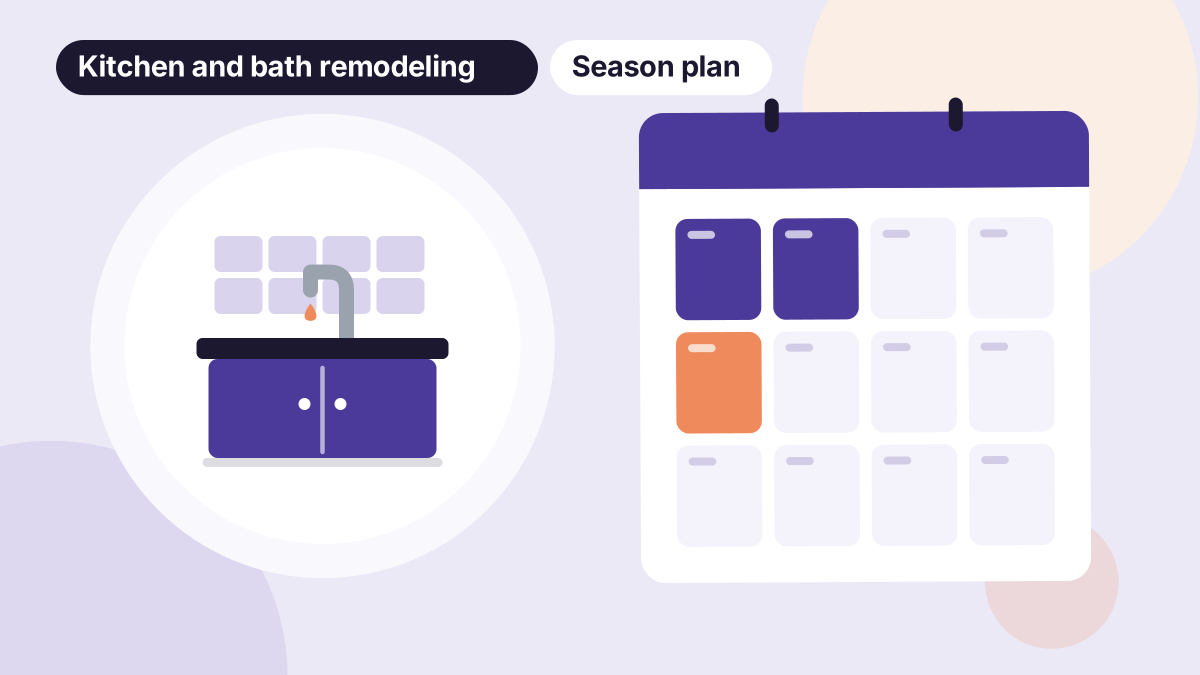
Late August is the lull before a kitchen and bath firm’s second busy stretch. Families are back from vacation, school is starting, and from September the calls split two ways: homeowners who want a bathroom finished before relatives arrive for the holidays, and homeowners starting to plan next year’s kitchen. Most firms chase the first group and lose track of the second. The second group is where next spring’s contracts come from.
The math behind a fall inquiry
Houzz’s 2026 Houzz & Home study, published this spring from a survey of 20,358 homeowners, measured how long the projects behind this trade take. Kitchens averaged 9.5 months of planning and 5.8 months of construction in 2025. Primary bathrooms averaged 8.4 months of planning and 4.8 months of work.
Run a September kitchen inquiry through those averages and it reaches demolition around the start of next summer. That is why a fall consult that does not sign by Christmas is not a lost lead. It is a lead on the normal schedule.
The same numbers set limits on the holiday calls. A bath that averages nearly five months of work from start to finish cannot honestly be promised for Thanksgiving if it is signed in September, unless the scope is small. Say so in the ad. A smaller scope with a believable date sells better than a full remodel with a date everyone knows will slip, and it does not produce the review that starts with “they promised.”
What the July outlooks say about next year
Four sets of numbers came out this summer, and they point the same way: flat spending, cautious buyers, smaller tickets.
- NKBA’s Kitchen and Bath Market Index, released July 21 with John Burns from a survey of 500 NKBA members, held flat year over year at 53 out of 100. Member firms now expect revenue to fall 2% this year, down from expecting 4% growth a quarter earlier. Consumer uncertainty was the top constraint at 49%, and more than a third of design firms said price-conscious consumers are shifting to lower price points.
- NKBA’s 2026 outlook update, published the same day, has kitchen and bath revenue flat at $228 billion this year. Within that, repair and remodeling spending on kitchens and baths is forecast to rise 3.5%, and pro-led spending to rise 5.3%, outpacing do-it-yourself work.
- Harvard’s Leading Indicator of Remodeling Activity, in its July release as republished by NARI on July 23, expects year-over-year growth in renovation and repair spending to slow to 0.5% by the second quarter of next year, with annual spending moving from $517 billion now to $519 billion. The next release is due October 22.
- NAHB’s Remodeling Market Index for the second quarter stood at 61 overall, but its gauge of the current rate of leads and inquiries was only 51, just above the line where as many remodelers call conditions good as poor. Large projects of $50,000 or more scored 64.
Houzz’s own planning question points the same way: half of homeowners plan projects in 2026, down from 52%, and the median planned spend is $15,000, down from $20,000 a year earlier.
Read together, this is not a collapse. It is a year where homeowners who do hire a pro look harder at the price, and where the firm with the clearest offer at more than one budget level gets the consult.
A fall plan, month by month
- September. Push design consults for next year alongside honest holiday offers for baths and smaller scopes. Ask every summer client for a review with a photo of the finished room: BrightLocal’s 2026 Local Consumer Review Survey found 74% of consumers only care about reviews from the last three months, so April’s reviews are already fading.
- October. Book next year’s design consults into real dates on the calendar. Add this year’s finished rooms to the gallery, labeled by room, town and scope. When Harvard’s next forecast lands on October 22, check next year’s budget against it.
- November and December. Few homeowners want a torn-out kitchen over the holidays, but plenty are browsing ideas and costs. Keep your local search presence and retargeting running at a lower level, and send every open consult one useful note a month: a finished project, a cost guide, a schedule of open build slots.
- January. Call back every fall consult with a design schedule and a start window. Those conversations are warmer than any new lead you can buy in January.
Lower price points without lowering the standard
NKBA’s finding that buyers are trading down does not mean cutting quality. It means having a credible offer at more than one level: a bath refresh beside a full remodel, a kitchen done in phases, cabinets refaced before a full replacement where it makes sense. Publish ranges for each so homeowners can find their own level without a sales call.
If financing is part of the answer, keep the ads clean. Under Truth in Lending, naming a monthly payment in an ad means stating the APR, the down payment and the repayment terms with it, and in California a home improvement deposit may not exceed $1,000 or 10% of the contract price, whichever is less.
The Local Services move, and why your photos matter now
In August, Google started shifting Local Services Ads accounts into Google Ads, where they run as Performance Max campaigns with pay-per-lead goals. Its first phase named plumbing, HVAC, electrical, appliance repair, house cleaning, lawn care, roofing, pest control and moving. Kitchen and bath remodeling was not on that list; Google’s schedule puts broader groups, including service-area businesses without storefronts, later this year, with the remaining categories after that.
Two details matter for a firm that sells on its portfolio. Once an account moves, manual bidding, such as a maximum cost per lead, is no longer supported. And the migrated campaigns accept up to 100 additional business photos. Firms that have their finished rooms photographed, labeled and ready will be able to use that space on day one.
What to do this month
- Tag every open consult with the season the homeowner wants to build, and set a dated reminder for each one.
- Write a holiday bath offer that states plainly what can be finished by Thanksgiving and what cannot.
- Ask every client from June, July and August for a review and a photo of the finished room.
- Put together one smaller-scope offer, with a published range, for the homeowners trading down.
- Gather and label your best project photos now, ready for the Local Services move.
- Put October 22 on the calendar and revisit next year’s budget when Harvard’s forecast comes out.
The firms that sign next spring’s kitchens are the ones still in touch with this fall’s inquiries in February. Our page for kitchen and bath remodelers shows how we build that follow-up, our GoHighLevel work is where the months-long sequence runs, and our local SEO keeps you visible while homeowners browse through the winter.
Written August 24, 2026, and kept as written. Platforms, features and policies mentioned here are described as they stood at the time.
The team that wrote this runs marketing for remodelers and contractors.
This is recent. How it applies to you depends on your market, so we will check where your business stands today and tell you what to do first.