Skip to content

Gym and fitness studio marketing that wins January and keeps the members it brings

In January 2025 fitness visits ran 21.2% above December, by Placer.ai's count, and the Health & Fitness Association put member retention at 66.4% for 2024. A gym fills in winter and loses about a third of its members within a year. We get you into the map when "gym near me" peaks, make your trial, prices and cancellation terms easy to trust and legal in your state, and keep the January joiners coming in after March.

Taking on new gyms and fitness studios now

Reviewed by Niomi Ascot on

January fills the floor, and March decides who is still on it

January is the one month every source agrees on. The other ratings are how a year usually runs for an independent club, with the reasons below. Regions swing too: in August 2026 visits in the Middle Atlantic were up 5.1% on a year earlier while West South Central fell 3.8%, according to the Health & Fitness Association.

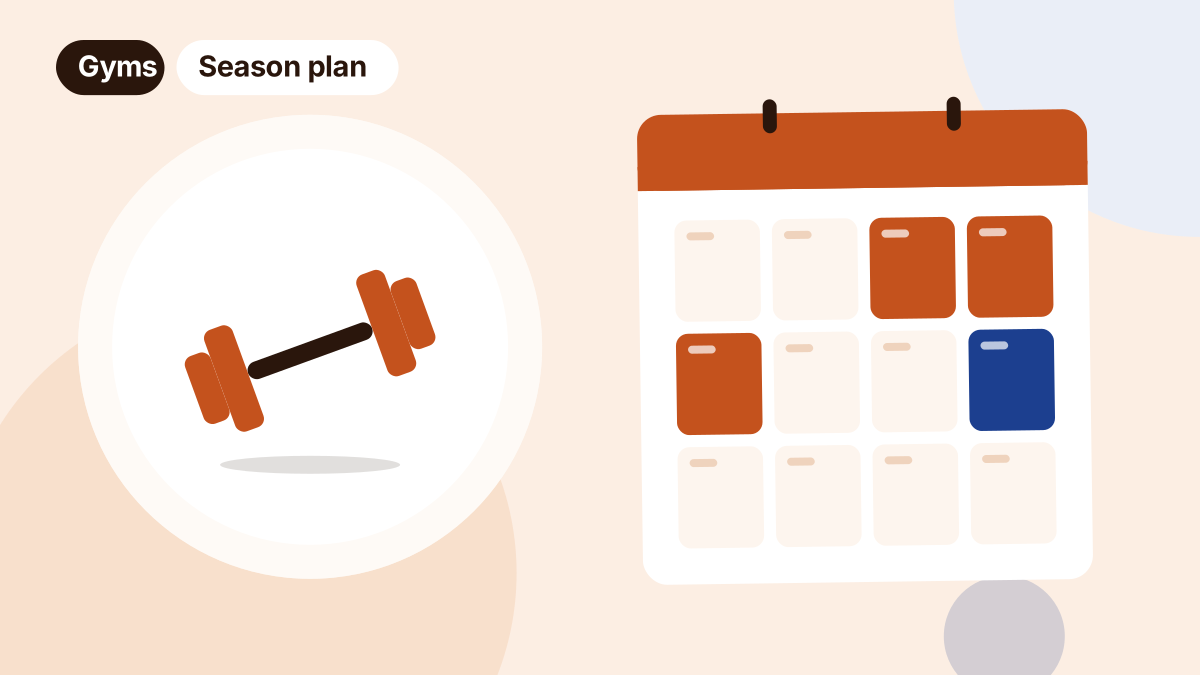
Demand through the year for gyms and fitness studios
  1. January: Peak
  2. February: Busy
  3. March: Busy
  4. April: Steady
  5. May: Steady
  6. June: Busy
  7. July: Steady
  8. August: Steady
  9. September: Busy
  10. October: Steady
  11. November: Slow
  12. December: Slow
Early December
Placer.ai found the big chains drew their lowest share of repeat visits in the fourth quarter, as holidays and travel broke routines. Members are quiet and January shoppers are not searching yet, which makes this the month to build the offer, the trial terms, the landing page and the first-month messages.
January
Placer.ai counted fitness visits 21.2% above December in January 2025, after a 23.4% jump the year before, and calls January the industry's peak sign-up season. Reviews, hours and holiday closures should be right before New Year's Day, not patched during the rush.
February and March
Sign-ups typically run through much of the first quarter, per Placer.ai, and in its 2024 data the first quarter brought the largest share of members visiting at least twice a month. Weather dents it: February 2025 brought the year's only dip in visits, and a winter storm cut visit frequency in January 2026. Keep spending through March and watch which January joiners stop coming.
April to June
In 2026 the Health & Fitness Association saw softer April and May traffic alongside a dip in consumer sentiment, then a June rebound, with visits to high-volume, low-price gyms up 10% on May. A good stretch to ask members who joined in January, and stayed, for referrals and reviews.
After Labor Day
In our experience the second join window of the year opens as school routines settle. It is smaller than January, and a useful test of the offer and the follow-up you plan to run in the new year.

Where gym members come from, most first, and what each source needs

Ranked by how many joins each usually brings an independent gym or studio. The first two carry most of the weight, and both turn on how close you are to the searcher and whether you look open when they search.

Google Search and Maps
The core searches are "gym near me" and "24 hour gym". In Whitespark's 2026 survey of local search experts, distance from the searcher ranked second among map pack factors and being open at the time of the search ranked fifth, so the hours on your profile should match when members can actually get through the door. ABC Fitness reports that active people without a membership prefer options within a mile.
The free pass and the members already training there
The New York Attorney General tells shoppers to visit at least two other health clubs, ask for free passes and talk to members before signing. That is the comparison your trial has to win: an easy booking, a coach who says hello, and prices and terms shown before anyone has to ask.
Facebook and Instagram
Usually the strongest channel for January offers and new-location presales. For Health & Fitness campaigns run between April 2025 and June 2026, WordStream by LocaliQ found a median Facebook lead ad cost of $27.11 per lead, roughly half the $52.98 its previous edition reported. A form fill is a name, not a visit, so how fast someone follows up decides what it was worth.
Google search ads
For searches the map does not settle: a class type, "personal trainer near me", or a neighborhood where you have no address. WordStream's Google benchmarks for Health & Fitness show a $6.17 median click and a $67.36 median lead (April 2025 to March 2026). Keep the targeting to the distance members will really travel.
ClassPass and Wellhub
Read these as vendor claims. By ClassPass's own count, in January 2025 almost every booker (94%) had never visited that venue before, and Wellhub puts the share of its members at partner gyms who are new to the club or returning after a lapse at 90%. Useful for empty off-peak capacity, as long as you know what each visit pays and have a plan to turn visitors into members.
AI assistants and review sites
BrightLocal's 2026 survey found 45% of consumers had used ChatGPT or other AI tools for local recommendations, up from 6% a year earlier. What an assistant can say about your gym depends on what is written about it: reviews, hours, the class list and prices on your own site.

The order we work in for a gym, and why March is part of the plan

For a gym, being found and being kept are close to equal jobs. The map decides which clubs a shopper tries, and the first weeks decide whether a January join is still paying in April. Tracking goes in during week one, so every later decision rests on members rather than form fills.

Found

Being the company that shows up when someone searches.

Distance and opening hours rank second and fifth among map pack factors in Whitespark's 2026 survey. Categories, hours that match the door, the map pin and photos of the floor and the classes come first, with Facebook and Instagram added for the January window and any presale.

Chosen

Being the one they pick once they have found a few.

Shoppers are told to compare at least two other clubs before they sign. The gym that wins shows its price, its terms and how to cancel before anyone asks, and has more than 20 recent reviews, since nearly half the consumers in BrightLocal's 2026 survey (47%) rule out anything below that.

Kept

Turning one job into the next one and the referral.

With retention at 66.4% in the Health & Fitness Association's benchmarking, each January class decides the year. First-month check-ins, class booking reminders, an intro session with a coach and a nudge when visits stop all land before the member starts thinking about canceling.

Clear

Knowing which work produced which jobs.

Joins by source are easy to count and easy to misread. By month three the report shows which sources produced members who are still billing, because a cheap January join who cancels in March cost more than it looked.

Week 1

Call and message tracking, the join source captured at signup, and one definition agreed with you: a member still billing 90 days after joining.

Weeks 1 to 4

Google profile categories, hours, pin, photos and schedule link fixed. Prices, trial terms and cancellation steps written on the site and checked against your state's rules, with California, New York and Connecticut read line by line.

Weeks 3 to 8

A review request to every member around their first month, owner replies, Facebook and Instagram campaigns built for the next join window, and any free trial given clear terms and a reminder before the first charge.

Weeks 6 to 12

A first-month sequence for new joins, an alert when a member stops checking in, intro personal training sessions offered, and the first report on joins by source and how many are still billing.

Gyms and studios that compete on more than the monthly price

Placer.ai sorts the big chains into budget (under $30 a month), mid-tier ($30 to $60) and premium (over $60). Most owners we help cannot win a price war against a chain with hundreds of clubs, so the work is showing what they win on instead.

The independent club with one to three locations

You compete on hours, equipment, coaching and front desk staff who know members by name. ABC Fitness platform data for January to May 2026 put average spend at $27 a month for small gym members against $17 at enterprise gyms, so the difference has to show in the profile, the photos and the reviews.

The class studio selling packs and memberships

Strength, HIIT, cycling or boxing, sold on the schedule and the coaches. Studio members spent $69 a month on average in the same ABC Fitness data, and studio check-ins rose 27% year over year while cancellations fell 6%. A full 6 pm class sells itself; the empty 10 am slot is where a class app might earn a place.

The personal training studio

Google has a Local Services Ads category for personal trainers, with the Google Verified badge, and none for gyms. Training packages often run a fixed first term and then bill monthly, the way the FTC described them at LA Fitness, so the renewal and cancellation rules reach you too.

The new location with a presale ahead of it

Presales work when there are weeks to spare before opening. In California, money taken for a health studio that has not opened must be held in trust until five business days after it does, so the campaign gets planned with your accountant before the first ad runs.

The franchisee with room to market locally

Brand standards on ads, prices and offers come first, so we start by reading what your franchisor controls. Inside those lines, the local profile, the reviews and each new member's first month are usually yours to run.

Who we would point elsewhere. Operators whose numbers depend on contracts that are hard to leave: cancellation by certified mail only, or free trials that roll into dues with no reminder. The FTC is in court over the first, California's auto-renewal law covers the second, and we will not write the campaigns that feed either. We would also point elsewhere a franchise location whose franchisor runs every ad account, or an owner who wants a two-week January blast with nothing behind it for the people it signs up.

Personal trainer ads, ClassPass and Wellhub, or your own profile and trial

Three ways a gym or studio pays for new people coming through the door. Google has no gym or fitness center category in Local Services Ads, so the first column helps personal training only.

QuestionLocal Services Ads (Personal trainer)ClassPass and WellhubYour own profile, site and trial
What it sellsPersonal training; there is no category for gym membershipsVisits and classes to the platform's own subscribers or to employees with Wellhub as a benefitMemberships, class packs and training on your terms
How you payPer valid lead, against a weekly budgetOn the platform's partner terms; get what each visit pays in writingFree to list; the cost is staff time and whatever ads send people there
Who it reachesPeople searching for a personal trainer nearbyMostly first-timers, by the platforms' own figures: 94% for ClassPass in January 2025, and 90% new or lapsed for WellhubShoppers who found you in the map, through a member or by driving past
Before you startBusiness and owner checks, state licenses where local law requires them, no insurance listed, a verified Google profile; about three to four weeksThe platform's own partner sign-upA verified profile, hours that match the door, and prices and terms on the site
Who keeps the memberYou: calls and messages come straight to you, and bookings can run through partners such as MindBody or VagaroThe platform keeps the subscriber; turning a visitor into your member is your jobYou, from the first visit
Trust signalsThe Google Verified badgeWhatever the platform shows on your listingYour Google reviews, real photos and a cancellation policy anyone can read

Google Verified took over from the Guaranteed and Screened badges in October 2025. From August 2026, Local Services Ads accounts are being converted into Google Ads campaigns in phases. The first phase named home and storefront trades; personal training was not on that list.

What a fitness lead costs, set against what a member pays

Published medians for the categories gyms fall into, and what members actually spend. They describe the market, not our results. ABC Fitness platform data for January to May 2026 puts average monthly spend at $17 for enterprise gym members, $27 at small gyms and $69 at studios, which is why we weigh a cost per lead against months of dues rather than the first payment.

81 million
Americans belonged to a gym, studio or other fitness facility in 2025, an all-time high and 26.1% of everyone aged six and older
Health & Fitness Association, 2026
66.4%
Member retention rate in 2024, as reported by fitness operators in the industry's 2025 benchmarking study
Health & Fitness Association, 2025
21.2%
More fitness visits in January 2025 than in December 2024, after a 23.4% jump the January before
Placer.ai, 2025
$27.11
Median cost per lead for Facebook lead ads in Health & Fitness, April 2025 to June 2026
WordStream by LocaliQ, 2026
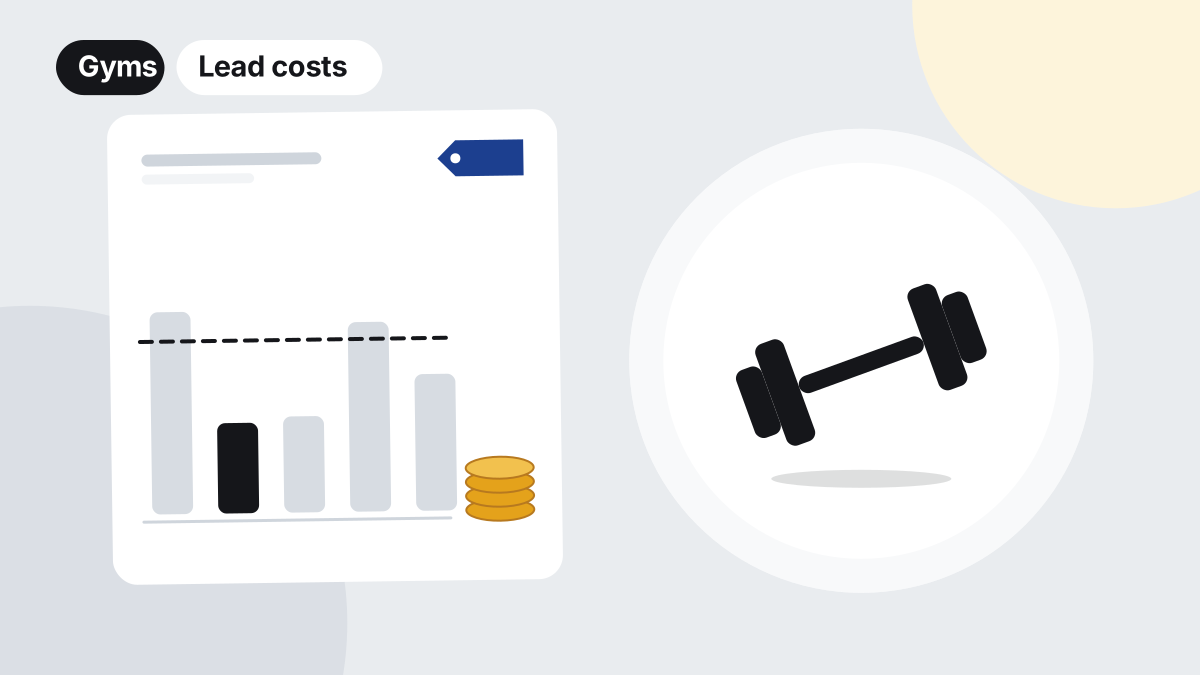
Median cost per lead: Google search against Facebook lead ads
  • Health & Fitness on Google search (campaigns April 2025 to March 2026)$67.36
  • Sports & Recreation on Google search (same window)$44.26
  • Health & Fitness on Google search (campaigns April 2024 to March 2025)$62.80
  • Health & Fitness on Facebook lead ads (campaigns April 2024 to June 2025)$52.98
  • Health & Fitness on Facebook lead ads (campaigns April 2025 to June 2026)$27.11
  • Sports & Recreation on Facebook lead ads (same window)$15.49

Between the two editions the Health & Fitness lead from Facebook roughly halved in cost, while the Google search lead rose from $62.80 to $67.36. A form lead is a name to call back, not a member who showed up. Sources: WordStream 2026 search report; WordStream 2025 search report; WordStream 2025 Facebook report; WordStream 2026 Facebook report.

Our plans are affordable for an independent gym or a single studio, and they are scoped to your join seasons and the hours you can spare from the floor, not to a fixed package. The free plan sets out what we would change first, in writing, before you commit to anything.

Get your free plan

From free pass to spring slump: where a gym loses the people it paid for

A gym pays hardest for attention in January and then loses many of those people twice, once before they sign and again in the spring after they do. The inquiry answered the next day and the trial visitor nobody calls cost the first; the member who drifts off and the friend nobody thought to ask about cost the second.

The trial request answered the next morning

Someone filling out a free-pass form in January has usually sent the same form to two or three other clubs, as shoppers are told to do. The club that calls while the person is still on their phone tends to get the first visit; that comes from our work with membership businesses rather than from any gym study.

The fix. Route every pass request to whoever is on the desk and set a five-minute target while the club is staffed. Text straight away with a name: "Hi, it's Jordan at the front desk. When would you like to come in? I can meet you for a walk-through tonight at 6 or Saturday at 10." Requests that land overnight get a call before 9 a.m.

The trial visitor who trained once and heard nothing

A free pass is a comparison test, and the visitor leaves with two other gyms still on the list. In our experience the club that follows up the same day, with someone who remembers what the visitor came for, signs far more of its trial visitors than the club that waits for them to return on their own.

The fix. Before the visitor leaves, the person who showed them around books the next session in the visitor's own calendar. That evening, a short text from the same person: "Good to meet you today. Want me to save you a spot in Thursday's 6 p.m. strength class?" On day three, a call to answer questions about price and terms. On the last day of the pass, one clear offer with the cancellation terms written out.

Members who stop coming, and nobody notices until they cancel

A Journal of Marketing study of one US telecom company's 2006 to 2014 data found that win-back offers pairing a discount with an upgrade worked best, and that customers who had left over price tended to stay longer once won back. It is a subscription analogy, not gym data. Contact rules apply to any win-back: the FTC says commercial email needs an opt-out honored within 10 business days, and FCC rules require prior express written consent for automated promotional texts.

The fix. Flag any member with no check-ins for three weeks and have a coach send a personal note, not a promotion: "Haven't seen you since the 3rd. Want me to book you into a class this week?" For members who have already canceled, ask why at the exit, and a month later send an offer that answers that reason, such as a lower rate for price leavers or an added class pass. Call former members only within the Do Not Call rules, and ask counsel whether the consent line in your membership agreement covers win-back texts.

Members who would bring a friend, if anyone asked

In a peer-reviewed study of a German bank, customers who joined through a referral program were worth at least 16% more and were about 18% less likely to leave at any point; after 33 months, 82.0% of referred customers were still active against 79.2% of others. A bank is not a gym, so read it as direction: referred people tend to arrive already sold.

The fix. Ask at moments of clear progress rather than at the front desk on day one: the 30-day check-in, a first pull-up, a finished challenge. Say it plainly: "Who do you train best with? Bring them Saturday as your guest." Tag referred members in the system so you can see whether they stay longer than the January joins.

Click to cancel is not federal law, but your members may already have it

Owners hear federal “click to cancel” described as settled in both directions. Here is where it stands in October 2026.

In October 2024 the FTC amended its Negative Option Rule to require disclosure of material terms, express consent and a simple way to cancel, effective January 14, 2025. Its own analysis named gym, fitness center and health studio memberships as ones that may require cancellation by certified mail or in person. On July 8, 2025 the Eighth Circuit vacated the rule on procedural grounds, with the Health & Fitness Association filing in support of the challengers. In February 2026 the FTC put the earlier text back, and on March 13, 2026 it started again with an advance notice of proposed rulemaking, the earliest stage, taking comments until April 13. No federal click-to-cancel rule is in force today.

That has not made a hard cancellation safe. In August 2025 the FTC sued the operators of LA Fitness, which it says run more than 600 locations with over 3.7 million members, under the Restore Online Shoppers’ Confidence Act, saying tens of thousands of customers reported trouble canceling. The case is pending. Meanwhile the states wrote their own:

  • California. AB 2863 applies to contracts entered into, amended or extended from July 1, 2025: express affirmative consent, an annual reminder, cancellation in the same medium the member used to sign up, consent records kept for three years, and rules for free trials that convert to paid. A save offer is allowed only if the member can still cancel. The state’s health studio law separately caps terms at three years and lets members cancel in person, by email from the address on file or by first-class mail.
  • New York. The Attorney General’s summary of the Health Club Services Act: contracts capped at $3,600 a year and 36 months, three days to cancel after signing, and cancellation through the club’s website, email, phone, mail or in person.
  • Connecticut. Its updated automatic renewal law, as the Health & Fitness Association summarized it in September 2026, requires renewal reminders, online cancellation for online sign-ups, and cancellation within one business day of a voicemail asking for it.

The association counted more than 160 fitness-relevant bills in 2025, 21 of them enacted, with auto-renewal one of the main themes.

The marketing lesson is the one the FTC drew in its business guidance on the LA Fitness case: making people jump through hoops to cancel is bad business. A gym that can honestly put “cancel online, any time” in its ads is answering the question every shopper has, and in California, New York and Connecticut a good part of that promise is already the law.
Five gym marketing habits that lose members or draw complaints

Keeping the cancellation policy off the website
Shoppers compare clubs on terms, and New York already requires that members can cancel through the club's website, email, phone, mail or in person. Hiding the policy reads as a warning sign. Publish how to cancel, then say it in the ads: it answers the question every shopper is already asking.
Free trials that turn into dues without a word
California's AB 2863 covers free-to-pay conversion offers on contracts made from July 1, 2025, and the Health & Fitness Association tracks states that restrict taking a card for a free trial at all. Put the terms beside the consent box and send a reminder before the first charge.
Spending the whole January budget by the 15th
Placer.ai says sign-ups typically run through much of the first quarter. Build in December, spend through March, and hold some money back for the follow-up that turns January joiners into regulars.
Opening every ad with a price cut
Owners in Wellhub's 2026 survey said members most often ask for flexible or shorter contracts (66%), with lower prices fourth at 46%. Lead with flexibility, hours and coaching, and keep the discount for when a shopper is deciding between you and one other club.
Rewarding five-star reviews, or asking only the regulars
The FTC's 2024 rule bans incentives tied to a review saying something positive. Ask every member around their first month, reply to every review, and keep before-and-after claims to what you could prove yourself, since FTC guidance says a testimonial cannot carry a claim the gym could not make directly.

What a gym or studio owner gets in the free plan

The consult costs nothing. You come away with an honest picture of how your club looks to someone choosing a gym this week, and a written plan that is yours to keep, hired or not. For a gym or studio it covers:

Get your free plan
  • Where you appear for "gym near me", "24 hour gym" and your own class or training searches, checked early in the morning and in the evening, and which clubs hold the map pack at those hours.
  • Your Google profile against what a shopper compares: hours, categories, photos of the floor and classes, review count and how the last three months look.
  • Your prices, trial offer, renewal and cancellation wording read against the rules in your state.
  • What happens when someone asks for a free pass: how fast they hear back, and whether anyone follows up after the visit.
  • Where your January joiners drop off in the first month, and the first 90 days of work in order, timed to your next join window.

Questions gym and studio owners ask before signing with anyone

Is click to cancel federal law for gyms now?

No. The FTC's amended Negative Option Rule took effect January 14, 2025, and the Eighth Circuit vacated it on July 8, 2025. The FTC restored the older text on February 12, 2026 and opened a new rulemaking on March 13, 2026, still at the advance notice stage. Federal enforcement goes on under the Restore Online Shoppers' Confidence Act: the FTC's case against the operators of LA Fitness, filed in August 2025, is pending. State rules such as California's, New York's and Connecticut's apply today.

Can my gym run Google Local Services Ads?

Not as a gym. Google has no gym or fitness center category; the nearest is Personal trainer, which carries the Google Verified badge and needs business and owner checks, state licenses where local law requires them and a verified profile, with no insurance requirement listed. It suits a training studio; memberships need search ads and a strong profile. How we run search and Local Services together.

What does a new member lead cost?

For Health & Fitness, WordStream by LocaliQ's 2026 medians are $67.36 per lead from Google search and $27.11 from Facebook lead ads. Those are leads, not members. We judge each source on the cost of a member still billing three months later, which is the number that pays your rent.

Should we join ClassPass or Wellhub?

If you have empty off-peak capacity, it can be worth testing. Each platform reports that most of its visitors have not trained with you before (ClassPass put it at 94% in January 2025, Wellhub at 90% new or lapsed), though both numbers come from the vendors. The trade is lower revenue per visit, so plan how a regular visitor gets offered your own membership.

When should January ads start?

Build them in early December and have them live before New Year's Day. Placer.ai found the fourth quarter brings the lowest share of repeat visits and January the biggest jump, with sign-ups running through much of the first quarter, so the budget should last into March. How we run Facebook and Instagram for join season.

Will you push us to sell longer contracts?

No. California caps health studio contracts at three years, and New York at 36 months and $3,600 a year. Owners in Wellhub's 2026 survey said members ask for flexible or shorter contracts more than anything else. We market the terms you choose to offer and put the cancellation steps right beside them.

What is the right way for a gym to collect Google reviews?

Text every member the direct link near the end of their first month, then answer each review that comes in. In BrightLocal's 2026 numbers, 47% of people skip a business showing under 20 reviews, and 89% expect the owner to reply. No rewards for reviews and no asking only the happy regulars. How we run review requests.

We are opening a new location. Can we presell memberships?

Yes, inside your state's rules. In California, presale money for a gym that has not opened must be held in trust until five business days after opening, and members get five business days to cancel. New York requires clubs that take prepayment to file a bond. We plan the presale offer with you and your accountant before any ad runs.

Can our ads say "certified trainers"?

Yes, if every trainer named holds a current certification. We found no state that licenses personal trainers, and the District of Columbia repealed its personal fitness trainer section. DC's athletic trainer law still restricts unlicensed people from using the word "trainer", so a DC gym should have counsel read the ad first.

See what a January shopper sees when they compare you with two other gyms

Tell us the gym or studio, the town, and whether you mostly sell memberships, class packs or personal training. You get back where you show up for "gym near me" and your class searches at the hours people search, how your profile, prices and cancellation terms compare with the clubs nearby, which state rules touch your trial and renewal wording, and the changes we would start with ahead of your next join season.

  • A free consult. A real conversation about your business, your area and what is not working yet.
  • An honest evaluation. Where you stand in search, ads and follow-up next to the businesses you lose customers to.
  • A plan you keep. What we would fix first and why. It is yours whether or not you work with us.

Form not loading? Email hello@beyaoshy.com and we will reply within one business day.

Sources

The figures on this page come from these published sources, checked on October 3, 2026. Benchmarks are averages across many advertisers; your market will differ, which is what the free plan is for.

Agencies with gyms and fitness studios among their clients: see the partner model.