Search ads, Instagram or loyalty: a cafe's first dollar
Published 2026 numbers on what a search lead, an Instagram click and a returning regular are worth to a cafe, and the order we would spend in this fall.
Mid-August is when coffee shop owners make the fall marketing decision, whether they mean to or not. Schools and offices are about to fill back up, the chains are getting their fall menus ready, and the owner has a modest amount set aside and three places it could go: Google search ads, Facebook and Instagram, or the loyalty program already sitting inside the point of sale. Each one has a salesperson who will say it comes first.
Published numbers settle more of this than the salespeople would like. Here is how they line up for a cafe, and the order we would spend in.
What a coffee is worth, and what a search lead costs
Start with the ticket. Toast’s restaurant trends report from March put the median cup of regular drip coffee on its platform at $3.65 in February 2026, up 4.3% on a year earlier. That figure covers every Toast restaurant that sells drip coffee, not only coffee shops, but it is a fair stand-in for the price of an everyday cup.
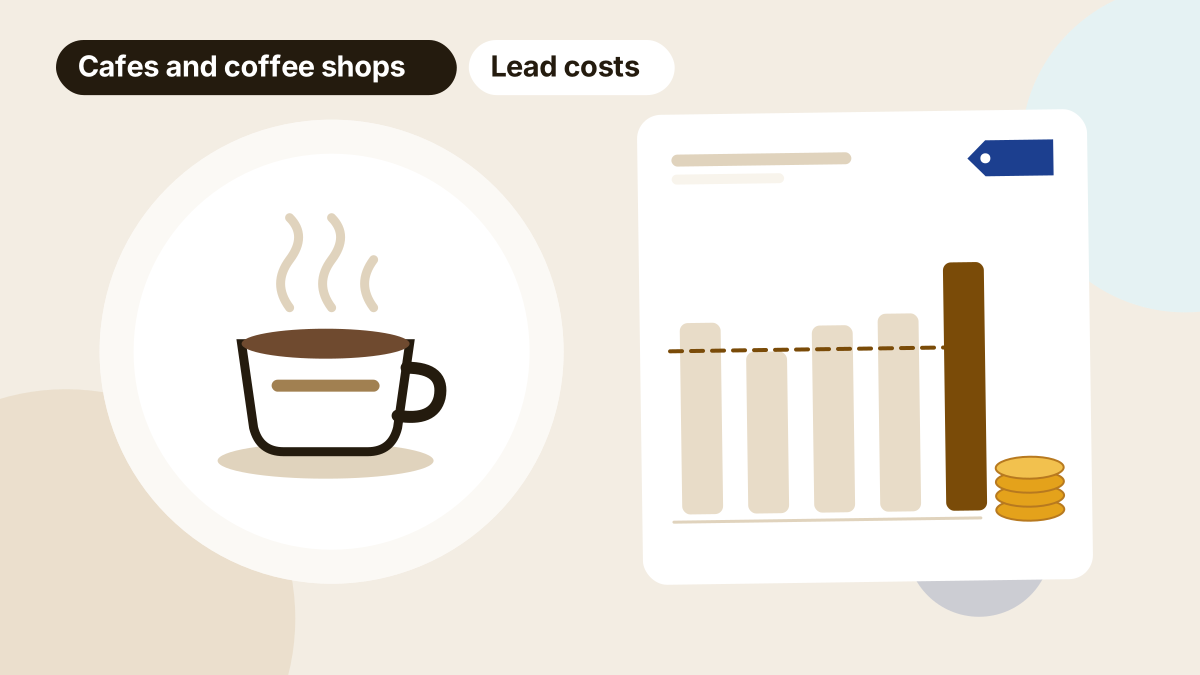
Now the ad side. WordStream by LocaliQ’s 2026 Google Ads benchmarks, published in May and covering April 2025 to March 2026, put the Restaurants & Food category at a median cost per click of $2.05, a click-through rate of 6.83%, a conversion rate of 8.05% and a cost per lead of $30.57. Across all industries the median lead cost $66.69, so food sits well under the all-industry median.
Cheap for the category is still expensive for a cup of coffee. At those medians, one lead costs more than eight drip coffees. And for a cafe, a “lead” in Google Ads is usually a call, a click on directions or an order button, or an inquiry form, not a guaranteed sale.
That does not make search ads useless. It makes them a tool for larger tickets:
- Office orders. Coffee boxes and pastry trays for meetings, searched by an office manager on a work laptop.
- Beans and subscriptions. A roaster with an online shop sells bags that are worth many drinks each.
- Gift cards in season. Searches for gift ideas near the holidays, sent to a page that sells them online.
- A new opening. The weeks when nobody nearby knows the shop exists yet.
For “coffee near me”, the free map listing does the job better, as long as the hours, photos and reviews are right.
Instagram buys cheap clicks from the right age group
Meta looks cheaper on paper. WordStream by LocaliQ’s 2025 benchmarks for Facebook ads, covering April 2024 to June 2025, put Restaurants & Food traffic campaigns at a median $0.72 a click with a 1.67% click-through rate. Lead form campaigns in the same category reported a median $3.16 per lead, though WordStream’s samples for that table were small and those leads are sign-ups, not sales.
What makes Instagram worth a share of a cafe’s budget is who is on it. The National Coffee Association’s specialty coffee report, released in June with the Specialty Coffee Association, found 69% of 25-to-39-year-olds had specialty coffee in the past week, more than any other age group. It also found 36% of past-day specialty drinkers had coffee prepared outside the home, against 23% of people drinking traditional coffee. Pew Research Center’s fact sheet from last November counts 80% of adults aged 18 to 29 and 62% of those 30 to 49 on Instagram.
So the people most likely to buy a latte out are on the platform. The catch is that a click is not a visit. We judge Instagram spend for a cafe by what shows up at the counter: loyalty sign-ups from a code in the ad, redemptions of a launch offer, and app orders during the campaign weeks. Keep the radius tight around the shop and the offices near it, and use photos of the drinks exactly as they are served.
Loyalty is where a cafe’s money is made
The third option is the least exciting to sell and the most useful. Toast and Resy’s Regulars Report, published at the end of July, found in Toast’s first-quarter data that up to 50% of a restaurant’s volume can come from just 7% of its guests. It also found that moving a guest into a loyalty program can lift their return rate from a 7% baseline to nearly 30%. In the report’s April survey of 1,500 adults, 37% of the regulars surveyed said they visit their favorite spot at least once a week. These are vendor figures across all restaurant types, not coffee shops alone, but a cafe’s whole model is built on that kind of frequency.
The habit is already there to work with. In the National Coffee Association’s spring survey, 66% of adults had coffee in the past day, and 86% of past-day drinkers had it first thing in the morning. The person who stops at your shop on Tuesday is a candidate for Wednesday too.
For most independents the program comes with the point of sale, so the cost is attention rather than media. A barista who mentions it on every first visit, a sign at the pickup shelf, and a message to guests who have not been in for a few weeks do more than an ad budget of the same size.
The order we would spend in
If the budget only stretches so far, this is the sequence we recommend to cafe owners:
- First, the free work. Hours, holiday dates, photos and the menu on the Google listing, and a loyalty enrollment push at the counter.
- Second, Instagram around the fall launch. A tight radius, real photos, and an offer that can be tracked at the register.
- Third, search ads on the bigger tickets. Office orders, beans and, from late October, gift cards.
On the menu itself, the Toast report also showed where customers are moving. Same-store sales of lattes rose 4.0% in 2025, espresso shots 3.3% and Americanos 1.4%, while regular hot drip fell 3.3% and cold brew 2.2%. Feature the drinks that are growing in the ads and posts you do pay for.
What to do this month
- Count loyalty members and note how many came back in the last thirty days, so the fall push has a starting number.
- Fix the hours and photos on your Google listing before spending anything on ads.
- Plan one Instagram campaign around your fall drink launch, with a code or offer the register can count.
- Build a simple office order page, then decide whether search ads should point at it.
- Retire any search campaign bidding on single-drink keywords such as “latte near me”.
Our page on marketing for cafes and coffee shops shows the full plan in order. If search ads do fit your shop, our Google Ads work is built around office orders and beans, and our Meta ads are set up to be judged at the counter, not in the ad dashboard.
Written August 12, 2026, and kept as written. Platforms, features and policies mentioned here are described as they stood at the time.
The team that wrote this runs marketing for restaurants.
This is recent. How it applies to you depends on your market, so we will check where your business stands today and tell you what to do first.