Termite swarm season: what pest companies set up by March
When subterranean and Formosan termites swarm, what homeowners do when they see wings, and what a pest company needs live before the first warm afternoon.
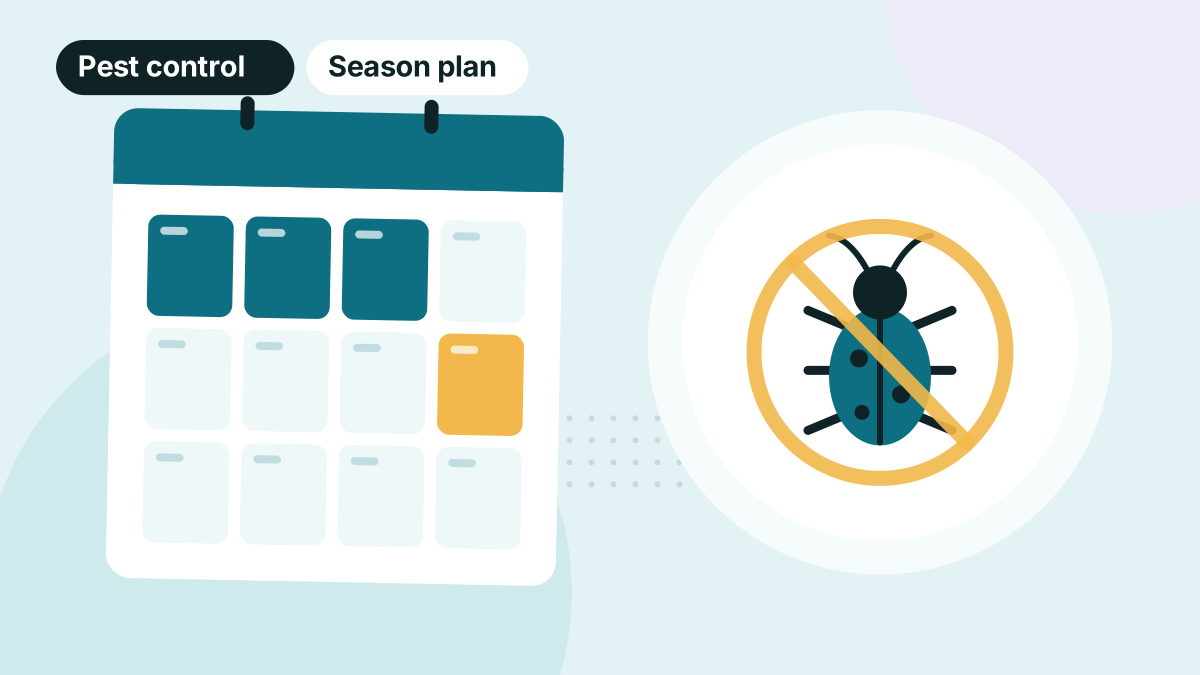
It is the second week of February, and in Florida some homeowner may already be sweeping wings off a windowsill. NPMA’s guide to subterranean termites says they swarm in spring across the country and in late winter in Florida. Everywhere else, the first warm, sunny afternoon after a rain will do it, and the phones ring that same afternoon.
That timing is the whole problem. A swarm is not a slow build. It is a burst of calls on one afternoon, then another on the next good day, and the companies that win them had pages, ads and phone coverage ready before the first. Here is what we would have in place by the first week of March.
When the swarms arrive, by species and by region
Termite swarms are local, and they run on weather more than on dates. What the published guides say:
- Subterranean termites are found in every state except Alaska, according to NPMA, and swarm in spring, starting in late winter in Florida. NPMA calls swarmers inside the house “typically the first sign of termite season.”
- The trigger is rain, then sun. The University of California’s Integrated Pest Management program (UC IPM) says a warm, sunny day following rain is the optimal time for subterranean termites to swarm, and that the common Reticulitermes species swarm in the afternoon, in spring or fall, on clear days after a soaking rain.
- Formosan termites come later. NPMA says they usually swarm in the evening after a warm, rainy day in late spring or early summer, and they are found mainly in the South, up to about 35 degrees north latitude.
- In the desert Southwest, UC IPM’s desert subterranean termite flies in the late afternoon or early evening in July, August and September, so a company in that market has a second swarm season the national calendar does not show.
Put together, that is a rough map of the year: Florida and the Gulf first, the rest of the South and the coasts through March and April, Formosan evenings into June, the desert in late summer. The forecast sets the exact day, so we tell clients to treat the first warm afternoon after a wet spell as opening day.
What a homeowner does when the swarmers show up
NPMA’s Bugs Without Borders survey, run in spring 2025 with 375 pest professionals, asked what usually prompts a termite call. A third of termite calls (33%) came after homeowners saw swarmers or discarded wings, and 34% after physical signs such as mud tubes, damaged wood or frass. Only 23% were preventative.
So roughly one call in three is a reaction to something flying around the living room, and the person making it is worried. NPMA’s own consumer pages tell homeowners that termites cause more than $6.8 billion in property damage and that those costs are not covered by homeowners insurance.
That worried person picks up a phone, searches, and calls one of the first companies that looks credible. In our experience they rarely wait for a callback. If the termite page is vague or the call rolls to voicemail, the next listing gets the inspection.
The industry hires into this, and so should the marketing
Bureau of Labor Statistics payroll counts for exterminating and pest control companies rose from 148,200 workers in February 2025 to 157,000 in May, most of the year’s hiring packed into three months. Marketing needs a longer run-up than hiring. A Local Services Ads application takes three to four weeks on Google’s own average, and a new page takes time to be found, so anything started after the first swarm serves the second half of the season.
What to have live before the first swarm
Here is the checklist we would work through in February:
- A termite page of its own. It should explain what swarmers look like, what an inspection involves and how soon someone can come out, and name the license you work under. In California termite work sits under its own license branch, and in Florida under the wood-destroying organisms category, so the page and the ads should only offer what your license covers.
- The Google Business Profile updated for termites. Termite inspection and treatment listed as services, real photos of your techs and trucks, and hours that match when you actually answer. A homeowner standing in a room full of wings searches on a phone, and the map pack is the first thing they see.
- Local Services Ads applied for, or checked. Google lists “Pest control services” as its own category, and verified companies now show the Google Verified badge, which replaced the old guarantee badges in October 2025. If you are not running yet, apply this week. If you are, confirm termite work is switched on only if you are licensed for it.
- A termite ad group in search, ready to go. Separate from general pest, with its own landing page and a budget you can raise the moment a swarm week starts. Swarm searches spike on specific days, so a flat daily budget will run dry on exactly the afternoons that matter.
- Copy that makes no safety promises. Texas’s pest control advertising rule and California’s both treat claims such as “safe” and “non-toxic to humans and pets” as misleading, and both apply online. “Pet-safe termite treatment” is exactly the kind of line both rules catch. Describe the method and the inspection instead.
- Afternoon phone coverage. Swarms happen in the afternoon and early evening, which is also when techs are out on routes. Decide now who answers on a warm Tuesday at 3 pm, and what happens to the call if nobody can.
Turning swarm calls into the rest of the year
The swarm call is the start of the relationship, not the end of it. Only 23% of termite calls in NPMA’s survey were preventative, so most calls wait for a sign. UC IPM suggests a termite inspection every three to five years, and a swarm customer who hears from you before that window closes is a repeat inspection, often with a general pest plan attached.
Two habits help. Ask every termite customer for a review once the job is done, while the relief is fresh. And put every termite caller, including the ones who did not book, on a reminder list for next February.
What to do this month
- If you work in Florida or along the Gulf, treat the season as already open: check your termite page, ads and phone coverage this week.
- Start or review your Local Services Ads account now, allowing three to four weeks for screening.
- Read every ad, page and profile description for “safe”, “non-toxic” or “EPA approved” wording and take it out.
- Set up a termite search ad group with a budget you can raise on swarm days.
- Pull last year’s termite callers into a reminder list for an inspection follow-up.
Swarm season rewards the companies that were ready a month early. Our page on marketing for pest control companies sets out the full year we plan around, and our Google Ads and Local Services Ads work covers how the paid side runs when the first warm afternoon arrives.
Written February 10, 2026, and kept as written. Platforms, features and policies mentioned here are described as they stood at the time.


The team that wrote this runs marketing for home service companies.
This is recent. How it applies to you depends on your market, so we will check where your business stands today and tell you what to do first.