Skip to content

Basement finishing marketing that answers egress, moisture and radon before price

In 2025, 53% of new houses completed in the Northeast and 50% in the Midwest had a basement, against 4% in the South, so this market is a map before it is a keyword. The homeowners who call have usually read about escape windows, damp walls and radon tests first, then take a season to decide. We put your company in front of them in the towns where basements exist, answer those questions on your own pages, and keep the consult warm until it signs.

Taking on new basement finishing contractors now

Reviewed by Niomi Ascot on

A bedroom with no egress, a wall nobody tested and a map drawn too wide

Selling the bedroom, not the window it needs

Under the 2021 model code every basement bedroom needs its own escape opening: at least 5.7 square feet clear, 24 inches high and 20 wide, with the sill no more than 44 inches off the floor, and a well of at least 9 square feet with a fixed ladder or steps once it is deeper than 44 inches. In an existing basement the rule applies to new bedrooms and apartments, not to a family room. Some counties go further: Fairfax requires an opening in every basement bedroom whatever the house's age. An ad that promises an extra bedroom without the window and well in the number breeds change orders. Give egress its own page and its own line on every estimate.

Quoting drywall before anyone checks for water or radon

The model code requires basement walls around living space to be dampproofed, and waterproofed where the water table is high. EPA tells homeowners to test for radon before converting an unfinished basement and to test again afterward, because major renovations can change the level. Leading with a moisture check and a radon test recommendation screens out jobs that would fail and tells the homeowner you know what can go wrong.

Drawing the service area by drive time alone

Basements follow the houses that were built with them. NAHB's 2024 data shows the split by division, with basements under 67.2% of new homes in New England and 62.3% in the West North Central states, while nearly all new homes in the South Atlantic and West South Central states sat on slabs. A radius that reaches into slab suburbs buys clicks from people with nothing to finish. Draw the area, the ad targeting and the town pages around where basements actually are.

October books the winter, and January brings the radon test

Finishing happens indoors, so cold months are working months. Census starts data puts Midwest single-family groundbreakings at roughly 5,900 in January 2026, down from 14,700 the October before (not seasonally adjusted), while basement crews keep going. The ratings are our reading of a typical year in the Northeast and Midwest, where most basements are; nobody publishes monthly demand for this trade, so the reasons below carry the sources.

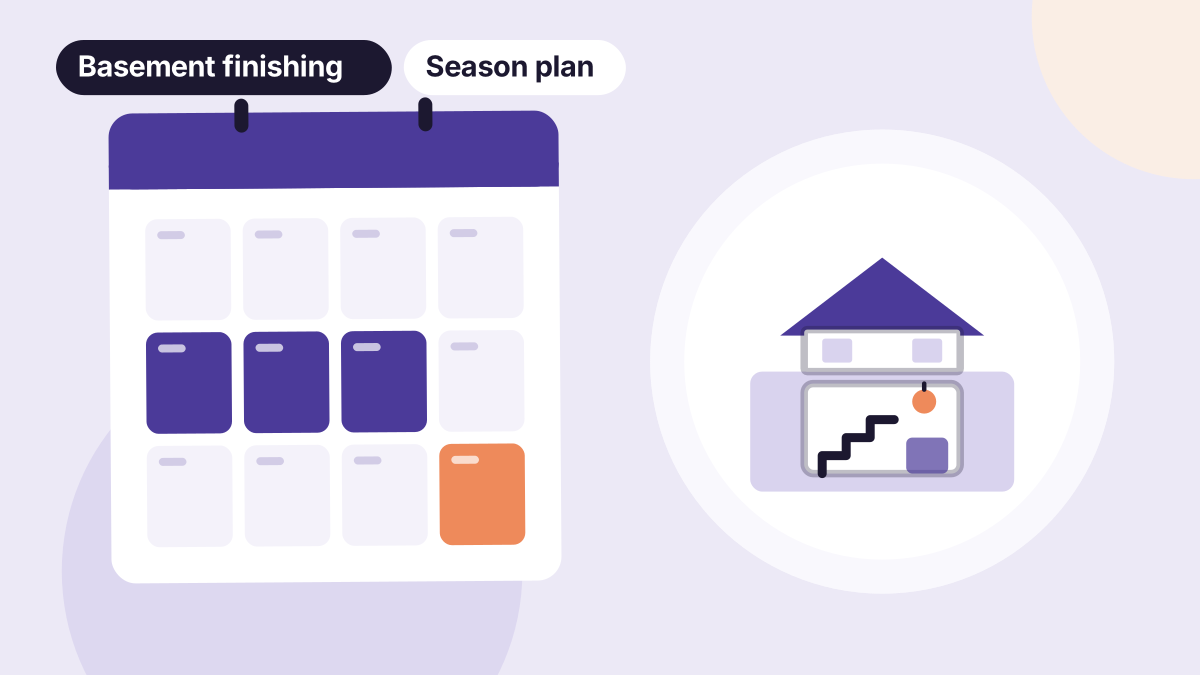
Demand through the year for basement finishing contractors
  1. January: Busy
  2. February: Busy
  3. March: Steady
  4. April: Steady
  5. May: Slow
  6. June: Slow
  7. July: Slow
  8. August: Steady
  9. September: Busy
  10. October: Peak
  11. November: Busy
  12. December: Steady
August
Planning restarts with the school year, and consults booked now become the winter's jobs. Permit time sits between the two: Fairfax County, for one, wants plans submitted and approved for any finished basement with a kitchen, a wet bar or a bedroom. Have pages, reviews and tracking live before the month begins.
September and October
Booking season for families who want the room before the holidays. Advertising under General contractor in Local Services Ads means a screening that usually takes Google three to four weeks once documents are in, which points to an August application.
January
EPA's National Radon Action Month. EPA tells homeowners to test before converting an unfinished basement into living space and again after the work, and puts radon behind about 21,000 lung cancer deaths a year. A radon page, and a test recommendation at every consult, suit the month.
March and April
Thaw and spring rain show where water gets in, and a wet wall has to be solved before any finish goes on it. The model code requires below-grade walls around living space to be dampproofed, and waterproofed where the water table runs high. Moisture checks booked now feed the fall schedule.
May to July
Decks, yards and vacations take the budget and the attention. EPA's mold guidance puts it plainly: the key to mold control is moisture control. Spend the quiet months on galleries from the winter's jobs, review requests and follow-up with the consults that did not sign.

Where finished-basement jobs start, in order of how much they bring

Ordered by the share of work each tends to bring a basement company in the Northeast or Midwest. CallRail's 2025 small business data found Google Ads, Google Business Profile listings and organic search started 37%, 23% and 22% of customer conversations, and basement buyers research for longer than most, so the first three are all Google.

Business Profile and the map pack

Where "basement finishing near me" gets settled. The primary Business Profile category tops the map pack list in Whitespark's 2026 survey of local search specialists, so a profile filed only as a general remodeler gives ground to one filed for basement work. Google allows one profile per staffed location, with a service area of about two hours' drive.

Search ads on finishing, egress and cost terms

In LocaliQ's 2025 home services data, Construction & Contractors (General) had the cheapest median click of 16 categories and the lowest conversion rate: plenty of searchers are pricing a job months out. Ads pay on specific searches such as basement finishing, basement bathroom and egress window installation, with negatives for do-it-yourself, job seekers and waterproofing you do not offer.

Pages that answer the research

Homeowners read about cost, egress, permits and damp walls well before they phone anyone. In BrightLocal's 2026 review survey, 54% of consumers went on to the business website after reading positive reviews, and 45% had asked ChatGPT or a similar assistant for a local recommendation, against 6% the year before. Both kinds of reader reward a page that answers one basement question properly.

Referrals, past clients and home shows

Michigan's licensing regulator tells homeowners to look for builders through friends and neighbors who were happy with their own jobs, at builder shows and open houses, and through the local homebuilders association. A finished basement gets shown to every guest who comes downstairs, so a referral ask at the final walkthrough and a current past-client list pay for themselves.

Local Services Ads, filed under General contractor

Google has no basement finishing category. General contractor is the nearest fit: Google runs a business check and an owner check on every advertiser there, asks for proof of general and professional liability cover, and verifies state licenses where they apply. Foundations services covers basement waterproofing, not finishing. Leads carry the Google Verified badge, and Google no longer credits leads for a job type you do not serve.

Facebook and Instagram

A bare basement beside the same room finished is about the plainest before-and-after in remodeling, and a long decision suits showing it again to people who read your cost or egress page. In WordStream by LocaliQ's 2026 Facebook benchmarks, the median lead-form lead in Home & Home Improvement cost $42.95 over the fifteen months to June 2026, and each one needs a quick, qualifying callback.

Local Services Ads with no basement category, marketplaces or your own pages

Three ways a basement company pays for a homeowner inquiry. The trade's particular problem, a project Google does not name, plays out differently in each.

QuestionLocal Services Ads (General contractor)Marketplaces such as Thumbtack and HouzzYour own site and Business Profile
Is basement work named?No. General contractor is the nearest category; Foundations services covers waterproofing onlyThumbtack runs a basement finishing cost guide with a free estimate requestYes, as precisely as you like: finishing, egress, bathrooms, apartments
What you are charged forEach valid call, message or bookingWhatever the marketplace sets; ask for it in writingNothing per lead; the cost is time spent on photos, pages and reviews
Leads you did not wantGoogle stopped crediting wrong-job and wrong-area leads, so new-build and addition calls are yours to pay forFind out how disputes and refunds are handled before you sign upFewer misfits, because you decide what is listed
What it takes to beginOwner and business checks, two kinds of liability cover, state licensing where it applies and a verified profile, usually three to four weeksWhatever vetting the marketplace runsOne verified profile for each staffed location, serving an area within roughly two hours by road
What builds trustA Google Verified badge on the adRatings that stay on the marketplaceRecent Google reviews, the license number in the footer and real photos of finished basements
Best atNear-me searches, if someone answers the phoneSmaller finishes while your own reviews buildThe homeowner reading about egress and moisture months before calling

In August 2026 Local Services Ads started turning into Performance Max campaigns inside Google Ads. Google's list for that first wave named trades such as plumbing, HVAC and roofing, not basement work; service-area businesses with no storefront are scheduled next, toward the end of 2026, with every other category due in 2027. Once an account moves, a manual maximum cost per lead is gone.

Basement consults that stall between the walk-through and the contract

A finished basement is a large, considered purchase, so most of the jobs a finisher loses go after the consult: to a decision nobody followed, an ad that breaks the lending rules, a contract signed without the cancellation forms, or a call where no one asked for the visit.

They said they'd think about it, and we let them

Houzz publishes planning times for kitchens and baths but not for basements, so we will not give you a number here. In our experience a basement consult is usually waiting on one of three things: the budget, the permit or the season after the holidays.

The fix. End each consult by asking what has to happen before they start, and when they expect to decide. Put one reminder on that date, send a finished basement with the same egress or bathroom layout in between, and close the file only after a clear no.

Our ads lead with a monthly payment

If an ad says what the monthly payment is, how many payments there are, how much is due up front or what the finance charge comes to, Regulation Z requires it to state the down payment, how the loan is repaid and the APR as well, noting if the rate can rise. Harvard's Joint Center found 76% of home improvement projects in the 2023 American Housing Survey were paid mainly in cash and 2% with contractor-arranged financing. Financed projects averaged larger, but that is a correlation, not proof that offering financing wins bigger jobs.

The fix. Either run "financing available" with no terms at all, or put the lender's full approved disclosure next to the payment. Leave out any claim that financing raises close rates, and confirm the wording with counsel.

The contract gets signed at the customer's kitchen table

The FTC's Cooling-Off Rule lets a buyer cancel a home sale of $25 or more for three business days, Saturdays included, even when the homeowner invited you in. At the moment of sale you must tell the buyer about that right, hand over two copies of a cancellation notice carrying your name, address and the date, and put the contract in the same language the salesperson spoke. A basement paid for with a loan secured by the house falls under Truth in Lending's rescission rules instead.

The fix. Make the contract packet identical for every rep: a dated contract, the cancellation statement in bold near the signature line, two completed notices, and a spoken explanation before the pen comes out. Schedule demolition after the window closes, and have counsel review the forms for each state you work in.

Whoever answers takes a message instead of booking the visit

Invoca's July 2026 home services benchmarks found the ask for an appointment came on 45% of phone leads, and the caller's details were collected on 62% (vendor data; Invoca has no basement category). Basement callers often open with a question about egress windows or a damp corner, and the call ends with an answer instead of a visit.

The fix. Answer the question in a sentence, then ask for the walk-through: "The only way to know for sure is to see it. I have Wednesday at 5 or Saturday at 10." Read back the time and address, and confirm by text.

A few large jobs a year means every consult gets a source

A basement company signs a few dozen jobs a year, not hundreds of service calls, so each lead is worth tracing before any budget moves. Found and Chosen then run side by side, because the homeowner who finds you reads the egress and permit pages before calling. The aim is to have all of it live by late summer, ahead of the September to January booking window.

Clear

Knowing which work produced which jobs.

Invoca's 2026 home services benchmarks put the call answer rate for its Construction group at 32%, the lowest of the sub-industries it reports. Tracking by source and by project type, from the first week, shows which channel produced a signed basement and which calls were missed while the crew was cutting drywall.

Found

Being the company that shows up when someone searches.

A Business Profile whose primary category and services say basement finishing, a service area drawn around the towns where basements exist, and separate pages for finishing, egress, bathrooms and apartments. If you hold the licenses, the Local Services Ads application under General contractor starts in the same weeks, because screening takes three to four.

Chosen

Being the one they pick once they have found a few.

Galleries sorted by room type, a price range taken from your own finished jobs, and plain explanations of permits, egress and moisture for your county. Your license number goes in the footer, as Minnesota requires on websites, and a review ask goes out at every final walkthrough, since 74% of people in BrightLocal's 2026 survey weigh only the past three months of reviews.

Kept

Turning one job into the next one and the referral.

NAHB's Remodeling Market Index for the second quarter of 2026 had its large-project reading, jobs of $50,000 or more, falling three points to 64, with cost pressures delaying larger work. In our experience a full finish with a bathroom often lands in that bracket, so a follow-up sequence for consults that are not ready, and a referral ask to past clients each fall, carry more weight this year.

Weeks 1 to 2

Calls and forms tracked by source, with each lead tagged as a full finish, a bathroom, an egress opening or an apartment. One definition of a qualified lead agreed: a site visit booked in a town you serve.

Weeks 1 to 6

Profile category and services rewritten for basement finishing, and the service area redrawn around towns with basements. Pages for finishing, egress, bathrooms and apartments go live, and the Local Services Ads application goes in if you are licensed.

Weeks 2 to 8

Galleries split by room type, a price range from your own jobs, and permit, egress and moisture explainers written from your county's rules. License number on every page, with a review ask built into the final walkthrough.

Weeks 6 to 12

A follow-up sequence for consults that are waiting on a budget, a permit or the season. Search ads switched on in time for the September to January booking window, with past clients asked for referrals.

Nobody benchmarks basement finishing alone, so start with these

The nearest published medians, chiefly the Construction & Contractors (General) row in LocaliQ's 2025 study of 3,211 home services search campaigns, which ran from April 2024 to March 2025. They show what the market pays, never what our clients pay. A basement lead should be weighed against the finished room it can turn into, not against the click that produced it.

$165.67
Cost per lead on Google search at the median for Construction & Contractors (General), the closest published match for basement work, April 2024 to March 2025
LocaliQ, 2025
2.61%
Of clicks in that category turned into a lead at the median, the lowest rate among 16 home service categories, though its $5.31 click was the cheapest
LocaliQ, 2025
4%
Share of the South's new single-family houses completed in 2025 that came with a full or partial basement, compared with 53% in the Northeast and 50% in the Midwest
Census Bureau, new housing 2025
$11,660
What most people pay to finish a basement in Thumbtack's data, inside a national range of $5,205 to $24,640 with a high end of $60,294; marketplace jobs skew small
Thumbtack, April 2026
What one lead costs at the median, closest category first
  • LocaliQ's Construction & Contractors (General) row, search ads, 2024 to 2025 window$165.67
  • Every home service category in that study, combined, same window$90.92
  • Every industry on Google search, twelve months to March 2026$66.69
  • Facebook lead objective for Home & Home Improvement, fifteen months to June 2026$42.95

A Facebook form lead costs about a quarter of a search lead in the nearest category, and it usually needs a qualifying call before anyone walks down the basement stairs. Sources: LocaliQ; WordStream by LocaliQ; WordStream by LocaliQ.

Our plans are affordable for a basement company with a couple of crews and one person doing the selling, and we scope them to the towns and room types you want more of. You get the free plan, with our first changes written out, before deciding anything.

Get your free plan

Who we help most: basement companies north of the slab line

NAHB's reading of the Consumer Expenditure Survey finds married couples with children aged 6 to 17 spend the most per remodeling household, $43,330 a year on average, and it names finished basements among the projects those growing families take on. The companies below sell to them in places where houses come with a basement to finish.

The design-build basement company in a northern metro

A licensed owner, a designer or estimator, and crews that work straight through the winter on a few dozen finishes a year. New homes in the East North Central states had the largest finished basements in NAHB's 2024 figures, 1,119 square feet on average. You want January booked by October and fewer inquiries from budgets that cannot stretch to a bathroom.

The remodeler whose best margins are below grade

Basement jobs share one services page with kitchens and decks, and the profile simply says remodeler. Whitespark's 2026 survey of local search specialists ranks a dedicated page for each service as the top local organic factor, so the first move is to give the basement line its own pages, photos and category.

The finisher who also cuts egress openings or waterproofs

You can sell the whole order of work: dry the walls, cut the opening, then frame and finish. Michigan licenses basement waterproofing as its own maintenance and alteration trade, and each step answers a different search, so each one earns its own page.

The firm building basement apartments

Under the 2021 model code, a new accessory dwelling unit in an existing basement needs an emergency escape opening, just as a new bedroom does. Owners planning a rental or a room for a parent search in different words from families planning a playroom, so the apartment work gets separate pages and ads.

Who we would point elsewhere. Contractors in mostly slab markets hoping basements will carry the business. Census counted a basement under just 4% of the new single-family houses completed across the South in 2025, and NAHB found 97.9% of new homes in the West South Central states sat on slabs in 2024. We would also hold off with a finisher who will not pull permits or print a license number, since Minnesota and Pennsylvania require the number in advertising and the homeowners worth having ask for it, and with any company that cannot return a call within a day while its consults take a season to close.

One county's checklist for a finished basement, and what it means for your estimate page

Fairfax County, Virginia, publishes a short guide called Typical Finished Basement Details, written against the 2021 Virginia Residential Code. It is one county’s rulebook, and yours will read differently, but it shows what a homeowner is really buying when they ask for a finished basement: a set of inspected minimums, not only drywall and carpet.

Room size and headroom. Habitable rooms of at least 70 square feet, and a ceiling of at least 7 feet, with some obstructions allowed down to 6 feet 4 inches above the finished floor. A homeowner with low ductwork wants to know before the consult whether the room will pass.

Life safety. Smoke alarms in the basement and in each basement bedroom, interconnected and hardwired. A minimum of R-13 insulation. An escape opening in every basement bedroom whatever the age of the house, and in any basement of a house built after October 1, 2003, which is stricter than the model code’s rule for existing basements.

Paperwork. A permit for any finished basement, plus plans submitted to and approved by the county when the space includes a kitchen, a wet bar or a bedroom, and again when a new window well is dug.

Other states put the paperwork squarely on the contractor. Michigan’s regulator tells homeowners that the contract should state that the contractor will obtain all required building permits before work begins, and that a licensed builder carries a pocket card they should ask to see. Minnesota wants the license number on every building permit application as well as in every ad.

What this means for marketing is simple, and in our experience few basement sites act on it. The questions that decide whether a homeowner calls are code questions. Will my ceiling pass? Does the spare room need a window? Who pulls the permit, and how long does the county take? A page that answers them for your county, with the inspections listed in the order they happen and the escape opening priced as its own line, does more selling than another row of finished photos. We write those pages from your county’s published documents and your own jobs, then link them from every estimate you send.
The free plan, from your map radius to your egress page

Any basement company that contacts us gets a free consult, a frank assessment of its position and a written plan that stays with the owner even if we never work together. Here is what it covers:

Get your free plan
  • Where you appear for "basement finishing", "finished basement cost" and "egress window" searches in the towns you serve, and which companies own the map pack and the paid spots above it.
  • Your Business Profile: primary category, services, the service area set against where basements actually are, and photos of your own finished rooms.
  • Your site: whether finishing, egress, bathrooms and apartments each have a page, whether a price range appears, and whether your license number sits where your state wants it.
  • Your reviews beside the two or three finishers you bid against most: how many, how recent and how they were answered.
  • How calls and forms are handled while crews are on site, and whether anyone can say which source produced last winter's signed jobs.
  • A 90-day sequence, set so pages and tracking are working before the September to January booking window.

What basement finishers ask before hiring us

Can I run Local Services Ads for basement finishing?

Not under that name. Google has no basement finishing category, so most finishers would apply as General contractor. That means owner and business checks, proof of two kinds of liability cover, state licensing where it applies and a verified Business Profile, and Google says the screening usually runs three to four weeks. Our approach to Local Services Ads and search.

Will Local Services Ads send me jobs I do not do?

They can, and you pay for them. A General contractor listing can draw calls about new builds or additions, and Google no longer credits leads marked "job type not serviced" or "geo not serviced". We set job types and the service area narrowly, then check every lead against the work you actually take.

What does a basement finishing lead cost?

Nobody publishes a figure for basements specifically. LocaliQ's closest category, Construction & Contractors (General), ran a median $165.67 per Google search lead between April 2024 and March 2025. For Facebook lead forms in Home & Home Improvement, WordStream by LocaliQ reports $42.95 over the fifteen months to June 2026. Both describe the market, not our results.

When should a basement company spend the most on ads?

From August through October, when families book the winter's work, with a second push in January. EPA runs National Radon Action Month every January and tells homeowners to test before converting a basement, which gives a finisher a useful reason to be in front of them. Keep the profile, pages and reviews running all year.

How do I stop getting inquiries from budgets far below the job?

Publish a price range from your own jobs, and explain permits, egress and moisture before the call. Thumbtack's data shows how far apart expectations sit: most people pay about $11,660, the national range is $5,205 to $24,640, and the high end is $60,294. A homeowner who has read your range and your egress page arrives with a realistic number. How we build pages that qualify the lead.

Does my license number have to be on my website?

In Minnesota and Pennsylvania, yes. Minnesota wants it on business cards, contracts, all advertising including websites, and building permit applications; a license is required to contract for more than one special skill, such as framing, insulation and drywall, unless gross annual receipts stay under $15,000 with a certificate of exemption. Pennsylvania's registration applies once a contractor passes $5,000 of home improvement work a year, and it wants the number, in the form PA123456, in ads, contracts, estimates and proposals. Michigan requires a license for work of $600 or more.

Should my marketing mention radon?

Yes, as advice rather than alarm. EPA says to test before turning an unfinished basement into living space and to test again after the work, and recommends testing every home. Suggesting a test before the estimate shows you know the job; leave readings and health claims to the test and to EPA's own words.

Is demand for large basement projects slowing in 2026?

For large projects, somewhat. NAHB's Remodeling Market Index stayed positive at 61 in the second quarter of 2026, but the reading for jobs of $50,000 or more fell three points to 64, and NAHB says cost pressures are delaying larger projects. That makes follow-up on unsigned consults worth more, not less. How we build the follow-up.

How many reviews does a basement company need when it finishes a few dozen jobs a year?

At least 20, with some from the last three months. In BrightLocal's 2026 survey, 47% of consumers ruled out businesses showing under 20 reviews, and 74% said only the past three months count. Ask at every final walkthrough. The FTC's 2024 rule bars rewards tied to a positive review, so the ask goes to every client, not only the delighted ones.

Can you market basement apartments separately?

Yes, and they should be. Under the 2021 model code a new accessory dwelling unit in an existing basement needs an emergency escape opening, just like a new bedroom, and counties add their own rules. People searching for a basement apartment use different words from people planning a family room, so the work gets its own page, photos and ads.

Send us your towns, and we will show you who gets the basement calls

Tell us the company, the towns you finish basements in and roughly how many jobs include a bathroom, a bedroom or an apartment. You get back where you rank for finishing, egress and cost searches in those towns, how your profile and pages compare with the finishers you bid against, whether your license number and permit wording meet your state's rules, and the three or four changes we would start with ahead of September bookings.

  • A free consult. A real conversation about your business, your area and what is not working yet.
  • An honest evaluation. Where you stand in search, ads and follow-up next to the businesses you lose customers to.
  • A plan you keep. What we would fix first and why. It is yours whether or not you work with us.

Form not loading? Email hello@beyaoshy.com and we will reply within one business day.

Sources

The figures on this page come from these published sources, checked on October 3, 2026. Benchmarks are averages across many advertisers; your market will differ, which is what the free plan is for.

Agencies with basement finishing contractors among their clients: see the partner model.