Skip to content

Locksmith marketing that shows callers and Google you are the real shop nearby

In one Google and UC San Diego study, 11% of locksmith search results were fraudulent, and Google now holds every locksmith ad until the shop passes Advanced Verification, a video interview included for Local Services Ads. Someone locked out at 11 pm picks within minutes, usually the first listing that looks local. We make your shop the one that plainly is: verified, licensed in the ad, one real address, marked vans in the photos and reviews from this month.

Taking on new locksmiths now

Reviewed by Niomi Ascot on

Lockouts ignore the calendar; rekeys follow the moving trucks

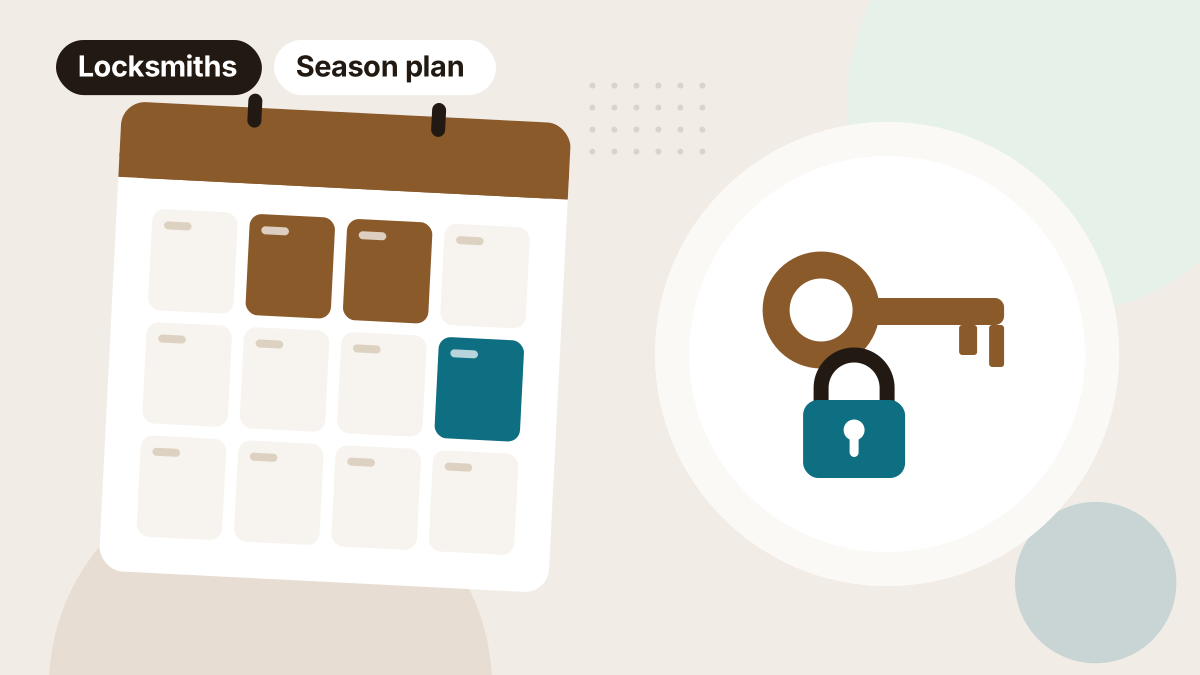
No one publishes month-by-month locksmith demand, so these ratings are our experience rather than a statistic. Lockouts arrive every day of the year, and Google files the trade as urgent because people call when they are locked out of a home, car or office. What moves is the planned work: rekeys after a move, campus turnovers, commercial jobs before budgets close.

Demand through the year for locksmiths
  1. January: Steady
  2. February: Steady
  3. March: Steady
  4. April: Busy
  5. May: Busy
  6. June: Peak
  7. July: Peak
  8. August: Busy
  9. September: Steady
  10. October: Steady
  11. November: Steady
  12. December: Slow
Every night of the year
Lockouts do not wait for business hours, and HomeAdvisor's cost guide shows after-hours calls adding $150 to $250 to the bill. State the after-hours fee on the phone and on the site before the caller asks: a low quote that grows at the door is the bait-and-switch regulators warn about.
February and March
Google averages three to four weeks to finish Local Services Ads screening once documents are in, and locksmiths get no pre-badge ads meanwhile. Apply now to be live when spring moves begin, with the license, insurance certificate and business registration ready for the video interview.
April to August
New owners and new tenants want the locks changed, and landlords rekey at each turnover. In Texas, the license exemption for installing pre-keyed locksets applies only when there is no rekeying or internal manipulation, and only to someone who does not use the word locksmith. A licensed shop should name rekeying plainly in its ads and on its pages.
June and July
Heat turns a child or pet locked in a car into a true emergency, and this year's regulator warning came in summer: Connecticut issued its locksmith scam alert on July 16, 2026. Its checklist tells consumers to look up your address in street view and check your area code, so make sure both hold up.
October to December
Commercial rekeys, access control and exit device work often land before year-end budgets close. Call property managers and facility contacts in early fall, and keep emergency coverage running through the holidays, when lockouts carry on and the office is thin.

How a locked-out caller picks a locksmith, and where planned work starts

Biggest source of jobs first, by our judgment rather than any survey; the facts inside each row are published, with the source named. The first two are also where the fake listings compete hardest.

Google Maps and the map pack
Google said in 2019 that Maps connects more than one billion phone calls a month, and a lockout is about as phone-first as a search gets. It is also where impersonators work: the Google and UC San Diego study found fraudulent results at 11% nationally and 83.3% in West Harrison, New York. A real shop wins by being checkable: a staffed address or a hidden service area, one phone number, photos of marked vans.
Local Services Ads
Google has a Locksmiths category with the Google Verified badge, and locksmiths get an extra layer of screening on top of the usual checks: background checks that reach past the owner to each technician sent into a customer's home or business, insurance certificates for general and professional liability, the state license wherever one is needed, plus Advanced Verification with a video interview. The trade gets no pre-badge ads, so nothing shows until all of it clears.
Search ads, once Advanced Verification clears
Google restricts locksmith ads in the US until the advertiser passes Advanced Verification, and in Germany, Sweden, Belgium, Spain and the Netherlands it does not allow them at all. Once approved, split campaigns by job: lockouts, car keys, rekeys and commercial work are searched differently and are worth different amounts.
Roadside programs, dealers and insurers
Connecticut's Department of Consumer Protection tells consumers to call a locksmith with a local storefront or a roadside assistance organization such as AAA. In our experience those programs and car dealers are a steady source of referred and subcontracted automotive work for a shop they already trust.
Property managers and commercial accounts
Rekeys at every tenant turnover, master key systems, exit devices and access control. A property manager who trusts one locksmith tends to call that locksmith for years, so this channel runs on follow-up, service records and a quick answer rather than on ads.
Referrals, reviews and AI assistants
The FTC has told consumers since 2008 to research a locksmith before they need one and save the number in their phone. BrightLocal's 2026 review survey has 45% of consumers asking ChatGPT and other AI tools for local recommendations, against 6% the year before, and an assistant can only recommend what it can find written about you.

Why a locksmith's plan starts with proof, not reach

Most plans we write begin with being found. A locksmith's cannot, because being found is gated: Google will not run your ads until verification clears, and in the 2017 Google and UC San Diego study locksmiths made up 25.7% of all abusive Maps listings, more than any other group. So the plan starts with what makes you checkably real, and the verification clock starts the same week.

Chosen

Being the one they pick once they have found a few.

A caller comparing three listings can tell the real one if you let them: a staffed address or a hidden service area, a business name with no city or keyword stuffed into it, the license number on the profile and site, photos of marked vans and named technicians, and reviews from the last few weeks with an owner reply under each.

Found

Being the company that shows up when someone searches.

The Advanced Verification and Local Services Ads applications go in during week one, because locksmiths get no pre-badge ads and the document review, background checks and video interview average three to four weeks. Fake competitors are reported with evidence in the same weeks; removing them is Google's decision.

Clear

Knowing which work produced which jobs.

In the 2017 study, 90.6% of the locksmiths among abusive on-call listings used disposable VoIP numbers, and Connecticut now describes fakes as many numbers ringing one call center. So tracking numbers go on ads and the site, never as extra numbers on the profile, and every call is tagged as lockout, car key, rekey or commercial.

Kept

Turning one job into the next one and the referral.

A landlord who rekeys at every turnover, a property manager with a master key system and a driver whose fob you programmed are the jobs that come back. Turnover reminders, service agreements and key records keep them with you, which a call center with a borrowed name cannot do.

Weeks 1 to 2

Profile audit against Google's rules (name, address or service area, categories, photos), the license number checked on every ad and page for your state, and the Advanced Verification and Local Services Ads applications filed with license, insurance and registration documents.

Weeks 3 to 6

Proof pages on the site: who your technicians are, your license, your vans, how pricing and after-hours fees work. A review request texted after every job, an owner reply to every review, and call tracking on ad and site numbers only.

Weeks 7 to 12

Search ads and Local Services Ads switched on as approvals land, split into lockouts, car keys, rekeys and commercial work. Outreach to property managers and roadside programs, and Local Services Ads reports saved before the account moves into Google Ads.

Locksmith shops that can show a license, a van and a face on camera

ALOA counted 13 states requiring a locksmith license as of January 2025. Licensed or not, every shop below has a real base, its own technicians and an owner who can sit through Google's verification. That is the starting line for everything else on this page.

The mobile locksmith with one to five vans

Lockouts, rekeys and lock changes from a home base, often with the owner driving one of the vans. This shop loses the most calls to listings that are not locksmiths at all, so the work starts with a clean service-area profile, the license number where the state wants it and the Google Verified badge.

The storefront with a key counter

A staffed shop can show its address on the map, which Google allows and a fake operator cannot copy. Rekeys, safes, smart locks and hardware sit beside the emergency calls, and the counter itself is proof worth photographing: street view should show the same sign the caller sees in your photos.

The automotive key specialist

HomeAdvisor's cost guide (vendor data, updated June 2026) puts transponder key replacement at $100 to $400, against $50 to $300 to open a car. That spread earns its own campaigns, a page per key type and steady ties with dealers and roadside programs that send overflow work.

The commercial and access-control shop

Master key systems, exit devices and access control are sold to property managers and facility staff over years, not to a stranger at midnight. ALOA runs separate divisions for institutional locksmiths and for safe and vault technicians, and this side of the trade grows through follow-up and service agreements more than through ads.

Who we would point elsewhere. Call centers that take locksmith calls nationally and pass them to whoever is nearby under an assumed name: that is the model ALOA and the FTC have warned consumers about for years, and we will not market it. The same goes for anyone who cannot clear Google's background checks or its video interview, and for owners who want a Business Profile in every town they drive to. Google's guidelines exclude virtual offices, and those profiles risk suspension.

What Local Services Ads, lead sites and your own listing each make a locksmith prove

Three ways a locksmith pays for calls, with facts only and no prices. In this trade the real difference is what you must prove before anything runs, and how much of that proof the caller gets to see.

QuestionLocal Services AdsMarketplaces such as Angi and ThumbtackYour profile and website
What you prove firstBackground screening of the owner and every technician you send out, liability cover, a state license wherever the law asks for one, and Advanced Verification with a video interviewWhatever that marketplace screens for; ask what it checks before it lists youVerification of a profile at a staffed address, or one with the address hidden and a service area set; virtual offices are excluded
Ads before approvalNone: pre-badge ads are not offered to locksmithsDepends on the siteThe profile shows once verified; search ads also wait for Advanced Verification
How you payPer valid lead, with a message lead typically cheaper than a callWhatever the marketplace charges; get its terms and refund policy on paperNo media cost; your time on photos, posts and review replies
Leads outside your workNo credits for a wrong job type or area, so set job types with careAsk how a disputed lead is handled, in writingNo refunds needed; the services and towns listed are your choice
What the caller seesThe Google Verified badgeThe marketplace's own label and reviews, invisible on GoogleYour Google reviews, license number, storefront or vans, and named technicians
What changes in 2026 and 2027Moving into Google Ads; locksmiths were not named in the August 2026 first phaseNot affected by the moveOnce an account migrates, the profile feeds the campaign
Best atLockout and "locksmith near me" calls answered liveFilling rekey and lock change slots in a new areaThe careful caller who checks street view and your area code first

Shops that work from vans with no storefront sit in the group Google has scheduled for late 2026, and whatever is left moves in 2027, so a mobile locksmith's switch is likely to come at the end of this year or during the next. After it, the badge carries over, license and insurance reverification stop, manual bidding ends and the old reports do not transfer, so export them first.

No one publishes a locksmith lead cost, so we plan from these

Neither WordStream nor LocaliQ reports a locksmith category, so the lead costs below come from the nearest published ones: LocaliQ's median across home service trades, every industry combined, and Home & Home Improvement on Facebook. The job value is HomeAdvisor's, which is vendor data. None of it is our results, and the free plan swaps it for estimates in your own city.

11%
Of locksmith search results were fraudulent in the Google and UC San Diego study of Maps listings from June 2014 to September 2015
Google and UC San Diego, 2017
10,000+
Listings Google removed in 2024 from one group impersonating real locksmiths, which it also sued
Google, 2025
13 states
Required locksmith licensing as of January 2025, Texas, California and New Jersey among them
ALOA, 2025
$163
Average locksmith job in HomeAdvisor's cost guide, with most between $107 and $242 (vendor data)
HomeAdvisor, June 2026
What one lead costs against one average locksmith job
  • Average locksmith job, HomeAdvisor cost guide (vendor data, June 2026)$163
  • Home services median on Google search, all trades in LocaliQ's report, April 2024 to March 2025$90.92
  • All-industry median on Google search, year ending March 2026$66.69
  • Home & Home Improvement median on Facebook lead forms, fifteen months ending June 2026$42.95

Medians as published, beside one vendor's average ticket. At the home services median, a search lead costs more than half an average job, which is why lockout ads need a tight budget and car key and commercial work deserve campaigns of their own. Sources: HomeAdvisor; LocaliQ; WordStream by LocaliQ; WordStream by LocaliQ.

Our plans are affordable for a one-van locksmith and are shaped by the jobs you want more of: car keys, rekeys, commercial accounts. You get the free plan in writing before anything else, so you can judge our thinking while Google is still reviewing your verification, without spending a dollar with us.

Get your free plan

After dark and on weekends: when a locksmith's paid calls go unanswered

Lockouts keep their own hours. A shop staffed nine to five misses much of the time when its listing does the most work, and the next listing, real or not, takes the job.

The evening and weekend lockouts

In BrightLocal's study of calls placed from Google listings between September 2017 and December 2018, locksmiths got 34% of their listing calls after 5 p.m., a further 8% before 9 a.m. and 31% at weekends, while most businesses took nearly all of theirs on weekdays. The data is old and counts only listing calls, so check the pattern against your own log.

The fix. Pull 90 days of calls from your phone system and chart them by hour and weekday. Cover the busiest uncovered block first, with a technician on call, an answering service that can dispatch, or an AI agent that tells callers it is automated. Then put the hours you really cover on the profile.

Voicemail at midnight

Someone standing beside a locked car does not leave a message. Invoca's platform data shows fewer than 3 in 100 callers who reach voicemail do so. Each unanswered night call goes to the next listing, and in this trade that can mean a call center trading under a borrowed name.

The fix. Keep the night greeting to ten seconds: the shop name and "we'll text you back from this number in two minutes." Then send that text, once, with no offer or link in it, and have a technician call within ten minutes. Ask counsel to review the text-back wording.

Twenty-four hours on the profile, a phone that rings out

In Whitespark's 2026 survey, local search experts ranked being open at the time of the search fifth among map factors, which tempts shops to list 24 hours. Google's guidelines ask for the hours you actually serve customers, and Whitespark's author warns businesses that customers might visit never to list anything but their real hours. A 24-hour listing that goes unanswered at 2 a.m. loses the job and invites a one-star review.

The fix. List the storefront's real hours with holiday hours added. If mobile technicians genuinely work around the clock, say so on the site and in the business description, and only once the night phone reaches a person who can dispatch.

Night calls handled by a bot that passes as human

Many shops now hand nights to an answering service or an AI agent. Maine's 2025 law bars using an AI chatbot, voice included, in a way that could lead a reasonable consumer to think they are talking to a person, unless they are clearly told. Recording is its own question: the Reporters Committee for Freedom of the Press lists California, Florida, Pennsylvania and Washington among the states that generally require every party's consent.

The fix. Open every overnight call with the shop's name, a plain line that the caller is speaking with an automated assistant when that is true, and a recording notice if calls are recorded, so the notice is on the recording. Transfer to the on-call technician after two answers the system misunderstands. Confirm the setup with counsel for each state you serve.

What a fake locksmith listing looks like to Google, and how a real shop shows the opposite

In 2017 Google and researchers at UC San Diego published a study of abuse on Google Maps, built from listings active between June 2014 and September 2015. Locksmiths were the largest single group of abusive listings, 25.7% of them. The data is old, and Google says its detection has improved since, but the fingerprints it found are the same ones regulators describe today, and every one of them has an honest opposite a real shop can show on purpose.

Phone numbers that can be thrown away. Among abusive on-call listings, 90.6% of the locksmiths used VoIP numbers. Connecticut’s consumer protection department said in July 2026 that phony locksmith businesses run several numbers into one call center, often out of state or out of the country. The opposite: one local number on the profile, the site and the van, kept for years. Tracking numbers belong on ads, not on the listing.

Addresses that move. In the same study, 31.2% of those locksmiths used verification hubs, and 80.4% of the abusive mail-verified locksmith listings changed ZIP codes while they ran, against 9.7% of active real ones. Connecticut now tells consumers to search the address and look at it in street view. The opposite: a staffed storefront that matches its photos, or a hidden address and an honest service area.

No name and no face. Connecticut’s alert says scam technicians arrive in unmarked vehicles, with no uniform and no identification, and tells consumers to refuse service from anyone who cannot give a registration number. New Jersey requires a licensed locksmith’s vans to carry the business name, the license number and the town on both sides. The opposite: photos of marked vans and named technicians, and the license number on every ad and page.

Praise that was paid for. Scammers buy fake Google reviews, Connecticut warns, and a reviewer with a single review is a reason to look twice. The FTC’s 2024 rule makes buying reviews illegal for every business. The opposite: a steady run of reviews from real jobs, each one answered by the owner.

A price that grows on site. The FTC warned in 2008 that some locksmiths advertising locally were not local at all, and regulators still describe the same bait-and-switch: a low quote on the phone and a bigger bill at the door. The opposite: a price range and the after-hours fee stated before anyone drives out.

None of this needs a bigger budget. It needs a profile, a site and ads that already answer what a careful caller, and Google’s own reviewer, will ask.
Five locksmith marketing habits that read as fake, or break a state rule

A Business Profile in every town you drive to
Google's profile rules exclude virtual offices and warn that stuffing extra words into a business name can get a profile suspended. Those are also the fingerprints of fake listings: in the 2017 study, 80.4% of abusive mail-verified locksmith listings changed ZIP codes while they ran, against 9.7% of active real ones. Keep one profile per staffed location and list the other towns as service areas.
No license number on the ad
Texas wants the company name, the address on file with DPS (unless it is a home address) and the license number in every ad, business cards included. California fines $500 for the first ad without the license number and $1,000 for each one after, directory listings included. New Jersey sets the words that introduce the number, "Locksmith Business Lic. #" or the long form, and wants the business name on both sides of each van in letters at least three inches tall.
The low quote that grows at the door
Connecticut's consumer protection department calls locksmith scams a bait-and-switch: a cheap price on the phone, a much bigger bill on site. An honest shop cannot win that comparison on price, only on trust, so state a service-call range and the after-hours fee in ads, on the site and on the phone.
Waiting to apply for verification
Until Advanced Verification clears, a locksmith can run neither US search ads nor an early, unbadged version of Local Services Ads, which leaves an unverified shop with no paid Google option at all. Every week of delay is a week the verified shops, and any fake that slipped through, take the calls.
Buying reviews to catch up with the fakes
The FTC's 2024 rule bans fake and bought reviews, and Connecticut's alert tells consumers that scammers pay for fake Google reviews and that a reviewer with only one review deserves a second look. Ask every real customer by text after the job, and reply to each review under your own name.

What the free plan checks for a locksmith, from street view to license number

No charge for the consult, a straight read on how the shop looks to a stranger, and a written plan you hold on to whether we work together or not. For a locksmith it covers:

Get your free plan
  • The listings that show today for "locksmith near me", "car lockout" and "rekey locks" in your towns, in the map and in the badge ads above it, and which of them look like real shops.
  • Your profile checked the way Connecticut tells consumers to check one: the address in street view, the area code, the reviews and who wrote them.
  • Where your Google Ads Advanced Verification and Local Services Ads screening stand, and which documents are still missing.
  • Your license number and its wording checked on ads, the site, the profile and van photos against your state's rule.
  • What happens when a lockout call comes in at night, and whether your calls can be told apart as lockouts, car keys, rekeys or commercial work.
  • A ninety-day order of work with the verification clock started in week one, and what we would not touch.

Questions locksmith owners ask about verification, licenses and fake listings

Why won't Google run ads for my locksmith business?

Because locksmith ads are restricted in the US until you pass Google's Advanced Verification. For Local Services Ads, Google describes that check as a review of your Ads account, publicly available data and video interviews. In Germany, Sweden, Belgium, Spain and the Netherlands it does not allow locksmith ads at all. How we run Google Ads for verified locksmiths.

What happens in Google's video interview for locksmiths?

Google talks to you on camera as part of Advanced Verification, alongside a review of your Ads account and publicly available data. Its help page says the check looks at whether your business registration is valid and for evidence of unauthorized or misleading practices. Have your license, registration and insurance certificate ready, and make sure your name and address match everywhere they appear.

Can I run Local Services Ads while my verification is pending?

No. Locksmiths are on Google's short list of categories with no pre-badge option, so your ad appears only once the background checks, insurance, license and Advanced Verification are complete. Screening averages three to four weeks once your documents are in, by Google's own count, which is why we file in the first week.

Can you get the fake locksmith listings near me taken down?

We can report them with evidence, and Google does act: in 2024 it removed more than 10,000 listings run by one group impersonating locksmiths and then sued the people behind them. Removal is Google's call, though, so the plan also builds the proof a fake cannot copy: a license number, a real address, named technicians and fresh reviews.

Should I have a Business Profile for every town I serve?

No. One profile per staffed location, with the other towns listed as service areas. Google's guidelines exclude virtual offices and tell a service-area business to hide its address. Extra profiles look exactly like the fake listings Google hunts, and a suspension takes your reviews off the map with it. How we set up locksmith profiles.

Do Texas, California and New Jersey locksmiths need a license number in Google ads?

Yes, in all three. Texas requires it with the company name and the address on record in any advertising, business cards included. California requires it in paid ads and directory listings and fines $500, then $1,000 per violation. New Jersey also fixes the words that introduce the number. Connecticut registers locksmiths and tells consumers to refuse a technician who cannot give a registration number.

When will my Local Services Ads move into Google Ads?

Probably late 2026 or 2027. Google began the move in August 2026 with a list of home service categories that did not include locksmiths. Its schedule names storefront-free service-area businesses for the end of 2026 and leaves all other categories to 2027. Export your Local Services Ads reports before then, because they do not carry over.

How do I get more car key and commercial work instead of cheap lockouts?

Give each its own campaign and page. HomeAdvisor's cost guide puts a transponder key at $100 to $400 against $50 to $300 to open a car, and commercial work comes from property managers who stay with one locksmith for years. Lockout ads then run on a tight budget and set hours, and the higher-value searches get the rest.

How many Google reviews does a locksmith need?

Enough that a careful caller sees recent, real ones. In BrightLocal's 2026 review survey, nearly half of consumers ruled out a business showing fewer than 20 reviews, and three in four weighed only the last three months. In a trade where fake reviews are common, owner replies and reviews that name the technician count for more. How we run review requests.

Find out whether a stranger at a locked door would pick you

Tell us your shop name, the town you work from and how your work splits between lockouts, car keys, rekeys and commercial jobs. You get back the names sitting in your map pack and badge ads today, which of them look fake, where your verification and license wording stand, and what we would change first.

  • A free consult. A real conversation about your business, your area and what is not working yet.
  • An honest evaluation. Where you stand in search, ads and follow-up next to the businesses you lose customers to.
  • A plan you keep. What we would fix first and why. It is yours whether or not you work with us.

Form not loading? Email hello@beyaoshy.com and we will reply within one business day.

Sources

The figures on this page come from these published sources, checked on October 3, 2026. Benchmarks are averages across many advertisers; your market will differ, which is what the free plan is for.

Agencies with locksmiths among their clients: see the partner model.