Skip to content

Roofing company marketing for storm weeks and every quiet month between them

More than a quarter of the country's hail reports land in May and fewer than one in a hundred in January, so a roofer's phone follows the weather, not the calendar. When it rings, the homeowner has often met a door knocker already and has an adjuster scoping the claim. We make your company the licensed local name they find and trust, keep every ad inside the deductible and license-number laws, and build the repair and referral work that carries you through the slow months.

Taking on new roofing companies now

Reviewed by Niomi Ascot on

Roofing has the highest Google cost per lead of 16 home service trades

Published medians for the categories roofers fall into, mainly LocaliQ's 2025 home services report (3,211 campaigns, April 2024 to March 2025). They describe the market, not our results. A $228 lead reads very differently against an insurance-funded replacement than against a patch job, which is why we report replacement, repair and insurance work separately.

$228.15
Median Google search cost per lead for Roofing & Gutters advertisers: the highest of 16 home service categories, April 2024 to March 2025
LocaliQ, 2025
3.70%
Median share of Roofing & Gutters search clicks that became a lead, the second lowest of the 16 categories
LocaliQ, 2025
$14,747
Average homeowners insurance claim for wind and hail damage, 2019 to 2023, excluding Texas and Alaska
ISO via Triple-I
18%
Of 2023 spending on exterior replacements such as roofing was funded by homeowner insurance settlements
Harvard JCHS, 2025
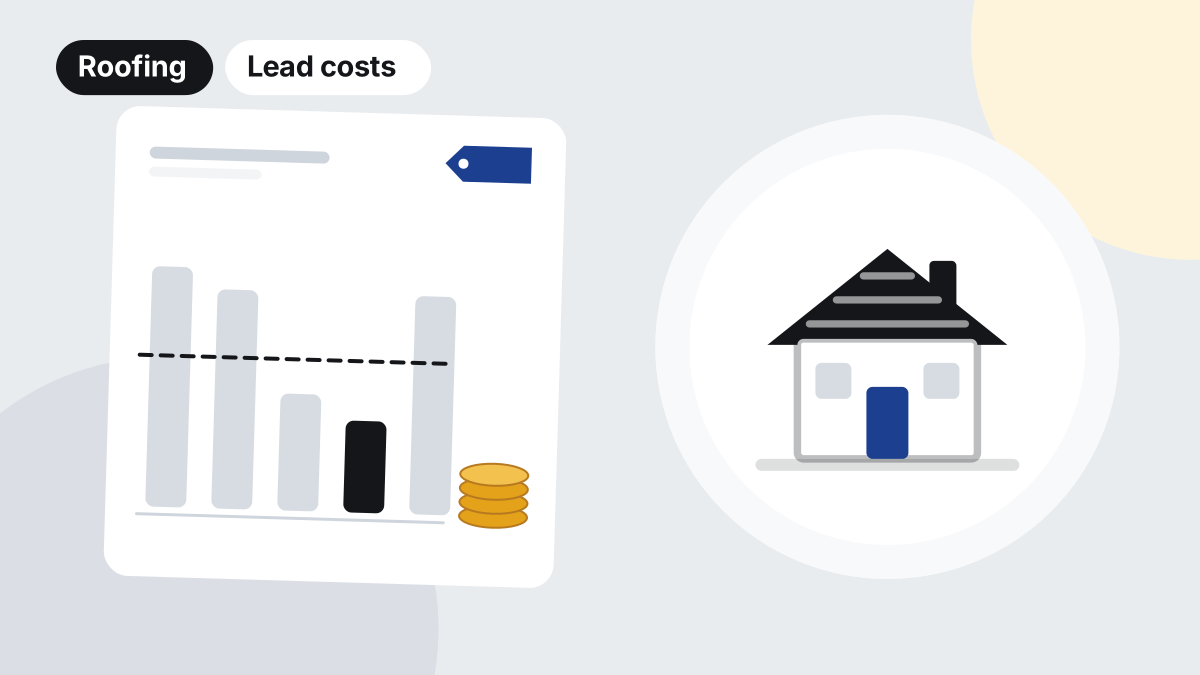
What one lead costs: roofing against the wider market
  • Roofing & Gutters, Google search, April 2024 to March 2025$228.15
  • All 16 home service categories, Google search, same period$90.92
  • Every industry, Google search, April 2025 to March 2026$66.69
  • Home & Home Improvement, Facebook lead ads, April 2025 to June 2026$42.95

Roofing search leads cost the most because so few clicks convert. Facebook form leads cost less and need more follow-up before anyone gets on a ladder. Sources: LocaliQ; WordStream by LocaliQ; WordStream by LocaliQ.

Our plans are affordable for an owner-run roofing company with a couple of crews, and they are scoped to your season and the work you want more of, not to a package. You see what we would do first, in writing and free, before you spend anything with us.

Get your free plan

The roofs you inspected and never signed

A roofing company pays for the lead, the ladder and the inspection, then loses the job later: an estimate nobody chases, a contract missing its cancellation notices, a financing line that breaks the rules, or a storm-week phone that rings out.

Estimates go out and nobody calls back

Only 16% of contractors told ServiceTitan they follow up with homeowners the same day on unsold estimates. The figure comes from its 2026 market report on roofing and exterior work, built on a survey it paid for of over 1,000 roofing-focused firms, which skews toward the bigger ones. On insurance work the homeowner is often still waiting on an adjuster, and in our experience the roofer who is still in touch when the claim settles gets the signature.

The fix. Run four touches on every unsigned estimate. Same day, a text from the estimator with the estimate attached and a sentence repeating what worried the homeowner, like "the soft spot over the garage." Day 2, a call: "Anything in there you want me to walk through?" Day 7, the photos from their roof or a finished job on a nearby street. Day 14: "Keep it open, update it later, or close it out?" On a claim, ask when the adjuster is coming and set one reminder for the day after.

Signed on the spot, with no three-day notice

The FTC Cooling-Off Rule lets a buyer back out of most sales of $25 or more made in their own home until midnight of the third business day, and Saturday counts as one. At signing, the seller must tell the buyer about it and leave a dated contract plus two copies of a cancellation form. California goes further: a homeowner pays no more than 10% of the price or $1,000 up front, whichever is smaller, and buyers 65 and over get five business days to cancel.

The fix. Put a checklist in every estimator's folder: say the cancellation right out loud, hand over two completed cancellation notices showing your business name and address and the transaction date, and date the contract. A repair the homeowner asked you to come and do falls outside the rule, but anything extra sold on that visit is covered, and waiving the three days for an emergency takes a buyer-initiated call plus the buyer's own handwritten, signed and dated statement. California contractors use the state's notice forms. This is not legal advice; confirm it with counsel.

A monthly payment on the yard sign and nothing else

Truth in Lending's advertising rule, Regulation Z, binds whoever advertises the credit, so a roofer's yard sign counts as much as the lender's brochure. Name a monthly figure, how many payments, or what is due up front, and the same ad owes the reader the APR, the full repayment schedule and the amount down. Deferred-interest promos carry a rule of their own: the words "if paid in full" and the length of the promo sit right next to each "no interest" claim, not in small print at the bottom.

The fix. Run financing copy one of two ways: "Financing available" with no numbers, or the lender's approved wording with every required term, including the down payment even when it is zero. A written estimate for one homeowner is not an advertisement under the rule, but the same offer sent to every open lead may be. Ask the lender whether the product is open-end or closed-end credit, because the wording rules differ, and have counsel review the promo.

Storm week, and nearly half the calls never reach a person

Invoca's 2026 chart has no roofing bar. Across home services, 52% of calls reached a person, and on phone leads staff captured the caller's details 62% of the time. In our experience, in a hail week that gap is the difference between an address on the inspection list and a homeowner who signs with the next truck down the street.

The fix. Line up overflow answering before your storm season starts, an answering service or a second line staffed from the office, with one script: name, callback number and address first, then the damage. Text any missed caller once from the same number, with no offer in it. And since October 1, 2026, a missed Local Services call during your listed hours can be billed if the caller holds past 20 seconds, so trim those hours to the ones someone covers.

Where roofing calls come from, before and after the storm

Ranked by how much work each usually brings a residential roofer. Two of them are not ad channels at all, because neighbors and insurers shape a roofing job more than they shape most home repairs.

  1. Google Search and the map pack

    BrightLocal's July 2026 survey of 1,227 consumers found 52% started their latest local search on Google Search and 9% on Google Maps, and 73% of those searches began on a phone. A leak call is usually someone standing in the kitchen with a bucket, so the profile has to answer: licensed, insured, local, open now.

  2. Local Services Ads

    Roofers is its own category, with the Google Verified badge above the map. Google ranks these ads on rating, review count, response time, photos and completed verification checks. Since August 2026 Google has been moving them into Google Ads, and roofing was named in the first phase.

  3. Search ads on leak, storm and replacement terms

    So few roofing clicks turn into leads that these ads earn their place only on the right searches: repair and storm damage during storm weeks, replacement in the shoulder months. Every roofing account needs a long list of negatives for the people looking for jobs, shingles to buy or how-to videos.

  4. Neighbors, referrals and the adjuster's report

    The FTC tells homeowners to ask people they trust for recommendations before any home repair, and the Texas Department of Insurance tells them to compare bids with the adjuster's report before settling. A finished roof, a yard sign and a neighbor who watched the crew work are still the cheapest leads a roofer gets.

  5. Review sites and AI assistants

    Google's share as a review source fell from 83% to 71% in BrightLocal's 2026 review survey as Facebook, the BBB and Angi gained ground, and use of ChatGPT and similar tools for local recommendations rose from 6% to 45%. Only 18% of people using AI for a local search felt ready to contact the business it named without checking further, so the assistants send people back to your reviews.

  6. Door knocking and mailers after a hailstorm

    Still a staple, and the most regulated channel here. The FTC Cooling-Off Rule gives three business days to cancel most door-to-door sales, and its own example of a regretted one is "a home improvement like a new roof that you're not sure you really need." In Florida, a door hanger that prompts a roof claim needs three printed disclosures.

Roofing companies with a local yard and a license on the truck door

Every company below works from a real base in the area it serves. Google wants a service area to stay within about two hours of driving from where the business is based, and the rest of the plan is built on that limit.

The replacement shop in one metro
An owner, an estimator or two and a few crews, licensed where the state requires it. You want retail replacements and repairs that do not wait for a storm, and you have finished jobs to ask for reviews. The map pack, reviews and Local Services Ads usually move first.
The Plains or Texas roofer living storm to storm
Texas logs 73% of its hail reports from March to May; Colorado and the Dakotas get most of theirs from June to August. If spring pays the bills and January is silent, the work is year-round visibility, inspections and referral asks layered under storm response.
The Florida or Gulf Coast roofer working insurance jobs
A Florida homeowner with a roof 15 or more years old can have it inspected before the insurer demands a replacement, and every claim-prompting flyer needs statutory disclosures. Inspections become a year-round service, and compliance becomes part of the marketing.
The roofer who lives on shared leads and wants its own
If most work arrives as marketplace requests sold to several roofers, the first job is a profile, reviews and tracked calls that belong to you, so you can see which source actually signs contracts.

Who we would point elsewhere. Out-of-town storm crews that want a Business Profile planted in a hail-hit city, or ads that offer to cover the deductible. Google says a virtual office is not eligible for a profile, and advertising deductible help is a Class B misdemeanor in Texas and banned in Colorado, Minnesota and Florida. We would also suggest waiting if you still need a state license you do not hold, or nobody can pick up during the working day: Local Services Ads checks the state license where the law requires one, and ranks partly on how fast you respond.

Hail sets the spring, and the coasts get a second season

The ratings show the national picture. The reasons come from five years of NOAA Storm Prediction Center hail reports, 43,582 of them from 2021 to 2025, and the National Hurricane Center's season dates. April to June held 61.7% of all hail reports, but your own curve depends on where your yard is.

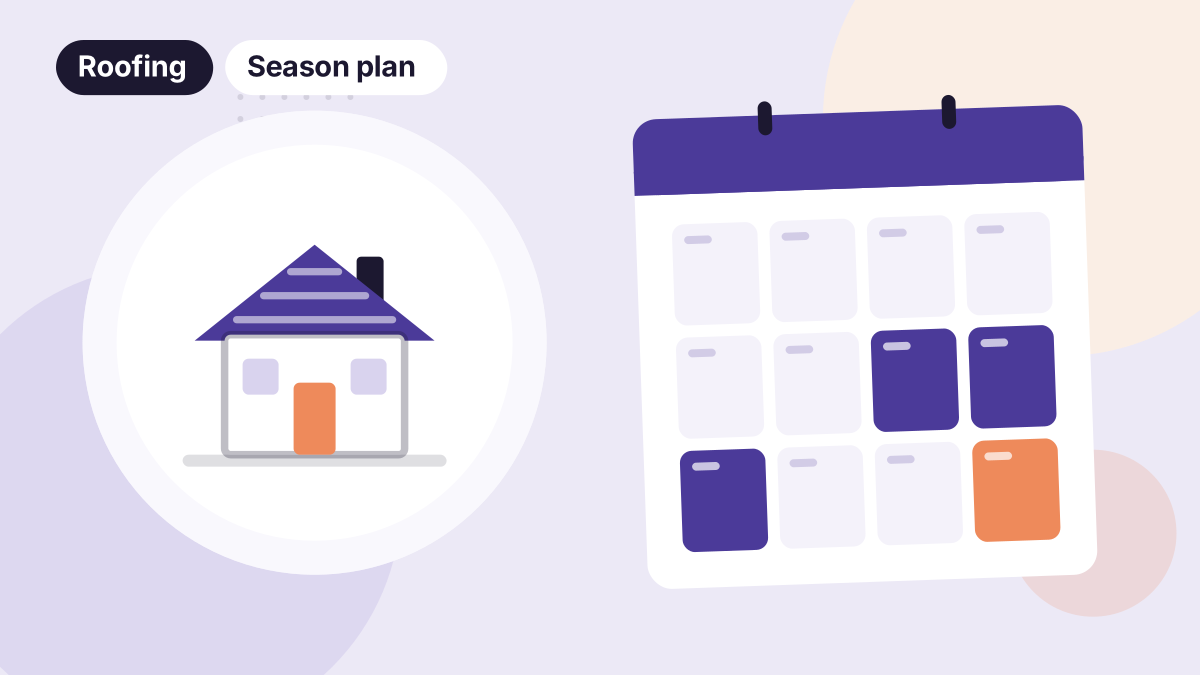
Demand through the year for roofing companies
  1. January: Slow
  2. February: Slow
  3. March: Busy
  4. April: Peak
  5. May: Peak
  6. June: Peak
  7. July: Busy
  8. August: Busy
  9. September: Busy
  10. October: Steady
  11. November: Slow
  12. December: Slow
January and February
The fewest hail reports of the year, 0.6% and 1.4% of the national total. Cold limits shingle work too: the NRCA notes asphalt shingles turn brittle in low temperatures and seal strips may not bond. Fix review gaps, check every ad for license numbers and set the spring budget now.
March
Hail season opens with 8.5% of national reports, and about a fifth of the year's reports in Missouri and Illinois. Google puts Local Services Ads verification at three to four weeks on average, so apply in February to be live for the first big storm.
April to June
May alone brings 26.5% of national hail reports. Texas logs 37% of its year in May and Florida 32% in April, while Colorado peaks in June at 32%. Reviews, call handling and an insurance-claim page belong in place before the first storm, because nobody has time to build them during one.
June 1 to November 30
Atlantic hurricane season, with the peak around September 10 and most activity between mid-August and mid-October, according to NOAA. Gulf and Atlantic roofers get a second run of claim work just as northern hail fades.
Any month, at renewal
The Texas Department of Insurance warns that as roofs age, some insurers switch them to actual cash value coverage. In Florida, a roof 15 or more years old can be inspected before the insurer insists on a replacement, and if it has five years of useful life left, age alone cannot cost the owner the policy. Renewal letters send homeowners looking for a roofer in months with no storms at all.

The roofing ad habits that waste money or break a state law

Any line about covering the deductible
Texas makes it a Class B misdemeanor to advertise or promise to pay, waive or absorb a deductible. Colorado and Minnesota ban the advertising too, and in Colorado the insurer is then not obligated to consider your estimate. Florida fines up to $10,000 per violation for offering a gift, cash or a deductible waiver in exchange for an inspection or a claim. Sell what you actually do instead: the inspection, the photos, the warranty.
No license number on the ad, the van or the listing
California's contractor law wants it in every form of advertising, a definition that reaches electronic ads, directories and lettering on vehicles. Florida requires it in every advertisement "regardless of medium" and on any vehicle that reads as a contracting vehicle. Put it in the ad text, the site footer, the profile description and the truck door.
A Business Profile in a city you do not work from
Google says a virtual office is not eligible, and a service area should stay within about two hours of driving from your base. Florida registered contractors may only contract in the jurisdictions they are registered in. A profile that breaks these rules can be suspended, and losing the profile during storm season takes your reviews and your map listing with it.
The same budget in January as in May
Nationally, April to June hold almost 62% of hail reports, but Texas peaks March to May and Colorado and the Dakotas June to August. A flat monthly budget overspends in dead months and runs dry in the week the phone would have rung most.
One blended cost per lead for insurance and retail work
Insurance jobs arrive in storm bursts, are paid in two checks and can be cancelled after a claim denial in Colorado. Retail jobs close on a different clock. Blend them and the cheapest-looking channel may be the one that signs the fewest roofs.

Local Services Ads, shared lead sites or your own profile, for a roofer

Three ways a roofing company pays for homeowner calls. Most end up using two of them; what matters is knowing which one signs contracts at a cost you can carry.

QuestionLocal Services AdsShared lead sites (Angi, HomeAdvisor, Thumbtack)Your own site and Business Profile
How you payPer lead: calls, messages and bookingsSet by each site; ask exactly what you pay for, and whenNo media cost; time to keep photos, reviews and services current
Who else hears about the jobThe lead comes to your companyAsk whether each request goes to other roofers too, and how manyNobody; the homeowner chose you
Leads you did not wantSome credits, but none for wrong job type or wrong areaGet the credit policy in writing before you startNothing to credit; you control the services and areas listed
Before you startLiability insurance, the state license where the law requires one, and business and owner checks for some advertisers; about three to four weeksThe site's own sign-up and screeningA verified profile with a real address or a service area within about two hours' drive
Trust signalsThe Google Verified badgeReviews on that site, which do not show on GoogleYour Google reviews, license number and photos of your own roofs
ControlAfter the move into Google Ads, no manual maximum cost per leadJob types and areas in the site's dashboardEvery page, photo and claim explanation is yours
Best atLeak and "roofer near me" calls in storm weeksFilling repair slots while your own reviews buildThe homeowner who checks you after a referral or a door knock

In August 2026 Google started converting Local Services Ads accounts into Performance Max campaigns with pay-per-lead goals inside Google Ads, and roofing was in that first phase. Pay per lead and the Google Verified badge carry over, insurance and license reverification stop, and manual bidding is no longer supported.

Why tracking comes before more storm leads

Most home service plans start with being found. Roofing starts one step earlier: the swing between a hail week and a January week is so large that judging channels before tracking exists leads straight to the wrong cuts.

Clear

Knowing which work produced which jobs.

One hailstorm can make every channel look brilliant, and one January can make them all look broken. Every lead is tagged from day one as repair, replacement, insurance or retail, so budget calls are made on signed jobs, and the license numbers your state requires are checked on every ad and listing.

Chosen

Being the one they pick once they have found a few.

After a storm, the homeowner is comparing you with crews in fresh trucks and no history. Almost half of consumers (47%) skip any business with under 20 reviews, and 74% only weigh reviews written in the past three months, per BrightLocal's 2026 review survey. Recent reviews, real job photos and license proof are what separate a local company.

Found

Being the company that shows up when someone searches.

Service areas inside Google's two-hour limit, Local Services Ads with the Google Verified badge, and search ads on leak and storm-damage terms, with spend shaped to your local hail or hurricane window rather than spread evenly across twelve months.

Kept

Turning one job into the next one and the referral.

Repair customers are where the next replacement comes from. Follow-up on every unsold estimate, inspection reminders for roofs crossing an insurer's age line and a referral ask on the street after each storm job keep work coming when the hail map is empty.

Weeks 1 to 3

Call and form tracking by source, each lead tagged by job type and by insurance or retail. License numbers, and in Florida the claim disclosures, checked on every ad, profile, page and truck.

Weeks 2 to 7

A review request after every finished job, an owner reply to each review, project photos on the site and profile, and an insurance page that explains the claim process and promises nothing about deductibles.

Weeks 5 to 11

Service areas set inside the two-hour limit, Local Services Ads applied for or tuned, search ads on repair and storm terms, and a budget calendar built on your state's hail or hurricane months. Starting in winter, this lands just ahead of March.

Weeks 9 to 13

An estimate follow-up sequence, maintenance and inspection reminders, warranty registration reminders and a neighbor referral ask after each storm job.

How an insurance claim shapes the roofing job, and the ad that sells it

Nearly one dollar in five spent on exterior replacements such as roofing in 2023 came from insurance settlements, according to Harvard’s Joint Center for Housing Studies. That money arrives with rules that reach back into your marketing, and most of them take direct aim at storm-chasing tactics.

The deductible belongs to the homeowner. Texas makes it a Class B misdemeanor to advertise or promise to pay, waive or rebate a deductible, and any claim-funded contract of $1,000 or more must carry a statutory notice in 12-point bold type. Colorado and Minnesota ban the same advertising. Florida goes further: no gift, gift card, coupon or deductible waiver in exchange for inspecting a roof or filing a claim, and any flyer, door hanger, magnet or email that steers a homeowner toward a roof claim must carry three printed disclosures.

You are not the adjuster. A Texas contractor may not act as a public adjuster or advertise to adjust claims. Colorado says a roofing contractor may not claim to be or act as one, though once under contract it may discuss the scope of repairs with the insurer for the owner. Copy that says “we handle your claim” invites trouble; copy that says what you inspect, photograph and document does not.

The homeowner can still walk away. Colorado lets a homeowner rescind a roofing contract within 72 hours of a written claim denial. Florida allows cancellation within 10 days, or by the official start date if that comes first, on roof contracts signed within 180 days of a declared emergency. California gives seven business days to cancel a home solicitation contract to repair disaster damage. After a storm, a signature is not yet a job, so the plan counts roofs started, not contracts signed.

Payment comes in pieces. The Texas Department of Insurance tells homeowners that with replacement cost coverage the insurer pays in two checks, the second after repairs begin, and that an insurer will not pay for a new roof just because the old one is worn out. That is why a storm job and a retail job never share one cost-per-lead number in our reports.

What this means in practice: a page on your site that explains the claim process in plain words, an ad library read against your state’s rules before the season starts, and tracking that follows each insurance job to the final check.
What a roofing company gets in the free plan

Any roofer who contacts us gets a free consult, a straight assessment of where the company stands and a written plan to keep whether or not we are hired. It covers:

Get your free plan
  • Where you show for "roof repair," "roof replacement" and "roofer near me" across your service area, and which roofers currently sit in the map pack and in the Local Services Ads spots above it.
  • Your Business Profile checked against Google's rules: address or service area, the two-hour boundary, categories, and photos of your own jobs.
  • Your review count, the last three months and your replies, set beside the two or three roofers you most often bid against.
  • Every ad, page and listing read for your license number and for any deductible or inspection-incentive wording your state bans.
  • How calls are answered in a storm week, and whether your numbers can tell an insurance job from a retail one.
  • The first 90 days in order, timed to your hail or hurricane months.

Questions roofing company owners ask us

Can you get me more insurance jobs after a hailstorm?

Yes, inside the law. We put you in Search, Maps and Local Services Ads across the storm footprint you can legally serve. We will not run any offer to pay or waive a deductible: it is a crime to advertise in Texas and banned in Colorado, Minnesota and Florida, and Florida adds required disclosures on flyers and emails that prompt a roof claim.

Are Local Services Ads still worth it for roofing now that they are moving into Google Ads?

Usually, if your reviews are strong and someone answers fast. Roofers has its own category with the Google Verified badge, which replaced the old Guaranteed and Screened badges in October 2025. Since August 2026 roofing accounts have been moving into Google Ads: pay per lead and the badge stay, manual maximum cost per lead goes. How we run Local Services and search ads together.

Does my license number have to be in my ads?

In California and Florida, yes, in every medium. California's rule covers electronic ads, directories and vehicle lettering, and Florida's applies regardless of medium and to marked vehicles. Texas has no state roofing license; a company in the voluntary RCAT program may describe itself as licensed under it. Elsewhere, we check your state board's rule before anything runs.

Can I set up a Business Profile in the next city after a big storm?

Not from a virtual office. Google says virtual offices are not eligible, and a service area should stay within about two hours of driving from where you are based. A profile that breaks the rule can be suspended, and your reviews disappear from the map along with it. How we set up service-area profiles.

How many Google reviews does a roofing company need?

Past 20, and fresh. In BrightLocal's 2026 review survey, 47% of people ruled out any business showing fewer than 20 reviews, 31% wanted 4.5 stars or better, and 74% looked only at the last three months. Roofing reviews arrive in bursts after storms, so ask after every job, including the January repairs. How we run review requests.

When should a roofer spend the most on ads?

In the weeks just before and during your local storm window. May brings 26.5% of hail reports nationally, but Texas runs March to May, Colorado peaks in June, and the coasts add hurricane season from June 1 to November 30. Keep search visibility and reviews running all year so the profile is ready when the storm comes.

Should I keep buying shared leads from Angi or HomeAdvisor?

Keep them if they sign roofs at a cost you can carry; your tracking should decide, not anyone's opinion. Once every call is tagged by source and job type, compare cost per signed contract rather than cost per lead. In our experience shared requests suit repair volume better than replacements.

Can I advertise that a new roof qualifies for a tax credit?

Not the federal one. The IRS energy efficient home improvement credit covered improvements made through December 31, 2025, and its list of qualifying envelope items named exterior doors, windows, skylights and insulation, not roofs. Check any state or utility program in writing before it goes in an ad.

Will you promise a number of roofs a month?

No. Lead volume rises and falls with storms, so a promised roof count is a bet on the weather. What we report each month can be checked: calls answered, inspections booked, estimates sent, contracts signed and what each cost, split between insurance and retail work.

Do drone photos help a roofing company's marketing?

Yes, as proof on your site and profile, flown legally. Drone flights for a business fall under the FAA's Part 107 rules. Real photos of your own work also feed Local Services Ads ranking, which Google bases partly on the use of high-quality images.

See what a homeowner sees when they check you after a storm

Tell us your company, the town your yard is in, and roughly how your work splits between insurance and retail. You get back where you rank for repair and replacement searches across your service area, how your profile and reviews compare with the roofers you bid against, any ad or listing wording your state would flag, and the first changes we would make before your next storm window.

  • A free consult. A real conversation about your business, your area and what is not working yet.
  • An honest evaluation. Where you stand in search, ads and follow-up next to the businesses you lose customers to.
  • A plan you keep. What we would fix first and why. It is yours whether or not you work with us.

Form not loading? Email hello@beyaoshy.com and we will reply within one business day.

Sources

The figures on this page come from these published sources, checked on October 3, 2026. Benchmarks are averages across many advertisers; your market will differ, which is what the free plan is for.

Agencies with roofing companies among their clients: see the partner model.