Skip to content

Window and door company marketing for a sale decided at the kitchen table

Replacement windows are planned, compared and usually sold at an in-home appointment, often after a national brand's consultant has already visited. Search leads for doors and windows cost more than for almost any other home service, and the shortcuts that sell them carry rules of their own: savings percentages the FTC has acted on, a federal credit that ended with 2025, closes made in the living room. We build the search presence, reviews and appointment handling that win the comparison, with every claim kept inside the rules.

Taking on new window and door installers now

Reviewed by Niomi Ascot on

How a homeowner ends up holding your quote

In rough order of how many sold jobs each brings an independent window company. The long decision runs through all of them: the first touch rarely signs, so every channel is judged on held appointments and sold jobs, not form fills.

Google Search and the map pack

Where most replacement shoppers start, and the most expensive attention in the trade. LocaliQ's 2025 home services report put the median Doors & Windows Sales cost per lead at $200.34, second highest of 16 categories, after cost per click rose more than 46% in a year. Separate campaigns for windows, entry doors and patio doors, and for repair against replacement, keep the price of each one visible.

Reviews, read before anyone books a visit

BrightLocal's 2026 review survey found 13% of consumers had spent more than $5,000 after reading reviews, and 70% had made a purchase they regretted after reading them. Window buyers read closely; reviews that name the product, the town and the install crew answer what a star rating cannot.

Local Services Ads under Window repair

There is no separate door category. Google's Window repair description covers installing and repairing windows and may include doors, skylights and other glass, with the Google Verified badge on the ad. Google screens for liability cover (general and professional), any state license the work legally needs, and a verified Business Profile; expect about three to four weeks.

Facebook and Instagram lead forms

Cheaper per lead and further from a signature. WordStream by LocaliQ's 2026 benchmarks put the median Home & Home Improvement lead-form lead at $42.95 (April 2025 to June 2026). Before an in-home visit, a call that confirms the address, the openings and whether everyone who decides will be there turns a form into an appointment worth driving to.

Home shows, canvassing and lead sites

Still part of how windows sell, and the part with the most rules. Any sale closed in the buyer's house at $25 or above is covered by the FTC Cooling-Off Rule, and an invitation from the homeowner does not change that. BrightLocal's 2026 survey shows Angi gaining use as a review source. Trace each booth, door route and lead contract to sold jobs before renewing it.

Answers from ChatGPT and other assistants

BrightLocal's 2026 survey found generative AI tools had become the third most popular source of local recommendations, used by 45% of consumers against 6% the year before. In our experience the assistants lean on what your site, profile and reviews say consistently, so a product line named the same way everywhere is easier for them to recommend.

What happens to a window appointment after the rep pulls out of the driveway

Window and door companies spend heavily to set an in-home appointment, and the costliest leaks come after it: the quote left unsold, the Saturday call that rang out, the oversized deposit California will not allow and the financing line no lender approved.

If they didn't sign at the table, we move on

In ServiceTitan's 2026 Roofing and Exterior Market Report, which counts window and door businesses among its exterior firms, just 16% of contractors said they contact homeowners on the same day an estimate goes unsold. The survey was commissioned by the vendor and leans toward firms above $5 million in revenue. A ServiceTitan staffer separately put the share of in-home sales that close on the spot at 37%, with no method given.

The fix. Have the rep text a same-day recap of the openings measured and the one feature the homeowner cared about, and phone the next afternoon to ask what did not make sense. After that, send one useful thing a week, such as a photo of the same series installed nearby or the factory's current lead time, and after the third week ask whether the homeowner wants the quote held for a later season or closed.

Saturday calls go to voicemail

Invoca's July 2026 report has 53% of calls to doors and windows companies reaching a person, so nearly half ring out or go unanswered. And from October 1, 2026, an unanswered Local Services call during the hours you list is billed as a lead if the caller stays on the line beyond 20 seconds, with a few exceptions.

The fix. Set Local Services hours to the hours someone truly answers, cover Saturdays with a person or an answering service that books the appointment, and review charged leads every week. Google bills a voicemail, or a caller who gives job details to an automated system, as a lead too, so check those charges in the same weekly review.

We take a deposit to order the custom windows

California caps the down payment on a home improvement contract at $1,000 or 10% of the price, whichever is less, and the CSLB says special-order materials are no exception, which is exactly what made-to-measure windows are. Buyers there aged 65 and older also get until midnight of the fifth business day to cancel a contract signed at home.

The fix. Rewrite the deposit line in every California quote template to that limit, and have reps carry both the standard and the senior cancellation forms, using the state's statutory notices rather than the federal text alone. In other states, check deposit rules with counsel before printing "deposit due at signing".

Our ad says no payments for a year

Regulation Z applies to anyone who advertises consumer credit, and its official interpretation names merchants and home builders who are not lenders. A "no payments" or "same as cash" offer on a deferred-interest plan needs "if paid in full" and the period beside each of those phrases, and an ad that states a monthly payment must also show the APR, the down payment and the repayment terms.

The fix. Get the lender's approved promotional copy and use it unchanged in every ad, mailer and landing page. A quote handed to one homeowner is not an ad under the rule, so the detailed terms belong there; a promotion texted to the whole lead list may be one. Run it past counsel first.

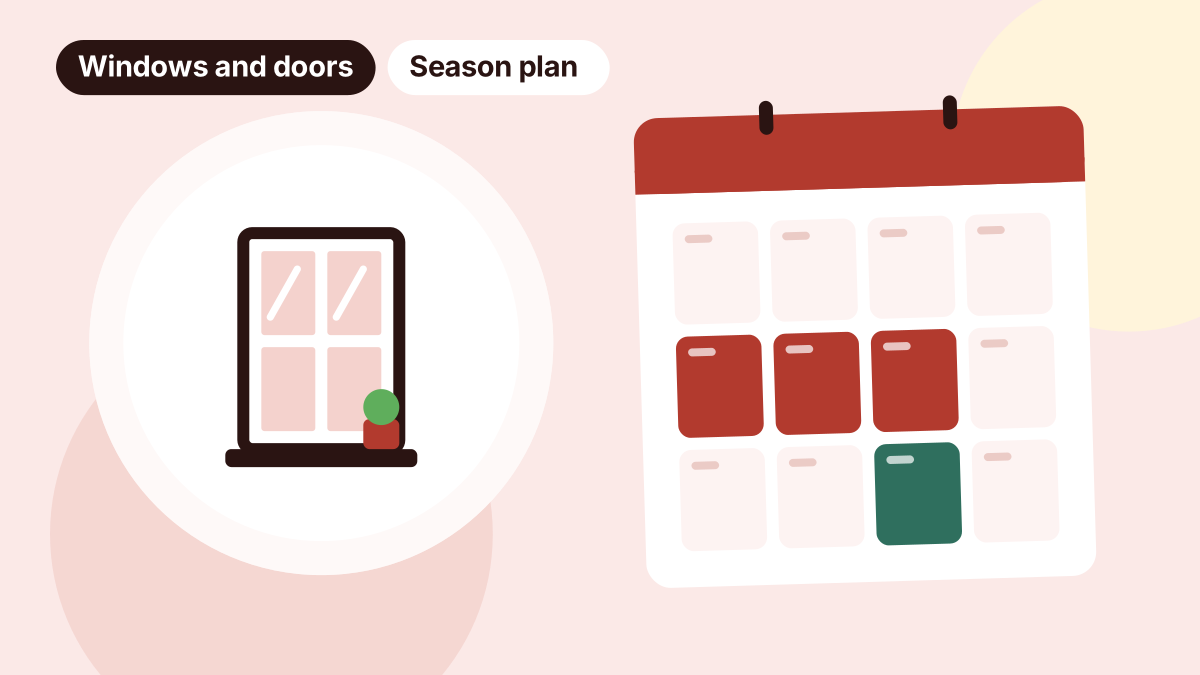
Mild install weather sets two peaks, and June 1 sets the coast's

The month ratings are how the year tends to run for an independent window company, partly from experience. The anchors are public: Census Bureau sales at building materials dealers climbed from February to a May high in 2025, the EIA counts October through March as heating season, and NOAA's hurricane center dates the Atlantic season from the first of June through the end of November.

Demand through the year for window and door installers
  1. January: Slow
  2. February: Steady
  3. March: Busy
  4. April: Peak
  5. May: Peak
  6. June: Busy
  7. July: Steady
  8. August: Steady
  9. September: Busy
  10. October: Peak
  11. November: Busy
  12. December: Slow
January and February
Heating season makes drafts and bills obvious, but cold slows installs in the North. Book spring appointments now, apply for Local Services Ads early enough to clear three to four weeks of verification, and check that no ad, page or sales sheet still mentions the federal credit that ended with 2025.
March to May
The spring run. Building materials sales jump in March and peak in May, and on the Gulf and Atlantic coasts these are the last full months to get impact openings in before hurricane season. Reviews from winter jobs and the spring budget belong in place before March, not during it.
June 1 to November 30
Hurricane season on the Atlantic and Gulf coasts. NOAA's climatology has the first hurricane usually arriving in early to mid-August, with the first major hurricane close behind in late August or early September. FGIA notes that codes require impact-resistant glazing in some part of virtually every state along the Gulf coast and up the eastern seaboard as far as Rhode Island, so coastal pages name the standard each product meets.
September and October
The fall push. Heating season opens in October by the EIA's definition, and in the North it is the last comfortable month to have openings out of a house. Follow-up on spring and summer quotes belongs here: the homeowner who waited is now thinking about winter.
November and December
Installs slow as weather and holidays close in. December 2025 was the last month a window could be placed in service for the federal 25C credit; from January 2026 there is no federal window credit to sell, and nothing in a winter ad should suggest one.

Dealers and installers who sell against the national brands

The best fits install the product themselves and want homeowners who picked them, not appointments bought off a list. In-home selling is fine; we build it on the rules that govern it.

The independent dealer-installer in one metro
You carry a manufacturer's line or two, run your own crews, and lose quotes to a national brand whose design consultant got to the house first. Reviews that name the product and the street, appointments offered within days, and search split by product usually move first.
The Florida impact window and door company
Florida's licensing board says window installation needs a general, building or residential contractor license, a local license that covers it, or a certified glass and glazing specialty license. If you hold one and your products carry approvals for the High Velocity Hurricane Zone, your pages can say exactly that, and coastal buyers look for it.
The glass and door repair shop moving into replacement
Google's Window repair category for Local Services Ads covers installing and repairing windows and may include doors, skylights and other glass. A cracked pane or a stuck slider brings the first call; the replacement quote is the second job, and the plan is built to ask for it.
The installer working in pre-1978 neighborhoods
EPA treats window replacement in homes built before 1978 as covered work whatever its size, and uncertified firms may not even advertise it. A company that already holds firm certification has a proof point many competitors cannot print.

Who we would point elsewhere. A canvassing operation that wants volume without the cancellation notices the FTC Cooling-Off Rule requires, or headlines promising a cut in energy bills the company cannot substantiate. We would also hold off with a company whose offer still leans on the federal window tax credit: the IRS stopped allowing it for anything installed after 2025, so the offer needs rebuilding before ad money goes behind it.

A window lead costs more than almost any other home service lead

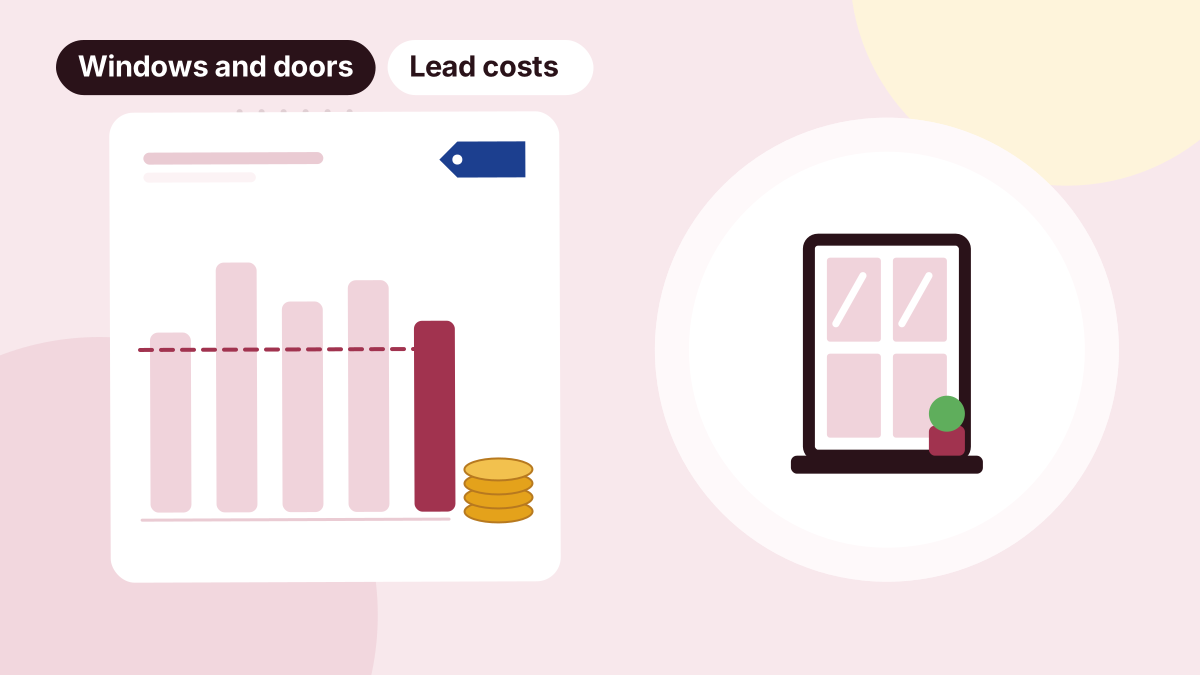
Published figures for the categories window and door companies fall into, mostly from LocaliQ's 2025 home services edition, built on 3,211 search campaigns running between April 2024 and March 2025. Every figure is a market median, not a result of ours. Against a typical replacement price, a costly lead can still pay when it becomes a held appointment, which is why we report appointments and sold jobs beside cost per lead.

$200.34
Median search cost per lead for Doors & Windows Sales over the 12 months to March 2025, the second most expensive of the 16 home service categories measured
LocaliQ home services report
53%
Of calls to doors and windows companies reached a person, and 28% of the sales leads among them converted on that call
Invoca home services report, 2026
$1,715
What most people pay for a window replacement, within a national range of $850 to $3,459
Thumbtack cost guide (vendor data)
Up to 13%
EPA's own average heating and cooling saving for ENERGY STAR certified windows, doors and skylights, against non-certified products
ENERGY STAR (EPA)
Median search cost per lead: windows against the categories around them
  • Doors & Windows Sales, search ads, 12 months to March 2025$200.34
  • Construction & Contractors (General), same period$165.67
  • Blinds & Window Treatments, same period$113.30
  • All home services in the report, same period$90.92
  • Home & Home Improvement on Facebook lead forms, data through June 2026 from April 2025$42.95

Window and door clicks turned into leads at 4.41%, against 6.00% for blinds and window treatments; the lower conversion rate, more than the click price, is what pushes the cost up. Facebook form leads cost far less and need a qualifying call before anyone drives to the house. Sources: LocaliQ; WordStream by LocaliQ.

Our plans are priced for an independent dealer with a few install crews, not a national brand with a showroom in every metro, and owners at that size find them affordable. Each is scoped to the products and towns you want more of, and the free plan puts the first changes in writing before you commit to anything.

Get your free plan

Where a window company pays for the homeowner's first call

Three ways to pay for that call. Most window companies use more than one; the test is which produces appointments that sign at a cost your margin carries.

QuestionLocal Services Ads (Window repair)Lead marketplaces such as Angi, HomeAdvisor and ThumbtackYour website and Google profile
What the homeowner asked forWindow repair: installing and repairing windows, possibly doors, skylights and other glassWhatever job types the site offers; check how replacement and entry doors are splitEach product you install, on its own page and in your profile services
What you are charged forEach valid lead, whether a call, a message or a booking; Google prices message leads below calls in most casesWhatever each marketplace sets; get the charge and the refund terms in writingNo media cost; time to keep photos, products and reviews current
Who else gets the same homeownerOnly youAsk how many other installers receive each requestNo one else; the homeowner came looking for you
Before you startInsurance certificates (general and professional liability), any state license the job legally needs, a verified Business Profile, and business checks for some advertisers. Allow roughly three to four weeksThe marketplace's own checks at sign-upA verified Business Profile, and in Florida a license covering window installation
What proves you are legitimateThe Google Verified badgeReviews that live on that marketplace and never show on GoogleReviews on your Google profile, your license number, EPA firm certification and product approvals
Junk leadsGoogle credits some low-quality leads automatically, but not leads outside your job types or service areaPolicies vary; read the refund terms before the first chargeNothing to credit; you choose the products and towns you show for
Best atCracked glass and stuck sliders that turn into replacement quotesFilling an install calendar while your own reviews buildThe homeowner comparing quotes after a referral or a national brand's visit

Google has started folding Local Services Ads into the main Google Ads platform, turning each account into a pay-per-lead Performance Max campaign. The first group, in August 2026, did not include Window repair. Google's timetable lists storefront-free service-area businesses for late 2026 and every category still left for 2027. Charging per lead and the verification badge survive the move; manual bids do not.

Why a window company counts sold jobs before it buys more leads

A typical home service plan opens with visibility. A window sale is too slow, and each lead too costly, for that order, so this one starts with knowing which source produced the appointment that signed.

Clear

Knowing which work produced which jobs.

A median search lead in this category costs about $200 and the contract is often signed weeks later in the living room, so a form fill proves little. Invoca's 2026 data has only 53% of calls to doors and windows companies reaching a person. Calls, forms, set appointments, held appointments and sold jobs are tracked by source before any budget rises.

Chosen

Being the one they pick once they have found a few.

Florida's state grant program tells homeowners to collect bids from at least three contractors, and buyers elsewhere tend to compare as many, often against a brand with a showroom. Old tax-credit lines and savings percentages come out first; license numbers, EPA firm certification, product approvals, FGIA InstallationMasters certified installers where you have them, photos of your own installs and recent reviews go in.

Found

Being the company that shows up when someone searches.

Local Services Ads under Window repair, with verification started early; search campaigns split by product and by repair against replacement; and a Business Profile whose services list each product you actually install.

Kept

Turning one job into the next one and the referral.

A house that replaced its front windows still has the back of the house, the patio door and the entry door to come. Warranty check-ins, a referral ask after each install and a note to past customers before your spring and fall peaks bring that work back to you instead of to the next quote.

Weeks 1 to 3

Each call and form labeled by where it came from and the product asked about, one agreed definition of a qualified appointment, and every ad, page and sales sheet read for savings percentages, unsupported "up to" claims and leftover tax-credit lines.

Weeks 2 to 6

License and registration numbers where your state requires them, EPA firm certification on pages about older homes, product approvals on Florida pages, real install photos, and a review request sent as each install wraps up.

Weeks 4 to 9

Local Services Ads application under Window repair, search campaigns by product, profile services, and appointment confirmation by call and text, with the cancellation notice handled at every in-home close.

Weeks 8 to 13

Follow-up on every unsold quote, outreach to past customers about the openings they did not replace, and the first monthly report built on sold jobs by source.

Window advertising that loses the sale or invites a regulator

A percentage off the energy bill

In 2012 the FTC settled with five replacement window sellers over claims such as a "40% Energy Savings Pledge" and "50% Energy Savings Guaranteed". EPA's own figure for certified windows, doors and skylights is an average of up to 13% on heating and cooling. Quote EPA with its wording, or sell what you can show: the certified ratings, comfort, the warranty.

A tax credit that ended with 2025

The 25C credit is gone for any window or door placed in service after December 31, 2025. While it ran, it capped windows and skylights at $600 a year and doors at $250 each and $500 in all, with labor excluded. Take it out of ads, landing pages, financing promotions and sales scripts. A state or utility program goes in only once its current terms are confirmed in writing.

Marketing work in older homes without EPA certification

EPA lists window replacement as always covered in homes built before 1978, whatever the square footage, and firms without certification cannot advertise covered work at all. If your area has older housing, put the firm certification on the page; if you do not hold it yet, that comes before the ads.

An in-home close with no cancellation notice

Under the FTC Cooling-Off Rule, a homeowner who buys at home for $25 or more can cancel until midnight of the third business day, even if they invited the salesperson in; Saturday counts, Sundays and federal holidays do not. California adds three days for home improvement contracts and five for buyers 65 and older. A cancellation handled badly tends to come back as a one-star review.

One impact window page for all of Florida

In Miami-Dade and Broward, the High Velocity Hurricane Zone, new windows and doors need a product approval showing they meet the Miami-Dade standard, which does not let its test missile, a 9-pound 2x4 at 34 mph, penetrate. Elsewhere in Florida other test standards also qualify. A page that blurs the two misleads the buyer who has not checked and loses the one who has.

What the 2012 window cases still mean for every savings claim

Few trades have an FTC case file written about their energy claims. In February 2012 the Commission settled with five replacement window companies over savings it said they could not support, and the orders still read like a list of what turns up in window ads.

What the companies claimed. Gorell Enterprises ran a “40% Energy Savings Pledge” and promised to repay the difference, up to $500, if a homeowner fell short in the first year. Long Fence & Home advertised “50% Energy Savings Guaranteed” and put a savings calculator on its website. THV Holdings’ telemarketing scripts said its windows would “cut energy bills in half” and “pay for themselves in energy savings alone in 8 years”. Winchester Industries told buyers they would “reduce energy costs by 47%”. In each case the FTC said the company lacked a reasonable basis for the number.

What the orders require. Each company was barred from claiming a specific amount or percentage of savings without competent and reliable scientific evidence. An “up to” claim gets no shortcut: the seller needs evidence that all or almost all consumers are likely to reach the maximum. A claim that only holds under certain conditions, such as replacing a particular frame material in a particular region, has to disclose those conditions clearly and close to the claim.

What EPA itself says. The ENERGY STAR program, which exists to promote certified products, puts the saving at an average of up to 13% on heating and cooling for certified windows, doors and skylights against non-certified ones, and at an average of 12% on household energy bills for certified windows. Its own guidance adds that new windows “may not pay for themselves in energy savings alone”, and points instead to comfort and a higher sale value. Certified products are independently tested and verified through the National Fenestration Rating Council.

What to say instead. The government’s averages, quoted with their qualifiers. The certification, and the rated U-factor and solar heat gain printed on the label. The comfort and resale value ENERGY STAR itself names. A savings calculator, a pledge or a percentage in a headline needs test evidence on file before it runs, and in our experience few window companies have it. Next to a competitor promising half off the heating bill, the quote that does not exaggerate is the one a careful homeowner trusts.
The free plan, written for a window and door company

Every window or door company that gets in touch is offered a free consult, an unvarnished look at how it is doing today and a written plan of first moves that stays with the company whatever it decides about us. Yours would cover:

Get your free plan
  • Where you appear for "window replacement", "replacement windows near me", "entry door installation" and "window repair" in the towns you install in, and which companies own the map results and the Local Services Ads slots above them right now.
  • Every ad, landing page and sales sheet read for savings percentages, unsupported "up to" claims and leftover tax-credit lines.
  • Your Business Profile services product by product, photos of your own installs, and your review count and recency beside the competitors who turn up most often on the same kitchen tables.
  • License or registration numbers where your state requires them, EPA firm certification if you work in homes built before 1978, and product approvals on any Florida page.
  • How a call or web request becomes a held appointment: how fast someone answers, who confirms the visit, and how the cancellation notice is handled at the close.
  • A first-90-days sequence keyed to your spring and fall peaks or, on the coast, to the start of hurricane season.

What window and door company owners ask us

Why do our search leads cost so much more than other home services?

Because the clicks are expensive and few become leads. LocaliQ's 2025 home services report put the median Doors & Windows Sales cost per lead at $200.34, second highest of 16 categories, with 4.41% of clicks becoming leads and cost per click up more than 46% in a year. A long, comparison-heavy decision explains most of it, so we judge search on held appointments and sold jobs. How we run search for high-ticket jobs.

Is there a Local Services Ads category for windows and doors?

Yes, Window repair, and it covers more than the name suggests. Google describes it as installing and repairing windows, with doors, skylights and other glass possibly included; there is no separate door category. It carries the Google Verified badge, and Google checks liability cover, any state license your work requires and a verified Business Profile before ads run.

Can we still advertise the federal window tax credit?

No. The IRS ended the energy efficient home improvement credit for anything placed in service after December 31, 2025, and ENERGY STAR describes it as covering products purchased and installed from January 1, 2023 through that date. Remove it from ads, pages and scripts. A state or utility program can go in once you have its current terms in writing.

What energy savings are we allowed to claim?

Only what you can substantiate, and EPA's own numbers are modest. ENERGY STAR cites an average of up to 13% on heating and cooling for certified windows, doors and skylights, and says new windows may not pay for themselves in energy savings alone. The FTC's 2012 window orders required evidence that all or almost all buyers would reach any "up to" figure.

Do we need lead-safe certification just to market replacement windows?

In homes built before 1978, yes. EPA says window replacement is always covered by its renovation rule regardless of square footage, and that firms cannot advertise or perform covered work without firm certification. Anyone paid to disturb paint in those homes must be certified too.

Can an independent company beat the national brands' free in-home consultations?

Often, on proof and speed rather than reach. Renewal by Andersen, for example, offers a free in-home consultation with a design consultant and sells its windows and entry doors only through official retailers. A local company wins with reviews that name the product and the street, photos of its own installs, a license number on every page and an appointment offered the same week. How we build reviews that say something.

Does the Cooling-Off Rule apply if the homeowner asked us to come out?

Yes. The FTC is explicit that an invitation does not take a home sale of $25 or more outside the rule, and cancelling stays open to the homeowner until midnight of the third business day. A repair visit the homeowner requested is not covered, but anything sold beyond that repair is. California gives buyers 65 and older five days.

What should our Florida pages say about impact windows and doors?

Which standard each product meets, and where. In Miami-Dade and Broward, the High Velocity Hurricane Zone, products need an approval showing they meet the Miami-Dade test; elsewhere in Florida the ASTM E 1886 and E 1996 standards also qualify. My Safe Florida Home lists impact windows and doors among its grant upgrades, but its site also says it is collecting contact details as the Legislature considers new opportunities, so confirm what is open before any ad mentions it.

Does our license or registration number have to appear in ads?

In several states, yes. California's license board expects the license number on every kind of advertising, and Washington requires the registration number on ads, including internet ads, estimates and bids. Florida requires a license that covers window installation before you can do the work at all. We read your state's rule before an ad goes live.

Are Facebook lead forms worth it for booking in-home appointments?

They can be, with a call before anyone drives out. WordStream by LocaliQ's 2026 benchmarks found a median of $42.95 per Home & Home Improvement lead-form lead, measured over April 2025 through June 2026, far below a search lead, but a form takes seconds to fill in. A short call to confirm the openings, the address and who decides keeps the calendar full of visits worth making. How we run Meta lead forms.

See your company the way a homeowner comparing quotes does

Tell us the company, the towns you install in, the products you most want to sell and whether you close in the home or in a showroom. You get back where you rank for replacement and repair searches, how your profile and reviews read beside the companies you quote against, any claim in your ads that the FTC or the end of the tax credit has overtaken, and the changes we would start with before your next busy season.

  • A free consult. A real conversation about your business, your area and what is not working yet.
  • An honest evaluation. Where you stand in search, ads and follow-up next to the businesses you lose customers to.
  • A plan you keep. What we would fix first and why. It is yours whether or not you work with us.

Form not loading? Email hello@beyaoshy.com and we will reply within one business day.

Sources

The figures on this page come from these published sources, checked on October 3, 2026. Benchmarks are averages across many advertisers; your market will differ, which is what the free plan is for.

Agencies with window and door installers among their clients: see the partner model.