Facebook lead ads vs a landing page for local leads
Meta's instant forms and a landing page on your own site compared for local businesses: lead volume, lead quality, tracking, consent and when each wins.
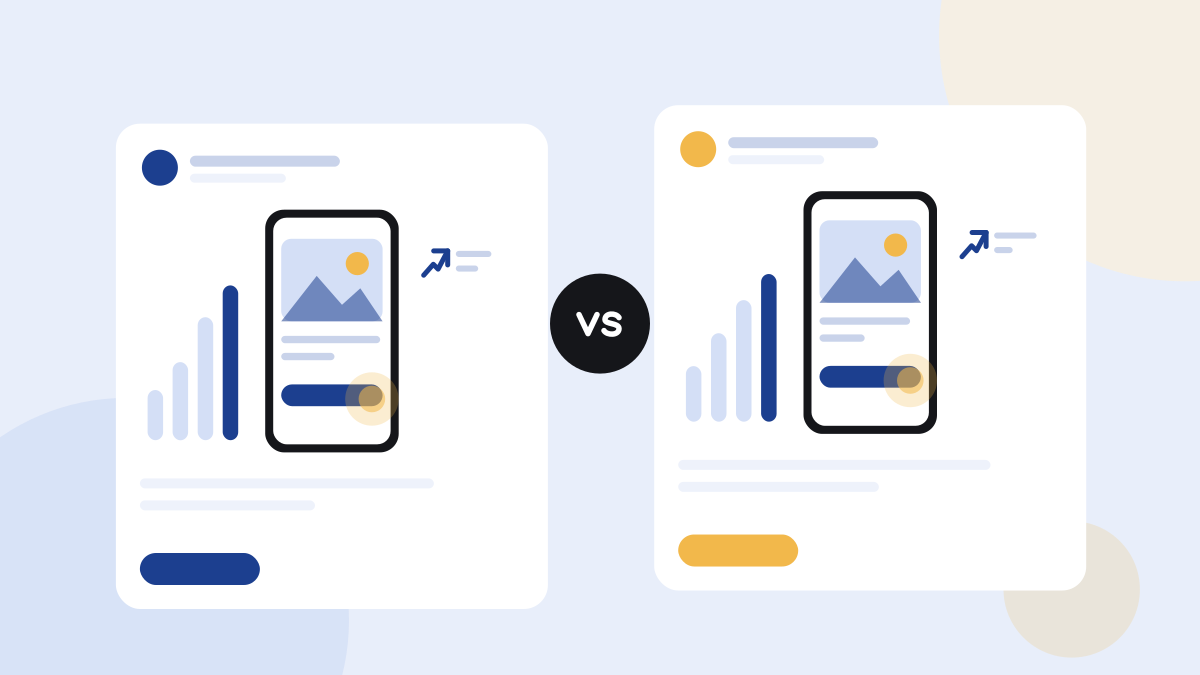
Spring is when Meta budgets go up for many local businesses. Air conditioning tune-ups, roof inspections after the winter, med spa treatments before summer, patio season openings. And with the budget comes a setup question that changes results more than most owners expect: when someone taps the ad, should a form open right there inside Facebook and Instagram, or should they go to a landing page on your website?
Both work. They produce different kinds of leads, and they ask different things of the business that follows them up. Here is how we choose between them, and why the answer is sometimes both.
What is really being decided
The choice is between speed and intent. A form inside the app is fast and effortless for the person filling it in, which brings more leads. A landing page asks for a bit more effort, which brings fewer leads who have usually read more before they reach out. What decides which one you want:
- How fast you call back. Instant form leads cool quickly. If nobody calls within minutes, the volume advantage disappears.
- How complex the offer is. A tune-up is easy to say yes to. A kitchen remodel or a medical treatment needs explaining first.
- Whether you can book online. A landing page can hold a calendar, so the lead becomes an appointment without a phone call.
- What you do with the data. Both need to feed a CRM and send outcomes back to Meta, or the campaign learns from the wrong thing.
Instant forms, built for volume and convenience
Meta’s lead ads open a form inside Facebook and Instagram when someone taps the ad. Name, email and phone number can come pre-filled from the person’s profile, you can add custom questions, and there is a form type that adds a review step before submitting so people confirm their details. Leads can flow straight into a CRM through integrations rather than sitting in a download.
The strength is friction, or the lack of it. Nobody waits for a page to load in the in-app browser, nobody types their details on a small screen, and the person never leaves the feed. For simple, well-understood offers, that brings more leads for the same spend.
The trade-off is intent. Because it is so easy, some people submit without really meaning to, forget they did, or do not recognize the number when you call. Contact details pulled from a profile can be out of date. Quality depends heavily on the questions you ask and how fast you follow up.
A landing page, built for intent and context
A landing page sends the person out of the app to a page on your own site built for that one offer. It can show real photos, reviews, what happens at the appointment, the areas you serve and a booking calendar, and it carries your Meta pixel and a server-side connection so conversions are still counted.
The strength is context. Someone who has read the page, seen the reviews and chosen a time is a warmer lead than someone who tapped a pre-filled form. The page also works for your other channels: the same page can take Google Ads traffic, email clicks and people typing in the address from a flyer.
The trade-off is friction and speed. The page has to load fast inside the in-app browser, and every extra field loses some people. Lead counts will usually be lower, and the page has to be built and kept current.
Side by side
| Instant forms | Landing page | |
|---|---|---|
| Suits | Simple, familiar offers with a fast callback | Considered purchases and offers that need explaining |
| Lead volume | Usually higher | Usually lower |
| Lead intent | Mixed; depends on questions and follow-up | Usually higher, after reading the page |
| Booking | Callback needed to book | Can include an online calendar |
| Tracking | Leads recorded inside Meta; send outcomes back | Pixel and server-side events; send outcomes back |
| Who owns the data | Your ad account and your CRM, in your name | Your site, your CRM and your ad account, in your name |
| Ask before launching | Who calls each lead, and how fast | How fast the page loads inside the app |
Pros and cons
Instant forms
Pros
- The easiest way for someone on a phone to raise a hand.
- More leads for the same budget on simple offers.
- No website needed to launch a campaign.
- Custom questions can filter out obvious mismatches.
Cons
- More low-intent and accidental submissions.
- Pre-filled details can be old or wrong.
- Leads go cold within minutes without a fast callback.
- Less room to explain the offer or show reviews.
Landing page
Pros
- Warmer leads who have read about the offer.
- Room for photos, reviews and a booking calendar.
- One page serves Meta, Google Ads and offline traffic.
- You control the design, copy and what is asked.
Cons
- Fewer leads, since some people drop off on the way.
- Needs to load fast inside the in-app browser.
- Has to be built, tested and kept up to date.
- Tracking needs both the pixel and a server-side setup to hold up.
Consent and texting
One point applies to both. If you plan to follow up by text, the person needs to have agreed to receive texts from you, and that agreement needs to be recorded. On an instant form that means adding clear consent wording and a checkbox. On a landing page it means the same wording next to the phone field. Carriers filter texts from senders whose registration and opt-in records do not hold up, so a lead without documented consent may never see your follow-up message.
Which fits which business
An HVAC company running a spring tune-up offer. Instant forms, with a dispatcher calling every lead within minutes. The offer is simple and the season is short.
A remodeler looking for kitchen projects. A landing page with real project photos and a consultation calendar. Fewer leads, and usually fewer wasted trips to measure a kitchen that was never going to happen.
A med spa promoting a new treatment. A landing page that explains the treatment and books a consult, with an instant form campaign tested alongside for the easier offers such as a first facial.
A business with no website worth sending anyone to. Instant forms, while a proper landing page is built.
How Beyaoshy runs it
We usually test both in the same month for a new client, with the same creative, and judge them on booked appointments rather than lead counts. The version that brings more leads can lose to the other once no-shows and wrong numbers are counted, and sometimes it does not. Either way, outcomes go back to Meta from the CRM, so the campaign learns from the leads that turned into customers.
That is easier because one team does all of it: Beyaoshy builds the landing page, runs the Meta ads, sets up the CRM follow-up and texts with proper consent, and reports calls and bookings from each version. You own the ad account, the pixel, the page and the data from day one. We have worked with local businesses since 2015, and our work is built for owners, not national brands. Agencies also have us run this for their own clients under their brand.
Choosing this spring
Pick the version that matches how fast your team calls back and how much your offer needs explaining, then test the other against it. Our Meta ads service covers the campaign and the follow-up, our website builds include landing pages designed for ad traffic, and the owners page explains how we start.
Written April 4, 2026, and kept as written. Platforms, features and policies mentioned here are described as they stood at the time.
Meta Ads is part of what we run for clients.
This is recent. How it applies to you depends on your market, so we will check where your business stands today and tell you what to do first.