Skip to content

Massage therapist marketing that shows you are licensed before anyone books

Most people book a massage for pain, stress or a doctor's suggestion, and before they do, they check whether your business looks like a licensed practice. In Florida, Texas and California the law also sets what your ads must print. We put your license, your therapists and your reviews where clients and ad reviewers look first, then fill the gift seasons and the repeat visits that carry the year.

Taking on new massage therapists and massage studios now

Reviewed by Niomi Ascot on

Licensed therapists, from one rented room to a studio with several

AMTA's 2026 profession research found therapists working in their own office (40%), in clients' homes (37%), in their own home (25%), in a spa or salon (20%) and in franchises (13%). The shares add up to more than 100 because many work in more than one setting, and each setting needs its Google profile built differently.

The solo therapist with an office and a license on the wall

One table, a full book on some days and gaps on others. The quickest gains are a profile that shows your license number and your modalities, a review request after every session, and the next visit booked before the client leaves the room.

The mobile therapist who brings the table

Working in clients' homes means a service-area profile with your home address hidden, and a client deciding whether to let a stranger in. Google's Local Services Ads category for massage screens the service professional as well as the business and the owner, and the Google Verified badge tells a nervous client that check was done.

The independent studio up against membership chains

Massage Envy reports franchise locations in 49 states and Hand & Stone calls its model membership-based, so clients arrive expecting a monthly plan. An independent wins on the therapist, the specialty and the rebooking habit, and its marketing should say which therapist does what.

The clinical practice that grows on referrals

AMTA found 64% of therapists get referrals from other health care professionals and 60% from chiropractic offices. Medical and orthopedic massage practices grow when a referring office has a page to send people to and an intake path that records who sent them.

Who we would point elsewhere. Anyone without the license their state requires: Texas bars an unlicensed person from using the word "massage" in any form of advertising, and we will not write around that. The same goes for anyone who wants suggestive photos or listings on adult sites, which California disciplines and Florida bans outright, or who wants reviews bought or screened. Franchisees should read the franchise agreement first, since some franchisors control local advertising, and we would rather you found out before paying us.

How a massage client finds you, and what they check before booking

Ranked by how many bookings each usually brings an independent practice. The first is the clients you already have, because the trade lives on second and third visits. Everything after it is about getting a careful first-timer to book.

  1. Your own clients, booked again

    AMTA's 2025 consumer survey found people who get massages averaged 2.7 in the past year. Every rebooking at checkout, every package and every membership is a visit no ad platform was paid for, and it is the habit the franchise chains are built on.

  2. Google Search and the map

    Searches such as "deep tissue massage", "prenatal massage" and "massage near me". In AMTA's 2026 fact sheet, consumers named a therapist's own office or location as a top place for massage (41%) more often than a spa (39%) or a franchise or chain (27%). BrightLocal's 2026 review survey adds that nearly a third of consumers (31%) now rule out anything under 4.5 stars.

  3. Referrals from other therapists and from health care

    AMTA's 2026 research found 74% of therapists receive referrals from other massage therapists, 64% from other health care professionals and 60% from chiropractic offices. Among consumers who discussed massage with a doctor or medical provider, 22% were referred to a therapist. A referred client still looks you up before booking.

  4. Booking apps and marketplaces

    Mindbody calls its consumer app a marketing channel seen by 3M+ people looking for fitness, beauty and wellness services; listing is free, and its pricing page puts the fee at 20%, capped at $30, on a new client's first purchase only. Vagaro offers a free marketplace listing and booking through Google, Apple Maps and Instagram. Both suit first visits; neither should own your regulars.

  5. Gift card buyers

    The person paying is often not the person on the table. In NRF's 2026 Mother's Day survey, 55% of shoppers had gift cards on their list, and in its 2024 winter holiday survey gift cards ranked second among all gift categories at 44%. NRF does not break out massage, but a gift card page that works on a phone is how a practice catches that demand.

  6. Local Services Ads

    Google files Massage therapist under Wellness rather than health care, and a verified advertiser shows the Google Verified badge. Screening covers the business, its owner and every service professional, plus insurance certificates covering general and professional liability. Vagaro, Mindbody and Booksy are listed booking partners; whether bookings can flow through the ad in this category is worth confirming in your own account.

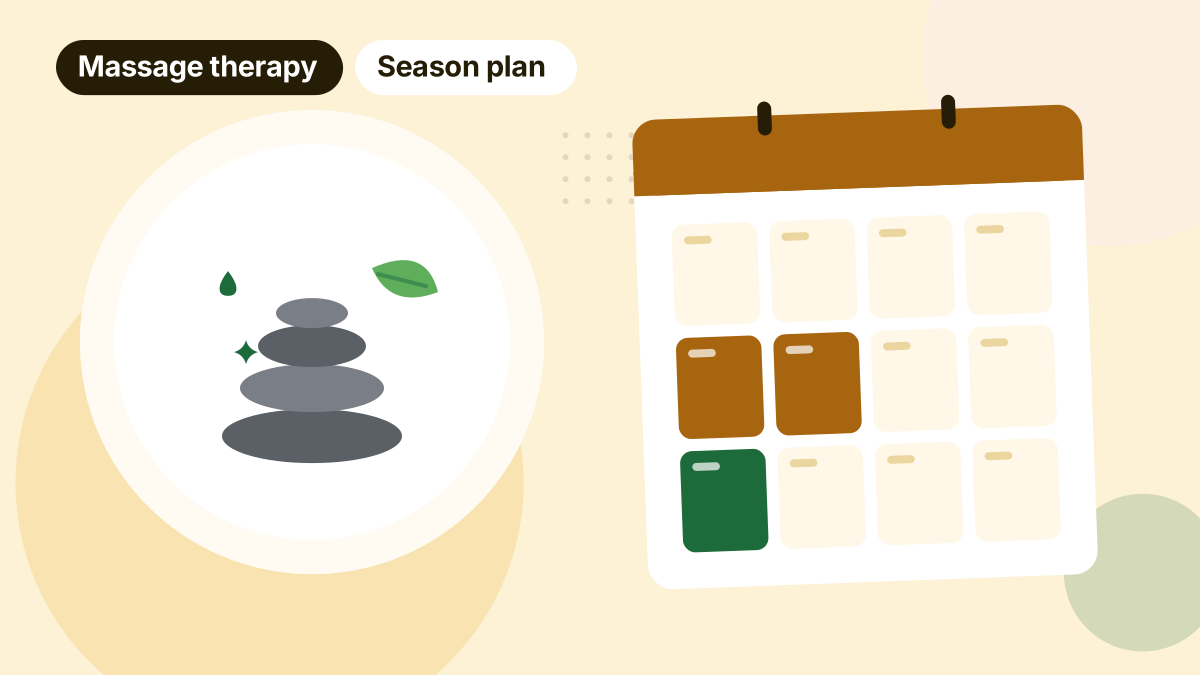
Valentine's Day, Mother's Day and December set the massage year

Massage demand follows gift giving more than weather. Each month's rating reflects a typical independent practice; the gift seasons behind them come from National Retail Federation surveys, which do not mention massage by name, so the link to your book is our reading of them.

Demand through the year for massage therapists and massage studios
  1. January: Busy
  2. February: Peak
  3. March: Steady
  4. April: Busy
  5. May: Peak
  6. June: Steady
  7. July: Slow
  8. August: Slow
  9. September: Steady
  10. October: Steady
  11. November: Busy
  12. December: Peak
January
December's gift cards come back to be redeemed, and New Year health goals bring first-timers in. Keep open slots visible online and have a rebooking offer ready for every gift card client before they reach the front desk.
Late January to February 14
NRF expected a record $29.1 billion in Valentine's Day spending for 2026, with 39% planning an evening out. Of the people not celebrating, 31% still planned to mark the day, including "splurging on a gift or self-care". Couples and self-care offers belong online by the last week of January.
April to May 10
Mother's Day fell on May 10 in 2026. NRF forecast a record $38 billion, with 55% of shoppers planning gift cards and a record one-third planning to give an experience. Its survey ran April 1 to 8, so buyers are already deciding in early April; start the campaign then, not in May.
July and August
The slow stretch for most practices, while resort and snowbird markets often run the other way. Use it for work that pays later: therapist bios, photos, reviews and the Local Services Ads application, since Google's screening averages three to four weeks.
November and December
NRF's 2024 holiday survey expected $28.6 billion in gift card spending, with the average shopper buying three to four cards at $51.18 each. Federal rules require gift card funds to last at least five years, so check the terms printed on your cards before the season opens.

Trust has to be settled before a massage ad is worth paying for

For most local businesses we would lead with being found. In massage the order flips, because clients, ad reviewers and state law all ask the same question first: is this business what it says it is?

Chosen

Being the one they pick once they have found a few.

Polaris estimated in 2018 that more than 9,000 illicit massage businesses were operating across every state, so clients and platforms read each listing with some suspicion. License numbers where your state requires them, therapist bios with credentials and modalities, calm photos of the real room, and reviews asked of every client with nothing offered in return.

Found

Being the company that shows up when someone searches.

Then the profile: a storefront, or a service area for mobile work, a booking link from a supported scheduling partner, and a Local Services Ads application started early, since the business, owner and therapist checks take weeks. Search ads go on modality terms such as prenatal, deep tissue and sports massage.

Kept

Turning one job into the next one and the referral.

People who get massages averaged 2.7 in a year in AMTA's survey, so rebooking at checkout, a package or membership, and gift card campaigns ahead of Valentine's Day, Mother's Day and December are what carry a practice through the year.

Clear

Knowing which work produced which jobs.

Bookings from Google, Local Services Ads, marketplaces and gift cards are tagged by source, so a marketplace fee on a first purchase can be set against what a search booking costs, and first visits can be told apart from regulars.

Weeks 1 to 3

License number, and in Florida the establishment address and phone, added to every ad, profile, booking page and gift card page. Therapist bios, real photos and a review request after every session, with no incentive attached.

Weeks 2 to 6

Google profile set up as a storefront or a service area, services listed by modality, a booking link through your scheduling software, and the Local Services Ads application with each therapist's background check.

Weeks 4 to 10

Rebooking prompts at checkout and by text, a package or membership offer, and a gift card campaign built for the next gift date on the calendar.

Weeks 8 to 12

Source tracking on every booking, and a monthly report that splits first visits from returning clients and shows what each channel cost.

A client who loved the massage and still waited months to return

A massage practice usually wins the first booking and then waits for the client to remember it exists. The losses come after the table: no next date, a booking link that only works in office hours, an empty slot nobody refills and a review asked for at the wrong moment.

The client leaves relaxed, and with no next appointment

AMTA's 2025 consumer research found people received an average of 2.7 massages in the past 12 months. AMTA does not say whether that average covers only people who get massages or every respondent, but either way most clients come in a handful of times a year, so each visit that ends without a next date pushes the following one further off.

The fix. Have the therapist, not the front desk, suggest the interval while the client is still in the room: "Your shoulders were tight again on the left. Coming back in three weeks would keep that from building up. Would the same time on the 14th work?" At checkout, book it and offer the membership or package once, in one sentence. Every Monday, call or email clients whose usual interval has passed with nothing booked.

Someone wants to book at 10 p.m., and only a phone number is listed

Massage is often booked in the evening, after the stress or the sore back has had a full day to make its case. A practice whose website and Google profile only offer a phone number tends, in our experience, to lose the late-night booker to the franchise down the road whose app works at any hour.

The fix. Connect a scheduler to the Google profile's booking button and the website, with real availability and the ability to move or cancel without calling. Change the voicemail to point to it: "We're with clients right now. You can book or change an appointment any time at the link on our Google listing, or leave your number and we'll call back by noon."

A late cancellation leaves an hour on the table

A 60- or 90-minute slot canceled the same morning is rarely resold without a list of people to offer it to. There is no measured no-show rate for massage that we would stand behind; the salon figures some vendors publish come without methods, so treat any number you hear as a claim rather than a benchmark.

The fix. Write a cancellation window in plain words (for example, 24 hours), show it on the booking page before the client confirms, and put it in each reminder. Remind twice, two days before and the day before, with a reply option to move the time. Keep a short-notice list of clients who like last-minute openings, and text them the moment a slot frees up.

The gift card push goes to every number in the system

Gift card campaigns before Valentine's Day, Mother's Day and December are marketing messages. Under the FCC's rules, automated promotional texts to cell phones need prior express written consent, and CTIA's industry guidance says a coupon or offer can turn an otherwise informational text into a promotional one. A booking confirmation does not give you permission to sell by text.

The fix. Ask for marketing consent with its own unticked box on the intake form and at online checkout, and send seasonal promotions only to those clients. Everyone else hears about gift cards by email, with the studio's postal address and an unsubscribe link, or at the front desk. Before the first gift card send, ask counsel to read the checkout box against the FCC's written-consent rule.

Reviews asked for at the front desk, by therapist name

Google's review policy bars pressuring customers to review while on the premises and does not allow staff to seek reviews that single out a named employee, and Yelp's guidelines say businesses should never ask for reviews at all. A tablet handed to a client still warm from the table breaks the first rule and puts people off.

The fix. Send a review request automatically a few hours after the visit, to every client, with the direct Google link: "How was your massage today? If you have a minute, we'd value an honest review." A small card with a QR code at the desk is fine. Do not ask clients to mention a therapist, and send no Yelp requests.
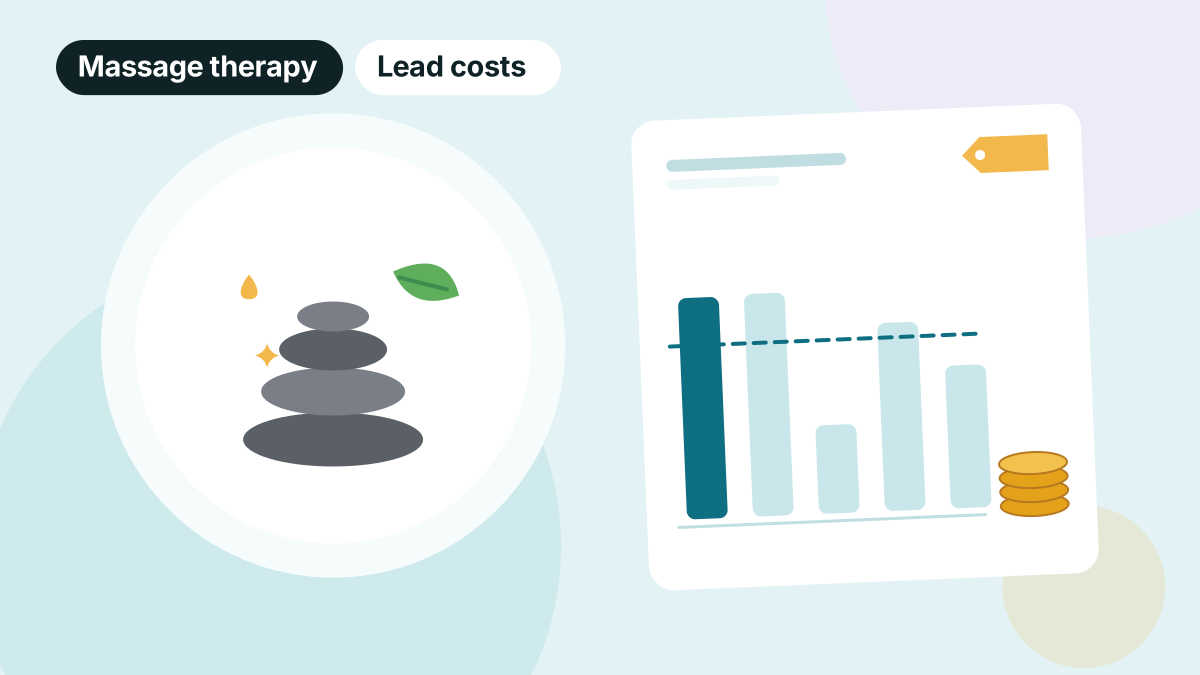
Massage has no benchmark category of its own, so read the three nearest

WordStream by LocaliQ reports no massage category. These are the medians for the categories a massage business could fall under, depending on whether it sells relief or relaxation. They describe the market, not our results, and a lead is a call or a form, not a booked session.

$39.25
Half of Beauty & Personal Care campaigns paid less than this per Google search lead in the year to March 2026
WordStream (LocaliQ), 2026
2.7
Massages per consumer, on average, in the 12 months to June 2025
AMTA consumer survey, 2025
71%
Of massage consumers used massage for a health or medical reason in the 12 months to June 2025
AMTA consumer survey, 2025
64%
Of massage therapists receive referrals from other health care professionals
AMTA, 2026
What one lead costs in the three categories nearest to massage
  • Search ads, Beauty & Personal Care, year to March 2026$39.25
  • Search ads, Personal Services, year to March 2026$54.60
  • Search ads, Health & Fitness, year to March 2026$67.36
  • Facebook lead campaigns, Beauty & Personal Care, 15 months to June 2026$50.91
  • Facebook lead campaigns, Health & Fitness, 15 months to June 2026$27.11

Which row fits depends on how your clients search: relaxation and gift searches sit nearer Beauty & Personal Care, pain and injury searches nearer Health & Fitness. Leads from Facebook forms tend to need a follow-up message before a session gets booked. Sources: WordStream (LocaliQ); WordStream (LocaliQ).

Our plans are affordable for a single-room practice or a mobile therapist with one table in the car. We size the work to the hours you want filled, and you see the first changes on paper, at no charge, before any invoice.

Get your free plan

Paying Google per lead, paying an app per new client, or owning the profile

Three ways a massage business pays for first visits. Florida's license number rule reaches any advertising medium, the internet included, so it follows you onto every one of them.

QuestionLocal Services AdsBooking marketplaces (Mindbody, Vagaro)Your own Google profile and website
What it costs youEach valid lead, billed against the weekly budget you setMindbody: free listing, then 20% capped at $30 on a new client's first purchase. Vagaro: free marketplace listingNo media cost; time to keep photos, services and reviews current
What arrivesCalls and messages, plus booking requests through partners such as Vagaro, Mindbody or Booksy. Google withholds messages and bookings from health care; massage is filed under Wellness, so confirm both in your accountA booked, paid first visitCalls, booking-link taps and direction requests
Before you startBusiness, owner and service professional background checks, general and professional liability insurance, and the state license where one applies; Google's average is three to four weeksWhatever the app asks for at sign-upProfile verification, then a choice between storefront and service area
What the client seesThe Google Verified badgeRatings and reviews inside the appYour Google reviews, license number, therapist names and photos of the real room
Who keeps the clientYou do; the lead comes to youYou do after the first visit; the fee applies only to that first purchaseYou do
Best at"Massage near me" searches from people ready to bookFilling first visits while a new practice builds reviewsThe referred client or gift buyer checking you before booking

Google's switch of Local Services Ads to Performance Max inside Google Ads began in August 2026, and its first wave covered home and storefront services but not massage. Once massage moves, billing per lead stays, verification and the badge transfer, and the manual bid cap disappears.

Five ways massage ads break a state rule or scare off a careful client

No license number on the ad

Florida requires the license number in any advertisement, in any medium including the internet, plus the establishment's physical address and the phone number on file with the state; owners of more than five Florida locations print address and phone only. Texas wants the therapist's legal name or license number wherever an assumed name appears in writing, and California the certificate number in all paid advertising. Put it in the ad text, the profile, the booking page and the gift card page.

Photos a stranger could misread

California can discipline a certificate holder for sexually suggestive advertising related to massage, and Google restricts ads with sexually suggestive images, text or poses. In our experience, close-up body shots from stock libraries are the photos most likely to cause trouble. Use the real treatment room, a draped client, a therapist at work and your credentials.

Using the word "massage" without a Texas license

Texas bars anyone not licensed under its massage law from using the word "massage" in any form of advertising unless exempt, and presumes anyone advertising massage is practicing it. A menu that lists massage needs a licensed therapist behind it, and a salon with one therapist skips the establishment license only if every ad carries that therapist's license number or full name.

Gift cards that expire in a year

Federal rules say gift card funds may not expire sooner than five years after the card was issued or last loaded, and a dormancy or service fee is allowed only after a full year with no activity, no more than once a month. State laws can add more. A twelve-month expiry printed on a holiday card is a problem you sold yourself.

A free upgrade for a five-star review

Google removes reviews bought with discounts or free services, and forbids requesting reviews only from clients you expect to be happy. The FTC's August 2024 rule bars incentives tied to a review being positive or negative. Ask every client the same way after every session, and reply to all of them.

Why a licensed studio has to look unmistakably licensed

Massage shares its name with an illegal trade. In a 2018 report on how human trafficking runs through illicit massage parlors, Polaris put their number at more than 9,000, operating in every state and earning nearly $2.5 billion a year. Anyone trafficked into one is a victim, and the businesses advertise under the same word a licensed therapist uses. That is the reason a legitimate practice gets read by a more cautious eye than most local businesses: the client’s, the ad reviewer’s and the regulator’s.

The Federation of State Massage Therapy Boards says gaps in oversight between state boards and education authorities let the illicit industry run diploma mills that sell fake transcripts and certificates. Its human trafficking task force reported in November 2017, and states have since written rules that reach everyday operations and marketing:

  • Florida bans any massage ad stating that prostitution, escort or sexual services are available, a rule that also binds any third party the owner directs, which covers an agency buying ads for you. It also bans placing online ads on websites known for advertising those services. Establishments may not operate between midnight and 5 a.m., with exceptions such as hotels and health care facilities, and anyone performing massage in one must show government ID when an investigator or officer asks.
  • Texas requires every massage establishment to display a sign about help for trafficking victims in English, Spanish, Korean and Mandarin, and bars sexually oriented businesses from using the words “massage” or “bath” in any advertising.
  • California’s certification council can discipline a certificate holder for sexually suggestive advertising related to massage.

None of these rules is aimed at a licensed therapist doing honest work, but all of them shape what a careful client looks for. FSMTB advises consumers to check a therapist’s license before booking an appointment. Good marketing answers that question before it is asked:

  • the license or certificate number on every ad and listing, not only where the law demands it;
  • each therapist named, with credentials and modalities;
  • photos of the actual room, the table and the people who work there;
  • prices, cancellation terms and draping policy stated plainly;
  • ordinary hours, and reviews that describe the work.

A practice that looks like a clinic online gets booked like one, and the clients it attracts are the ones it wants.

What a massage practice gets in the free plan

You pay nothing for the consult or the evaluation, and the written plan stays with you whether we end up working together or not. For a massage practice it includes:

Get your free plan
  • Where you appear for "massage near me", "deep tissue massage" and "prenatal massage" around your address or service area, and who holds the map and the Local Services Ads spots today.
  • Every ad, listing, booking page and gift card page checked for the license or certificate number and the other details your state requires.
  • Your photos and wording read the way a cautious first-time client, or a Google ad reviewer, would read them.
  • Your Google reviews: how many, how recent, your rating against the 4.5-star line that 31% of consumers draw, and your replies.
  • Your gift card terms checked against the federal five-year rule, plus a gift calendar for Valentine's Day, Mother's Day and December.
  • The first 90 days in order, and what we would leave alone.

What massage therapists ask us before they sign

Do our ads really have to show our license number?

In Florida, Texas and California, yes, in different ways. Florida wants the license number, the establishment address and its phone number in any advertisement, internet included. Texas wants the therapist's legal name or license number alongside any assumed name, plus the establishment license number. California wants the certified name and certificate number in all paid ads. In other states we check the massage board's advertising rule first.

Why does Google keep disapproving our massage ads?

The image is the usual suspect. Google restricts ads whose images, text or poses can be read as sexually suggestive, and a stock photo of bare skin can be read that way. We build ads around photos of the real room and a therapist at work, plain service names and the license number. How we run search ads.

Should we list on Mindbody or Vagaro?

For first visits, often yes, as long as your regulars book with you directly. Mindbody's listing is free and its pricing page sets the fee at 20%, capped at $30, on a new client's first purchase only. Vagaro offers a free marketplace listing and booking through Google. Both are Local Services Ads booking partners, so the same calendar can also serve the ad wherever Google allows bookings in your category.

Can a massage therapist run Local Services Ads?

Yes. Google lists Massage therapist among its Local Services Ads categories, and an approved practice carries the Google Verified badge. Expect checks on the business, its owner and each therapist, insurance certificates for both kinds of liability, and screening that Google says averages three to four weeks. The category sits under Wellness, not health care, so the health care limits on messages and bookings should not apply, but confirm that in your account. The profile it depends on.

How do we compete with Massage Envy and Hand & Stone?

On the therapist, not on price. Massage Envy reports franchise locations in 49 states and Hand & Stone sells on membership, so a monthly plan is what many clients expect. An independent wins by naming who does deep tissue, prenatal or sports work, showing their credentials, and booking every client's next visit before they leave.

When should we push gift cards?

From late January for Valentine's Day, from early April for Mother's Day and from early November for the winter holidays. NRF's surveys put gift cards on 55% of Mother's Day shopping lists in 2026 and on 44% of holiday lists in 2024. Promote to your own client list first, because they can vouch for the gift.

Can our gift cards expire?

Not within five years. Federal rules require gift card funds to last at least five years from issue or the last load, and allow a dormancy fee only after a year without activity and no more than once a month. Some states go further, so check yours before printing.

Can we get referrals from doctors and chiropractors?

Yes, and most therapists already get some. AMTA's 2026 research found 64% of therapists receive referrals from other health care professionals, 60% from chiropractic offices and 45% from physicians. Give referring offices a page to send people to and a booking path that records who sent them. How we track referrals in the CRM.

We practice in Kansas, Minnesota or Wyoming. Does any of this apply?

Less of it, and that cuts both ways. FSMTB lists those three states as having no state regulation of massage, though county or city ordinances may apply. With no state license to show, your training, certifications, insurance and reviews carry the weight a license number carries elsewhere.

Find out how your practice reads to a first-time client

Tell us the business name, the city and whether you work from a room, a studio or clients' homes. In return you will see your rank for the massage searches near you, whether every ad and listing carries what your state requires, how your photos and reviews read to someone booking for the first time, and the changes we would make first.

  • A free consult. A real conversation about your business, your area and what is not working yet.
  • An honest evaluation. Where you stand in search, ads and follow-up next to the businesses you lose customers to.
  • A plan you keep. What we would fix first and why. It is yours whether or not you work with us.

Form not loading? Email hello@beyaoshy.com and we will reply within one business day.

Sources

The figures on this page come from these published sources, checked on October 3, 2026. Benchmarks are averages across many advertisers; your market will differ, which is what the free plan is for.

Agencies with massage therapists and massage studios among their clients: see the partner model.