Skip to content

Nail salon marketing for the map search, the clean-station check and the next fill

A new client opens a map, sees three places within a few blocks and picks on stars, recent photos and whether the stations look clean. In California the state board even tells clients they may ask to see your footspa cleaning log. We make your reviews, your work and your cleaning routine easy to see, then bring each client back for the next fill and the gift card months.

Taking on new nail salons now

Reviewed by Niomi Ascot on

The salons we fit: booked gel work, spotless stations and a review gap

The Bureau of Labor Statistics counts 23% of manicurists and pedicurists as self-employed, so "the salon" can mean a twelve-station shop or one technician in a rented chair. In California a manicurist trains 400 hours before the state exam, the establishment license belongs to the address, one per address, and a booth renter cannot hold their own, which shapes who can market what.

The multi-technician shop selling gel, extensions and art

Saturdays are full and Tuesday afternoons are not. More booked clients for the higher-ticket services, and a rebooking prompt at the fill interval, usually move this salon first.

The clean, well-run salon with thin or stale reviews

The work is good, but the newer place two doors down has more recent reviews and brighter photos, so it wins the map. A steady, rule-safe review ask and fresh photos of current sets close that gap.

The California salon with Healthy Nail Salon recognition, or chasing it

Local programs recognize salons that use less toxic products, improve ventilation and train staff. Once a salon earns it, that recognition belongs on the profile, the site and every review reply about safety.

The nail artist leaving a booth for a studio of their own

A strong portfolio and a following on Instagram, but no Google profile at an address yet. Opening the studio is the moment to set up the profile, the booking link and the review habit together.

Who we would point elsewhere. Salons that want reviews bought, or traded for a discount: Google and the FTC both ban it, and we will not run it. A busy walk-in salon that is already full every day may need only light profile upkeep, and we would say so. And if there are open hygiene complaints or a board matter, fix the operation first; marketing only sends more people to read about it.

How a client picks between three salons on the same block

Ranked by how many new and returning clients each usually brings a nail salon. The decision is fast and local, and in this trade it turns on cleanliness more sharply than almost anywhere else, because state regulators tell consumers to look for it.

  1. Google Maps and the map pack

    The experts polled for Whitespark's 2026 ranking factors put a searcher's distance from the business second and a high star rating sixth on the map pack list. When five salons sit within a short walk, distance stops separating you and the stars, the review dates and the photos decide.

  2. Regulars and walk-in repeats

    Square's 2026 Local Economy Report defines a regular as someone with four or more purchase days a year and uses a full nail salon around the corner as its picture of a busy neighborhood. In our experience, keeping a fill client costs far less than finding a new one.

  3. Instagram and TikTok

    Nail art sells on the picture, and in our experience a set photographed well travels further than any other salon service. Instagram's Book button works only through a scheduling partner, as Vagaro's own setup guide notes, so connect it to the booking system you already use.

  4. Booking apps such as Fresha and Booksy

    Both run marketplaces that send new clients and charge for them: Fresha a one-time fee per new marketplace client, Booksy Boost a share of the first visit, up to a cap. Useful for empty slots; costly as the main front door.

  5. AI assistants

    BrightLocal's 2026 consumers turned to ChatGPT and its rivals for a local pick far more than a year before: 45%, against 6%. The assistants lean on the same reviews and profile details a person reads, so the map work carries over.

  6. Local Services Ads, in two states

    Nail Salon is a Local Services Ads category, but Google's requirements page marks every beauty category, nails included, as open only to advertisers in California and Florida, and no beauty listing can show the Google Verified badge for now. Worth testing there; nowhere else yet.

Sandals open the pedicure season, and gift cards close the year

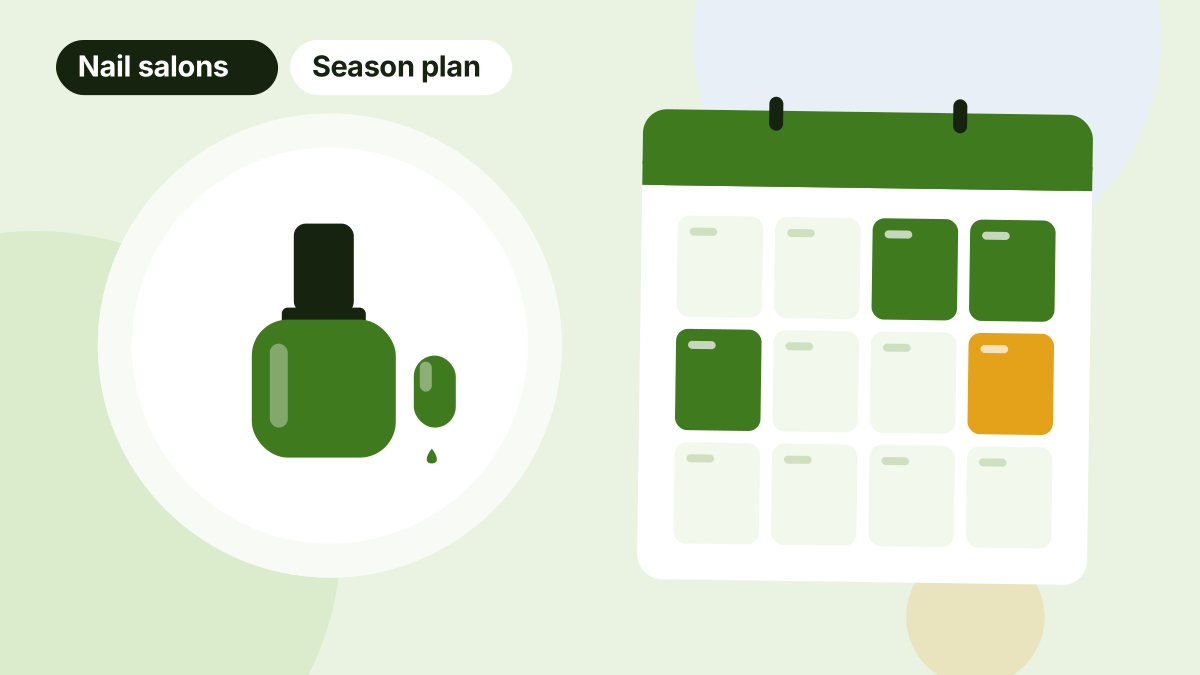
Month by month, this is the usual shape of a nail salon's book; the notes below give the reasons, sourced wherever a source exists. Pedicure demand follows sandal weather, so in our experience salons in the Sun Belt get a longer, flatter season and salons up north a sharper climb from April to August.

Demand through the year for nail salons
  1. January: Slow
  2. February: Slow
  3. March: Steady
  4. April: Busy
  5. May: Peak
  6. June: Peak
  7. July: Busy
  8. August: Steady
  9. September: Steady
  10. October: Steady
  11. November: Busy
  12. December: Peak
January and February
Square's guide for beauty businesses calls these traditionally slower months, and the Seattle nail salon owner it quoted called winter the salon's slowest time. Use the quiet weeks for the review backlog, new photos of current sets and a winter offer sent only to regulars.
Late March into April
Toes come out with the first warm weekends. Before then, list each pedicure service by name on the profile, post a photo of a cleaned footspa, and set spring evening hours, since clients book after work.
Mid-April, ahead of Mother's Day
More than half of the shoppers in the National Retail Federation's 2026 Mother's Day survey (55%) had a gift card on their list. A salon gift card has to be buyable online, from the profile and the site, by mid-April to catch that.
May to October
Wedding season. The Knot puts June and October at 16% of weddings each and May at 14%. Bridal parties book as a group, so a group booking page and one clear contact path belong on the site before spring.
November and December
Holiday parties fill the book, and the NRF found 43% of 2025 holiday shoppers planned at least one gift card, the second most popular gift. Start the gift card push in the week before Thanksgiving, not after it.

Why reviews and visible cleaning come before being found

In most trades the work starts with being found. A nail salon is usually found already: the client is looking at your pin beside three others. What wins the tap is what they see next, so the order changes.

Chosen

Being the one they pick once they have found a few.

Salons a few doors apart are separated by stars, review dates and what the stations look like, not by distance. In BrightLocal's 2026 survey 68% of consumers said they only use businesses rated four stars or more. A review ask after every visit, photos of current sets and of the cleaning routine, and replies in your own words come first.

Found

Being the company that shows up when someone searches.

Then the profile itself: the right primary category, services named the way clients type them (gel, dip, acrylic fill, pedicure), and hours that match when you really take walk-ins. Being open when someone searches sits fifth on Whitespark's 2026 list of map factors, and that matters to a trade that lives on evening and weekend visits.

Kept

Turning one job into the next one and the referral.

Most gel and acrylic clients need a fill or a fresh set within a few weeks, and Square found regulars bring six times the annual revenue of passing customers. Rebooking texts timed to that interval, online gift cards before Mother's Day and December, and a winter offer for regulars do most of the work.

Clear

Knowing which work produced which jobs.

Booking-link taps, calls, gift card sales and new clients who say they found you on Google, counted by month. A salon that only watches Instagram likes cannot tell whether the February offer filled a single chair.

Weeks 1 to 2

Profile, reviews, photos and booking path audited from a phone. Every "non-toxic" or "free" claim on the site, menu and Instagram checked against the actual products. Photos taken of the stations, the posted establishment license and the footspa routine.

Weeks 3 to 6

A review request by text after each visit, sent once the client has left, the reply backlog cleared, services renamed to match searches, and gift cards available online.

Weeks 5 to 9

Rebooking reminders at each service's usual interval, a slow-month offer for regulars, and the Instagram Book button connected through your scheduler.

Weeks 8 to 12

A small campaign ahead of the next busy window: search ads on the higher-ticket services, Facebook and Instagram for gift cards and offers, with bookings compared by source at the end.

Between one fill and the next: where a nail salon loses clients it already has

A nail client comes back on a short cycle, so a salon's best customers are the ones already in its book. They slip away when booking only works during opening hours, when the fill is left for them to arrange, when a pedicure chair sits empty and when review requests depend on who remembers.

Booking and changes only work while the salon is open

In Zenoti's 2025 survey of more than 1,000 US salon and spa-goers, 35% said they already need to manage appointments outside normal business hours. Zenoti sells salon software and did not break out nail clients, so read it as direction. A client who chips a nail at 9 p.m. and finds only a phone number tends to book whichever salon lets her pick a time from the couch.

The fix. Connect a scheduler to the Google profile's Book button and your Instagram bio, with real technician availability and online rescheduling. Keep walk-in slots open on the schedule so the link and the door do not compete. Record a greeting that sends late callers to the link and promises a call back when you open.

The fill is left for the client to remember

Boulevard's 2023 platform data from salons (nails were not reported separately) showed average salons turning 45% of first visits into a second appointment and 39% into a third, against 70% and 57% for the top tenth. Gel and acrylic clients need a fill within a few weeks, so a missed rebook shows up fast as a gap in the book.

The fix. Book the fill at the table, before the hands go under the lamp for the last coat: "Your set will need a fill in about three weeks. I have Saturday the 21st at 11 or the Tuesday after at 6." Print the date on the receipt. For anyone who did not book, send one text on day 14 with a direct link to her technician's calendar, to clients who agreed to texts.

A spa pedicure booked for Saturday, and an empty chair

Zenoti's benchmark figures put salons at a 3% no-show rate and an 8% cancellation rate, without saying how either is measured. On a busy Saturday a missed 75-minute spa pedicure or full set is time a walk-in could have filled, if anyone had known it was free.

The fix. Keep it light for short services and firm for long ones: card on file only for full sets, nail art sessions and spa pedicures, with a cancellation window printed on the booking page and in the reminder. Send the reminder the day before with a reply option to move it. When a long slot frees up, offer it to the walk-in list or text clients who asked for short-notice openings.

Review requests happen only when the owner remembers

In BrightLocal's 2026 survey, 32% of consumers said they look only at reviews from the last two weeks, up from 20% a year earlier. A salon that asks in bursts shows a page of old reviews between them. Google's policy allows asking every client for an honest review but bars pressuring people to post while they are on the premises.

The fix. Set the booking system to send one review request automatically after every checkout, to every client, with the direct Google link and one reminder if it goes unopened. A small QR card at each station is fine; handing a client a tablet while her nails dry is not. Keep the wording neutral: "Thanks for coming in today. Would you share an honest review?"

Beauty & Personal Care benchmarks, the nearest published numbers for nails

No benchmark publisher reports nail salons on their own. The closest category in every source is Beauty & Personal Care, which also covers hair and spa businesses. Each figure is the middle value across a large pool of accounts, none of them ours, and a fill client who returns every few weeks is worth judging against more than one manicure.

$39.25
What the median Beauty & Personal Care advertiser paid for each Google search lead in the year ending March 2026
WordStream by LocaliQ, 2026 edition
2.73%
Median click-through rate on Beauty & Personal Care Facebook traffic campaigns, the highest of any industry, over the fifteen months to June 2026
LocaliQ, September 2026
At least 50%
How much exhaust ventilation may cut worker chemical exposure in nail salons, according to NIOSH laboratory tests
OSHA
9%
Projected growth in manicurist and pedicurist jobs from 2025 to 2035, from 201,800 jobs; BLS calls it much faster than average
Bureau of Labor Statistics, 2026
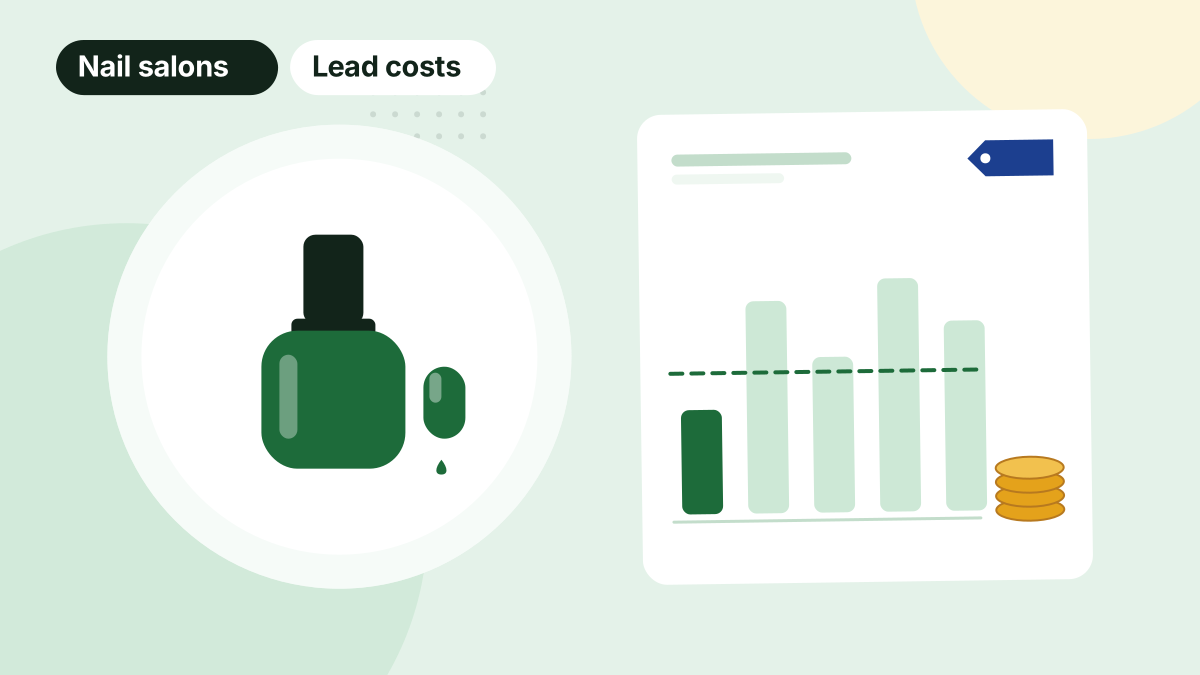
Beauty & Personal Care: what one lead cost, Google search beside Facebook forms
  • Beauty search ads, year ending March 2026$39.25
  • Beauty search ads, year ending March 2025$60.34
  • Beauty lead forms on Facebook, 15 months ending June 2026$50.91
  • Beauty lead forms on Facebook, 15 months ending June 2025$51.42
  • All industries combined, search ads, year ending March 2026$66.69

In the latest editions a beauty search lead cost less than a Facebook form lead; a year earlier the order was reversed. Facebook still sells the cheaper click, a median $0.50 on beauty traffic campaigns against $4.62 on search, which suits gift card and offer posts better than lead forms. Sources: WordStream by LocaliQ; WordStream by LocaliQ; WordStream by LocaliQ; WordStream by LocaliQ.

Priced for one salon with a handful of stations rather than for a chain: affordable, and sized to the months you want fuller. Judge us first on the free plan, which names the three changes we would make to your salon before anything else.

Get your free plan

Local Services Ads, a booking app or your own profile: where a new nail client books

Three ways a nail salon pays for a new client, side by side. Most salons use the profile everywhere, a booking app for empty slots, and Local Services Ads only if they are in one of the two states where beauty runs.

QuestionLocal Services Ads (California and Florida)Booking apps such as Fresha and BooksyYour Google profile and booking link
How you payGoogle bills each lead it judges valid, and a booking request counts as oneA charge for each new client the marketplace sends, set by the appNo fee per client; time to keep services, photos and hours current
Where it runsBeauty is listed for California and Florida onlyInside the app and its marketplaceGoogle Search and Maps, wherever the salon is
BookingThrough the ad when your scheduler is a Google booking partner such as Vagaro, Booksy or Square; each booking request is a charged leadInside the appA booking link on the profile from the scheduler you already run
Trust signalsNone: Google keeps the Verified badge off beauty listingsRatings on the app's own listingYour Google reviews and photos of your own sets and stations
Before you startProof of general and professional liability coverage, state business and owner licenses where they apply, and a business and owner check for some salons; three to four weeks on averageSigning up on the app's termsVerification of the profile at your street address
Best atNew clients who want to book from the top of the pageFilling open slots while your own reviews buildThe "nail salon near me" search that compares stars and photos

Local Services Ads are being merged into Google Ads. The first phase, in August 2026, covered home and storefront services; Google lists every remaining category for 2027, and nail salons were not named in that first group, so the beauty setup above still applies.

Nail salon habits that break a review rule or hide the work you do well

Ten percent off for five stars

Google's Maps policy bans anything offered in exchange for a review, and bans choosing whom to ask so that only the happy clients hear from you. The FTC's rule, in force since October 21, 2024, outlaws rewards that depend on the review being positive. Send every client the same request with nothing attached, and keep staff and family off the profile: Google treats them as conflicts of interest.

A spotless salon nobody can see

California's board tells clients they may ask to see footspa cleaning logs and should leave if they doubt the salon's cleanliness. Texas publishes a foot spa cleaning record for salons to fill in. Photograph the routine, keep the log where clients can see it, and describe your ventilation on the site.

"Non-toxic" on the menu with no product list

OSHA cites a California study in which some products claiming to be free of the toxic trio tested positive for those very chemicals. In California, cosmetics with intentionally added formaldehyde or dibutyl phthalate have been banned from sale since January 1, 2025, so "formaldehyde-free" is the legal floor there. Name the brands and the ventilation instead.

A stock apology under a cleanliness complaint

In BrightLocal's 2026 survey nearly nine in ten consumers (89%) said they expect the owner to reply, and half said a templated reply puts them off. Say calmly what happens between clients, invite the reviewer back, and never offer anything for taking the review down, which Google's policy also forbids.

No gift card a shopper can buy at 11 pm

Gift cards were on the list for more than half of Mother's Day shoppers and two in five holiday shoppers in NRF's surveys. A salon that sells gift cards only at the front desk misses the shopper who decides late at night, from a phone, a week before the date.

Footspa logs and the toxic trio: what a nail client is told to look for

In October 2000, California health officials traced an outbreak of skin boils to clients who had soaked their feet in salon footspas. The state’s Board of Barbering and Cosmetology still cites that outbreak in the consumer fact sheet it publishes today, last revised in March 2024, and the advice in it reads like a checklist your next client may carry in with them:

  • check for a current establishment license posted in the reception area;
  • footspas must be cleaned after every client;
  • you have the right to ask to view the footspa cleaning logs;
  • leave the salon if you have any doubts about its cleanliness.

The board offers its consumer fact sheets in Korean, Vietnamese, Simplified Chinese and Spanish as well as English. Florida registers nail technicians as Nail Specialists and asks for 10 hours of continuing education at renewal, three of them on sanitation and sterilization. Texas works from the salon’s side: its licensing department publishes the required whirlpool foot spa cleaning steps after each client, with a downloadable cleaning record in English, Spanish and Vietnamese, and lists products not labeled as OSHA requires among its ten most common violations.

The chemistry is a client question too. OSHA names toluene, formaldehyde and dibutyl phthalate, the three chemicals the industry calls the toxic trio, among the chemicals found in nail products, and requires employers to keep safety data sheets and train workers. The FDA regulates the polish as a cosmetic and leaves the salon and the license to the states. It moved against products made of 100 percent methyl methacrylate monomer in the 1970s, yet no regulation specifically bans the monomer in cosmetics, so a client who asks what goes into their acrylics deserves a straight answer.

What this means for marketing. A regulator has already told your clients what to look for, so show it before they ask: a photo of the posted establishment license, a short video of a footspa being cleaned between clients, the cleaning log on the wall where it can be read, the ventilation described on the site, and the polish brands named on the menu rather than a blanket “non-toxic”. A salon that does this answers the question in the review section before anyone writes it there, and a salon in a California city with a Healthy Nail Salon program has a recognition to point to as well.
Your free plan, from the map pack to the gift card page

Hire us or not, the first call is free, the read on your salon is candid, and the written plan leaves with you to use as you like. For a nail salon it covers:

Get your free plan
  • Where you appear for "nail salon near me," "gel manicure," "pedicure" and "acrylic nails" around your address, and which salons hold the three map spots today.
  • Your profile read the way a client reads it: category, services named the way people search, hours against your real walk-in times, booking link and photos of current work and stations.
  • Your reviews beside the two or three salons you lose clients to: total count, the dates on the newest ones, and how replies to cleanliness or service complaints read.
  • Every "non-toxic," "3-free" or safety claim on your site, menu and Instagram, and any review request wording that breaks Google's rules.
  • Whether a shopper can buy a gift card online before Mother's Day and December, then a week-by-week order for your first three months.

What nail salon owners ask before they hire anyone

Most of our clients walk in. Do we still need online booking?

Yes, alongside the walk-ins, not instead of them. A 2025 survey of salon and spa-goers by the software vendor Zenoti found 71% of salon regulars had skipped booking because they could not reach anyone or book online. Keep the door open and put a booking link on the profile and Instagram for the clients who will not call.

Should we list on Fresha or Booksy?

For empty slots, yes; as your only front door, no. Fresha charges a one-time fee for each new client from its marketplace, and Booksy Boost takes a share of the first visit up to a cap. The booking button on your own Google profile costs nothing per client, and a client who books there chose you rather than the app.

How should we answer a review that calls the salon dirty?

Once, specifically and calmly. Say what you actually do between clients, such as cleaning each footspa after every client and disinfecting tools, invite the reviewer back to see it, and leave it there. Never offer anything for removing the review: Google's policy bans incentives for that too. How we handle review replies.

Can we advertise that our polish is non-toxic?

Name the products instead. OSHA cites a California study where some products claiming to be free of the toxic trio tested positive for them. California has banned cosmetics with intentionally added formaldehyde and dibutyl phthalate since January 1, 2025, with a second list of ingredients following on January 1, 2027, so in California those claims describe the minimum.

Can a nail salon run Google's Local Services Ads?

Only in California and Florida for now, and without a badge. Nail Salon is a category, but Google's requirements page confines beauty to those two states, and its category list says beauty cannot earn the Google Verified badge at present. If your scheduler is a booking partner such as Vagaro, Booksy or Square, clients can book through the ad, and each booking request counts as a paid lead.

Is Instagram enough on its own?

No. Instagram shows the work; Google Maps is where nearby clients compare salons on distance and stars, two of the strongest signals in Whitespark's 2026 ranking study. Use both, link Instagram from the profile, and connect Instagram's Book button through your scheduler. How we set up the profile.

Do Facebook and Instagram ads work for a nail salon?

For gift cards, offers and new-client promotions, often; as lead forms, less so. Beauty & Personal Care had the highest Facebook traffic click-through rate of any industry in LocaliQ's 2026 data, at 2.73%, but its Facebook lead-form leads cost more than its Google search leads. How we run Meta ads for local businesses.

Can you get us recognized as a Healthy Nail Salon?

We cannot award it, but we can make it count once you earn it. In California these programs are run voluntarily by cities and counties under state guidelines required by AB 2125, with early programs in San Francisco, Alameda, San Mateo and Santa Clara counties and Santa Monica. Salons qualify through less toxic products, better ventilation and staff training.

Clients ask whether gel or UV lamps are safe. What do we say?

Point to the trade body and make no medical claims. The Professional Beauty Association's Nail Manufacturer Council says UV nail lamps are safe and that the EU restricted one ingredient, TPO, rather than banning gel polish. Say who said it, and let the client decide.

Can we advertise house calls or express manicures?

Express services, yes; house calls only where your state allows them. The BLS links much of the trade's projected growth to quick, low-cost mini-sessions and mobile manicures and pedicures. But Florida's board says manicuring and pedicuring must be performed in a licensed salon, so check your state's rules and exceptions before a mobile service goes in any ad.

See how your salon stacks up against the three closest pins

Tell us the salon, the street it is on, and whether your book is mostly walk-ins or appointments. In return you get your rankings for the nail searches around you, how your reviews, photos and replies compare with the salons nearest you, any claim or review request we would change, and the first steps we would take before your next busy month.

  • A free consult. A real conversation about your business, your area and what is not working yet.
  • An honest evaluation. Where you stand in search, ads and follow-up next to the businesses you lose customers to.
  • A plan you keep. What we would fix first and why. It is yours whether or not you work with us.

Form not loading? Email hello@beyaoshy.com and we will reply within one business day.

Sources

The figures on this page come from these published sources, checked on October 3, 2026. Benchmarks are averages across many advertisers; your market will differ, which is what the free plan is for.

Agencies with nail salons among their clients: see the partner model.