Skip to content

Hair salon and barbershop marketing that books new clients on your own link

A salon's year is mostly the same clients coming back every few weeks, and across local businesses, Square's 2026 transaction data puts a regular at six times the annual revenue of a one-time customer. New clients still arrive through Google Maps, Instagram or a booking marketplace that keeps up to 30% of their first visit. We make your own profile the place they book, keep review requests inside Google's rules, and get the next date on the calendar before anyone leaves the chair.

Taking on new hair salons and barbershops now

Reviewed by Niomi Ascot on

Three habits that cost a salon its regulars, its reviews or its margin

Asking at the chair, or asking clients to name their stylist

Google's review policy says businesses should not pressure people to review while on the premises, and bars them from having staff request reviews that identify a staff member. A tablet passed across the chair, or a card that says "mention your stylist", puts those reviews at risk of removal. Send every client the same plain request by text after the visit.

Paying a marketplace for clients who were already looking for you

Booksy Boost keeps 30% of a new client's first visit up to $100, and StyleSeat 30% up to $50. Worth it while a stylist builds a book. Less so once your own profile can be found: a Book button on it, through a scheduling partner, sends those same clients straight into your own calendar.

Letting the client leave without the next date

Square's 2026 report quotes a barber who is "always pushing to rebook before you leave", and its data puts a regular at six times a one-time customer's yearly revenue. A salon that skips the rebook through the holidays walks into January with gaps and starts discounting. Ask at checkout, every time.

Full by Thanksgiving, quiet by February, with weddings in between

The month ratings reflect a typical salon or shop year. The holiday crush and the January drop come from stylists quoted by NAILS Magazine and from Square's guidance for beauty businesses; the wedding months come from The Knot's 2026 study of 10,474 couples.

Demand through the year for hair salons and barbershops
  1. January: Slow
  2. February: Slow
  3. March: Steady
  4. April: Busy
  5. May: Busy
  6. June: Busy
  7. July: Steady
  8. August: Steady
  9. September: Busy
  10. October: Busy
  11. November: Peak
  12. December: Peak
January and February
After a November and December that NAILS describes as fully booked, stylists often see a drop off, and Square calls these months traditionally slower as clients rein in their spending. The remedy is set in December: the January appointment booked at checkout, and a follow-up on every gift card sold.
Early May
NRF's 2026 Mother's Day survey had 55% of shoppers planning to give gift cards. A gift card someone can buy from your profile or site at ten at night catches part of that without a phone call.
May to October
The Knot puts 76% of weddings in these six months, with June and October tied at 16% each. Bridal parties tend to book as a group, so one inquiry answered the same day can fill a Saturday morning. List bridal services on the profile and site before spring.
Late summer
Square flags a late-summer slowdown as free time goes to vacations and back-to-school tasks. Barbershops often see the reverse in August with kids' cuts, so a reminder to families who came in last August is worth sending.
September and October
NRF found 43% of holiday shoppers planned to buy at least one gift card in 2025, and ranked gift cards second among all gifts. Open the December book and put gift cards on sale in the fall, so the busiest weeks are spoken for before they start.

How a new client finds a chair, and how a regular gets back in it

In order of how much business each tends to bring a salon or shop that has been open a few years. The first one is not a channel you buy, and it is still where most of the money sits.

Regulars, and the friends they send

Square's 2026 Local Economy Report, built on its own payment data, puts a regular's annual revenue at six times a one-time customer's, with tips 11% higher. It also saw beauty customers visiting fewer businesses, which it reads as deeper loyalty. A next appointment booked at checkout is the cheapest marketing a salon has.

Google Maps, with a Book button on the profile

Google adds a booking button through scheduling partners such as Booksy, Fresha, Mindbody, Square Appointments and Squire, and the button arrives within about a week of connecting one. In Whitespark's 2026 expert survey, being open when the search happens ranks fifth of all map pack factors, which counts in a trade whose busiest hours often fall in the evening and on weekends.

Booking marketplaces

Booksy Boost charges 30% of a new client's first visit, capped at $100. StyleSeat's New Client Connection takes 30% with a $50 cap, and Fresha charges a one-time new-client fee. Fair money while a new stylist fills an empty book; an expensive way to meet clients who were already searching for your shop by name.

Instagram, as the portfolio

Cut and color are judged from pictures before anyone reads a word. Instagram's Book button only works through a scheduling partner, and a Google profile accepts one Instagram link, so the grid, the bio and the profile should all point at the same booking page.

AI assistants, Apple Maps and other review sites

BrightLocal's 2026 review survey found Google slipping from 83% to 71% as the place people go for reviews, Apple Maps climbing from 14% to 27%, and ChatGPT and similar tools for local recommendations jumping from 6% to 45%. Matching services, hours and photos everywhere is the groundwork for being the shop they name.

Local Services Ads, in two states

Google lists Hair Salon and Barber Shop as categories, but its requirements page says the beauty block is open in California and Florida only, and beauty listings cannot earn the Google Verified badge. Google screens for both general and professional liability cover plus state-level business and owner licenses, and Booksy, Square and Vagaro can carry bookings into the ad.

A marketplace fee, a search ad or your own Book button

Three ways a salon pays for a new client's first booking. Most shops use more than one; the real question is which one you keep paying for after that client already knows where you are.

QuestionBooking marketplaces (Booksy, StyleSeat, Fresha)Google search adsYour Google profile with a Book button
How you payA share of the first visit: Booksy Boost and StyleSeat take 30%, capped at $100 and $50; Fresha charges a one-time feePer click, and a click still has to bookNo media cost; time to keep services, hours and photos current
Where the client finds youIn the marketplace, alongside other salons it listsOn your own landing pageOn your own listing, booking into your calendar
What you can measureWhat the marketplace dashboard reportsClicks, calls and bookings, tagged by serviceBookings through a Reserve with Google partner; Google reports nothing for custom links
The second visitBooksy charges Boost on the first visit only and sends a "book again" reminder three weeks laterPaid again if a regular clicks the ad instead of your listingRebooked on your own link or at checkout
Before you startA marketplace account and a profile on itAn account, landing pages and booking trackingA verified profile, plus a scheduling partner or your own booking link
Best atFilling a new stylist's empty bookHigh-ticket services: color, extensions, bridalClients who searched your name or "barber near me" and want a time tonight

Local Services Ads list Hair Salon and Barber Shop, but Google's requirements page lists beauty as open in California and Florida only, and no beauty listing can carry the Google Verified badge. In August 2026 Google began converting those accounts to campaigns inside Google Ads, starting with home services, and its published timeline brings the remaining categories over in 2027.

The chair was empty and the client wanted it: four salon leaks after the first visit

A salon or barbershop pays most for a new client once, then either books them every few weeks or loses them. The leaks sit in a phone nobody can answer mid-cut, a first visit that never becomes a second, a color slot left empty and a lapsed regular nobody contacts.

Clients can't get through, so they book somewhere else

In a 2025 survey by Zenoti, which sells salon software including an AI receptionist, 71% of salon regulars said they had decided not to book because it was too hard to reach someone or to book online. Zenoti publishes no fieldwork dates or method, and it sells a fix for the very problem it measured. Boulevard's platform data adds a correlation worth knowing: clients who booked online returned 78% of the time, against 39% for walk-ins.

The fix. Put one booking link everywhere a client looks: the Google profile's Book button, the Instagram bio and the voicemail greeting ("We're mid-cut right now. Book or move your appointment any time at the link on our Google listing."). Let clients reschedule and cancel online without calling. Check missed calls between clients, and return each one before the next appointment starts.

The first visit that never becomes a second

Boulevard's 2023 report on more than 30,000 businesses found the average salon turned 45% of first-time visits into a second appointment, against 70% for the top tenth of salons. Zenoti's 2025 benchmark figures say top-earning salons rebook clients within 24 hours at three times the average rate. Both are vendor platform data.

The fix. Give every first-time client two chances to book again. In the chair, the stylist names the interval: "This cut will hold its shape about five weeks. Want me to put you in on the 12th?" For anyone who says they'll book later, send one text within 24 hours from the stylist, with a direct link to that stylist's calendar. Each week, count how many first-timers left with a second date.

A three-hour color appointment that does not show

Zenoti's benchmark figures put salons at an 8% cancellation rate and a 3% no-show rate, with no definition, sample or geography published. Averages hide where it hurts: one missed balayage or color correction can empty a stylist's whole afternoon, while a missed beard trim costs 20 minutes.

The fix. Ask for a card on file only for long services, such as color, extensions and corrections, and write the cancellation window into the booking page and each reminder. Send two reminders, two days ahead and the evening before, with a way to reply to move the time. When a long slot opens, text the clients on that stylist's waitlist first.

Regulars who drifted off, and nobody noticed for months

A regular who used to come every five weeks and has not been back in ten has usually found another chair, and the salon software already knows who they are. Any message to win them back is marketing: FCC rules require prior express written consent for automated promotional texts, and the FTC's CAN-SPAM guidance requires an unsubscribe option honored within 10 business days on commercial email.

The fix. Each month, pull clients who are two full intervals past their last visit. Send a personal note from their stylist rather than a discount blast: "It's been a while since your last cut, and I've got openings next week if you want to come back in." Text only clients who agreed to marketing texts, email the rest with an unsubscribe link, and stop after two tries. Ask counsel whether your booking form's marketing box is worded tightly enough to cover these texts.

Why the rebook comes before any ad for new clients

Square counts a customer as a regular after four visits in a year, and that is where a salon's money sits. So the order starts with the client already in the chair, then the profile a stranger books from, then the reviews that persuade them, then the numbers.

Kept

Turning one job into the next one and the referral.

Rebooking at checkout, a reminder when a client's usual interval passes, and a note to anyone who has not been back in a few months. Regulars are worth six times a one-time customer in Square's data, so this pays before a single ad runs.

Found

Being the company that shows up when someone searches.

Primary category, services, hours and a Book button through a Reserve with Google partner or your own link. Whitespark's 2026 survey ranks the primary category first among map pack factors, and a connected scheduling partner's button goes live in about a week.

Chosen

Being the one they pick once they have found a few.

Photos of current stylists' work, a review request after every visit with no staff names and no incentives, and a reply to each review. Reviews go stale fast here: 74% of consumers in BrightLocal's 2026 survey disregard anything older than three months, and BrightLocal adds that older reviews may matter less once staff have changed.

Clear

Knowing which work produced which jobs.

Booking clicks, calls and marketplace fees tracked by source. Google gives no performance data for custom booking links, so a Reserve with Google partner usually tells you more about what the profile actually books.

Weeks 1 to 2

An audit of what a new client sees. The Google profile, the booking path on a phone, review count and recency, and what the salon paid marketplaces last quarter.

Weeks 3 to 6

Retention running before anything else. The rebook prompt at checkout, a reminder at each client's usual interval, a review request after every visit and a message to clients who have lapsed.

Weeks 4 to 8

A profile rebuilt to take bookings. Categories and services matched to what you sell, a Book button through a scheduling partner, the Instagram link added and photos of current work from every chair.

Weeks 8 to 12

Search ads only where the ticket justifies them. Color, extensions and bridal in your area, judged on booked appointments rather than clicks, with the holiday and wedding months planned ahead.

What a new salon client costs before they sit down

Published medians for the category salons and barbershops fall into, Beauty & Personal Care in WordStream by LocaliQ's benchmarks, beside the fees booking marketplaces publish. These are market medians, not results of ours. Weigh any of them against a client who comes back every few weeks, not against one haircut.

$39.25
Median Google search ad cost per lead in Beauty & Personal Care over the 12 months to March 2026, well under the $66.69 median for all industries
WordStream by LocaliQ, 2026
30%
Of a new client's first visit goes to Booksy when Boost brings them in, capped at $100 per client
Booksy Boost
6X
Annual revenue from a regular against a one-time customer, national average across local businesses in Square's own data
Square Local Economy Report, 2026
72%
Of couples married in 2025 hired hair and makeup professionals, at an average spend of $300
The Knot Real Weddings Study, 2026
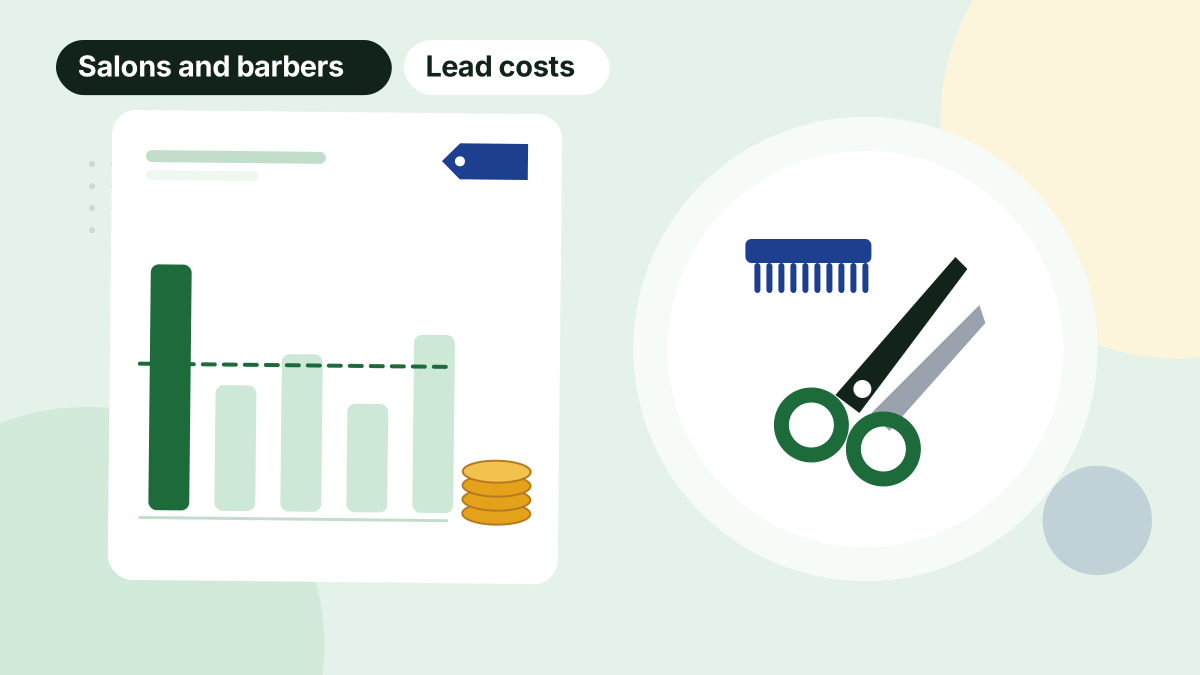
Median cost per lead: beauty against the wider market
  • Google search, 12 months to March 2026: Beauty & Personal Care, the salon category$39.25
  • Google search, 12 months to March 2025: the same salon category$60.34
  • Google search, 12 months to March 2026: all industries combined$66.69
  • Facebook lead ads, 15 months to June 2026: Beauty & Personal Care, for salons$50.91

A search lead is someone asking for a time; a Facebook form fill is a name and a number that still has to be chased. Marketplace fees sit off the chart because they are charged per arriving client, not per lead: Booksy caps its fee at $100 and StyleSeat at $50. Sources: WordStream by LocaliQ; WordStream by LocaliQ; WordStream by LocaliQ.

Our plans are affordable for an owner who still works a chair most days. We size them to how many chairs need filling, and the free plan lays out our first moves before you pay us anything.

Get your free plan

From a two-barber shop to a building full of rented suites

BLS counts 80% of barbers and 48% of hairdressers, hairstylists and cosmetologists as self-employed, so one "salon" is often several small businesses under one roof. Each profile below settles who the marketing is for before it settles what to run.

The owner-run salon with stylists on staff

Stylists are employees or on commission, the front desk books every chair and one system holds the client list. Here a single Google profile, one review routine and one rebooking sequence pay off fastest, because every appointment lands in the same calendar.

The barbershop with a packed Saturday and an empty Tuesday

Visits are short and frequent, so the booking link and the rebook carry more weight than wedding season does. BLS notes that evenings and weekends are when barbershops and beauty salons may be busiest; the job is moving regulars into the weekday gaps through your own link, not through a discount.

The color, extension or bridal specialist

Clients research these appointments by service name before they book. The Knot found 72% of couples married in 2025 hired hair and makeup professionals, spending $300 on average. Search ads on service terms earn their keep here, backed by photos of current work.

The booth-rental or suite building

Each renter keeps their own clients, prices and booking link, which is what makes them a separate business in the IRS's description. We market the building so new clients find it, and send them to each renter's own booking page instead of a front desk nobody staffs.

Who we would point elsewhere. A single renter with a full book from referrals probably needs nothing beyond a booking app and an Instagram grid, and we would say so. A rental building where nobody owns the shared marketing should settle who pays and who benefits first. And we will not buy, gate or reward reviews, or hand clients a tablet at the chair: Google's review policy rules out each of those, and the FTC's review rule, in effect since October 2024, allows civil penalties for knowing violations, including fake reviews and rewards tied to a positive rating.

When the chairs are rented, whose marketing is it?

In most local businesses one address means one business. Salons and barbershops often do not. BLS counts 80% of barbers and 48% of hairdressers, hairstylists and cosmetologists as self-employed, and notes that some lease booth space from a salon owner. Before anyone spends money on ads, someone has to decide whose clients they are, and the rules draw that line more sharply than most owners expect.

How the IRS describes a renter. Publication 4902 calls a booth renter someone who leases space from an existing business and runs their own as an independent contractor. Its signs include having your own phone number and business name and setting your own prices. A renter who does all three owns the client relationship, so their reviews, their Instagram and their booking link should stay theirs.

Who books is a signal too. OSHA’s guidance says that when the owner or receptionist makes the appointments for all workers, those workers may be more likely to be considered employees. A shared front desk that books every chair is convenient for marketing, and it also weighs on how renters are classified. Settle it with your accountant before booking is centralized.

What two big states require. In California only the owner of an establishment may apply for its license, and only one establishment license is issued per address, so a booth renter cannot hold a separate shop license at the same address. Only an establishment that employs a barber may display a barber pole. In Texas the lessor must keep a list of every renter with their license number, and a suite rented inside a licensed establishment and run on its own is licensed separately as a mini-establishment.

What we build for a rental building. The building’s Google profile and site market the place itself: where it is, which services are offered under its roof, hours, parking and photos of the space. Each renter gets a page or a listing that sends clients straight to their own booking link, and nobody’s client list quietly becomes the building’s.

And for a salon with stylists on staff, the reverse holds: one profile, one booking system, one rebooking sequence and one review routine, because every client belongs to the salon.
What a salon or barbershop owner gets in the free plan

Ask, and the first consult costs a salon or barbershop nothing. You hear plainly how your shop looks to a new client and leave with a written plan that stays yours either way. The plan covers:

Get your free plan
  • Your position for "hair salon near me", "barber near me" and two of your best services in your neighborhood, and which shops hold the map pack today.
  • Your Google profile on a phone: primary category, services, hours, the Book button and which partner runs it, and the Instagram link.
  • Your review count and the last three months, set against the two or three shops clients compare you with, and a check that your review requests follow Google's rules.
  • What you paid booking marketplaces last quarter, beside what your own profile booked in the same months.
  • How rebooking works at your checkout today, and what a client hears from you after three months without a visit.
  • A 90-day order of work that fits around your holiday and wedding months.

What salon and barbershop owners ask before signing anything

Should I pay Booksy or StyleSeat new-client fees, or run Google ads instead?

Often both for a while, then less of the marketplace. Booksy Boost takes 30% of a new client's first visit up to $100 and StyleSeat 30% up to $50, charged once the client arrives. Google search ads in Beauty & Personal Care had a median cost per lead of $39.25 in WordStream by LocaliQ's 2026 benchmarks, and a lead still has to book. Judge both against a client's visits over a year, not the first ticket. How we run search ads that book appointments.

Can my salon run Google Local Services Ads?

Only in California or Florida, going by Google's requirements page. Google lists Hair Salon and Barber Shop as categories, but that page labels the entire beauty section California and Florida only, and beauty gets no Verified badge. Expect to show general and professional liability cover and state business and owner licenses; Booksy, Square or Vagaro can pass bookings through the ad.

Can I ask clients to mention their stylist in a Google review?

No. Google's review policy bars a business from having staff ask for reviews that identify a staff member, and says nobody should be pressured to review while on the premises. Ask every client the same way, by text after the visit, and reply to whatever they write. Plenty will name their stylist on their own, and that is fine. How review requests work with us.

Do I need a website if I already have Instagram and a booking app?

Yes, a simple one. The Google profile can carry the Book button and one Instagram link, but BrightLocal's 2026 survey found 54% of consumers check a business's website after reading positive reviews. Whitespark's 2026 survey of local search experts also ranks a dedicated page for each service first among local organic factors, and an Instagram grid cannot be that page.

My stylists rent their chairs. Who should the marketing be for?

The building, with a path to each renter. The IRS describes a booth renter as running their own business, with signs such as their own phone number and business name and setting their own prices, so those clients are theirs. We market the shop's profile and site and send new clients to each renter's own booking link.

What can we do about January and February?

Most of it happens in November and December. Stylists quoted by NAILS Magazine describe those months as fully booked and the two after them as a drop off. Book the next appointment at checkout through the holidays, follow up on December gift cards, and message clients who pass their usual interval in January before reaching for a discount.

Is it worth paying for Facebook and Instagram ads for a salon?

For awareness and offers, yes; as a lead form, less so. In WordStream by LocaliQ's 2026 Facebook benchmarks, Beauty & Personal Care had the highest click-through rate of any industry on traffic campaigns, 2.73%, and the second-highest median cost per lead of 14 industries on lead campaigns, $50.91. How we run Meta ads.

Can software answer the salon phone and book appointments?

Yes, and many clients are open to it. In a 2025 survey by Zenoti, which sells salon software, of more than 1,000 salon and spa clients, 41% of regulars were very comfortable with an AI receptionist and 38% were open to one, while 71% had decided not to book because reaching someone or booking online was too hard. Google may also call your shop to book on a customer's behalf. How our voice agents book.

Do you market a barbershop differently from a color salon?

Yes. BLS counts 80% of barbers as self-employed against 48% of hairdressers, so a barbershop is more often a room of independent chairs. Visits are shorter and more frequent, which puts the weight on a fast booking link and the rebook; a color salon leans harder on service searches, photos and wedding season.

See what a new client sees before they tap Book

Tell us the salon or shop, the neighborhood, how many chairs, and whether your stylists are on staff or renting. In return you will see your rankings for the searches that bring new clients, how your profile and reviews read on a phone, what your marketplace fees are buying, and which fixes come first so the holiday book fills on your own link.

  • A free consult. A real conversation about your business, your area and what is not working yet.
  • An honest evaluation. Where you stand in search, ads and follow-up next to the businesses you lose customers to.
  • A plan you keep. What we would fix first and why. It is yours whether or not you work with us.

Form not loading? Email hello@beyaoshy.com and we will reply within one business day.

Sources

The figures on this page come from these published sources, checked on October 3, 2026. Benchmarks are averages across many advertisers; your market will differ, which is what the free plan is for.

Agencies with hair salons and barbershops among their clients: see the partner model.