AI Mode is here. Get named, not just ranked
Google put AI Mode in Labs and ran a core update. What we are checking on client listings, and why being named now matters as much as ranking.
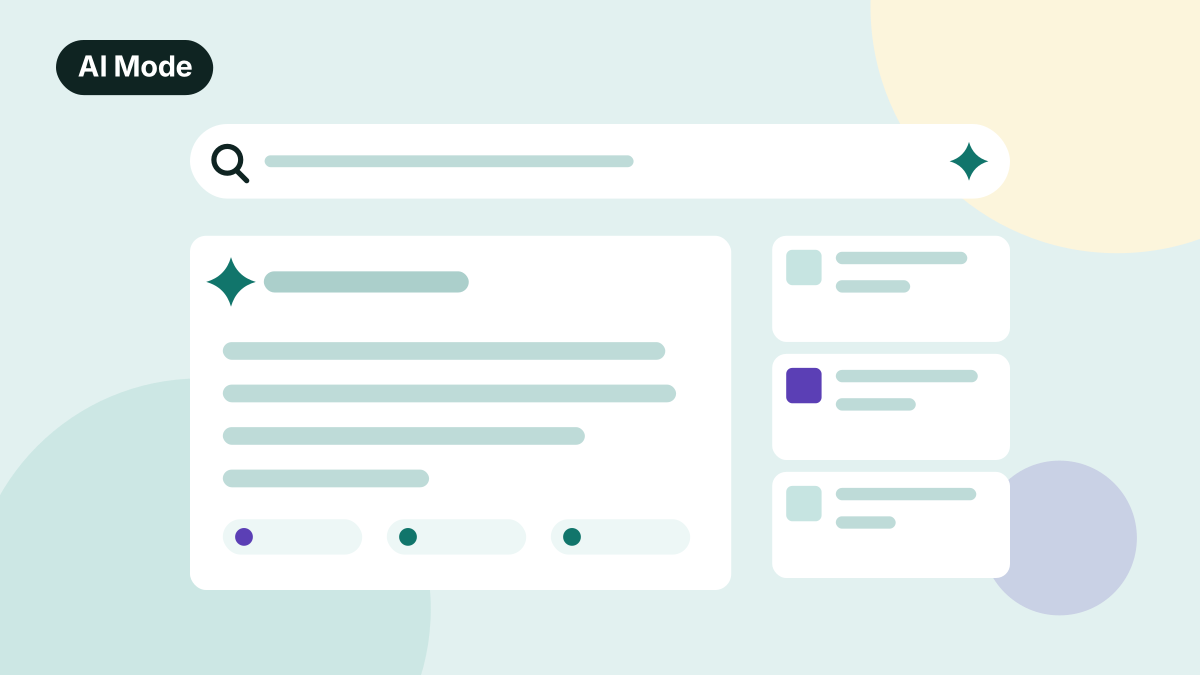
Ask AI Mode which dentist near you does same day crowns and takes evening appointments, and you get a paragraph back with three practices named inside it. No map pack, no ten blue links, just a written answer that has already made the shortlist for the person reading. Google opened that tab in Search Labs on March 5, 2025, and a core update ran from March 13 to March 27.
One of those is a preview of how people will search. The other is the ordinary churn we deal with a few times a year. Together they make the point we have been making to clients since the first AI answers showed up in search: the question is no longer only where you rank, it is whether you get named.
What AI Mode actually is
It is an opt-in experiment in Search Labs. You get a tab, you ask a question in full sentences, and you get a written answer with links off to the side. You can ask a follow-up and it keeps the thread. Google describes it as using a query fan-out, where your one question is broken into several searches behind the scenes and the results are pulled back together into an answer.
That last part is the bit worth understanding. When somebody asks “which dentist near me can do a same day crown and takes evening appointments”, they are not running the three separate searches they used to run. The machine runs them, and it needs a source that ties those facts together in one place. If your site says you do same day crowns and your profile says you are open until seven, that is two sources agreeing. If neither says it plainly, you are not in the shortlist.
We spent the weeks after the launch asking it about client categories in the metros we work in, and a few things are consistent:
- It names businesses. Not always the same three as the map pack. Sometimes a business ranking fourth or fifth organically gets named first in the text.
- It leans on the profile. Hours, services, the category, review themes. Where a fact only exists on the profile, it shows up in the answer anyway.
- It picks up review language. Whole phrases that patients use in reviews come back in the description of a practice. “Good with nervous patients” is not on their website. It is in their reviews.
- It fills gaps with directories. If your site is quiet on a question, an aggregator page answers for you, and those pages are often out of date.
- It gets things wrong. We have seen a merged phone number and a service listed for a practice that stopped offering it in 2024.
Nobody should redesign a website because of a Labs experiment, and as of late March 2025 we do not know whether this one ships. If it does, you want to already know what it says about you.
Being named is not the same as ranking
A ranking is a position on a page that you can screenshot. Being named is a sentence about your business inside an answer, and it comes from a different set of inputs.
Ranking well is still the price of entry, because the sources the answer draws on are the pages that rank. Beyond that, what decides whether you get named is whether your business is described clearly and consistently in machine-readable terms:
- One clear answer per question, on your own site. A heading that asks the question the way customers ask it, then two or three sentences that answer it, then the detail. Not the answer buried in paragraph nine.
- Services written out by name. Not “restorative dentistry” alone but the actual procedures, with the words patients use next to the words you use.
- A profile that matches the site. Hours, categories, services, attributes, payment and insurance details. The same facts in both places.
- Reviews that mention specific things. Review text is the only writing about your business that you did not write, which makes it a rich source for a summary. Ask for specifics, not for stars.
- Directory entries that are not lying about you. The stale listing you ignored because it sent no traffic can now get quoted back to a patient in a sentence that looks official.
None of this is new work. It is the same local search work, with the emphasis moved from position to description.
What the core update has actually moved
The update that ran from March 13 to 27 has only just finished, so read the changes cautiously. What we can say is which page types have moved in the accounts we watch, which is narrower than the newsletters of that week suggest.
- Thin service pages took it. The three hundred word page built so there would be one per treatment, saying nothing a patient could not have guessed, is where the losses are. We are folding those back into the parent service page rather than rewriting them one by one.
- Templated location pages are the same story. One paragraph, a different city dropped into it. Where a practice genuinely has two offices we are rewriting each page around that office: the team who work there, the parking, the plans that office is in network with.
- Informational blog posts lost impressions and no bookings. “How long does a crown last” was never somebody about to pick up the phone, and the answer to it now appears above the results anyway.
- Commercial pages have not moved. The pages that name a treatment and a city and put a booking path in front of you are flat in every account we run.
So the work for the rest of March is consolidation rather than rewriting, and we are not touching a page until the rollout is called complete. If your traffic has been drifting down for a year and this update made it worse, the update is not the problem. Thin pages written for search engines are the problem, and they have been losing ground for a couple of years.
What to do while the update settles
- Turn on AI Mode in Search Labs and ask it your five most common customer questions, plus “best [your category] in [your city]”. Screenshot what comes back and note who gets named.
- Read every sentence it writes about your business and mark the facts that are wrong. Fix them in this order: your website, your profile, then the directories.
- Pick your ten most asked questions and give each one a heading and a direct answer on your own site within the month.
- Check your service list on your profile against the one on your site and make the wording match.
- Ask ten recent happy customers for a review and prompt them to mention the treatment or job by name.
- Leave rankings alone for a few more weeks while the March core update settles. Note what happened, act in April.
The work here is not new and it is not mysterious. It is the local search basics done properly, with a business profile that is accurate enough to be quoted, which is most of what our AI search visibility work turns out to be in practice.
You made it to the end. Now let's get you more customers.
AI Search Visibility is part of what we set up and run every day, along with the search, ads and follow-up around it. Tell us about your business and we will send back what to fix first. Platforms change every year, so we will check what still holds for you today.
- A free consult. A real conversation about your business, your area and what is not working yet.
- An honest evaluation. Where you stand in search, ads and follow-up next to the businesses you lose customers to.
- A plan you keep. What we would fix first and why. It is yours whether or not you work with us.
Form not loading? Email hello@beyaoshy.com and we will reply within one business day.