What a chat answer does to local search
Microsoft is adding OpenAI models to its products and Google says answers are coming to Search. What a single answer would change for a local business.
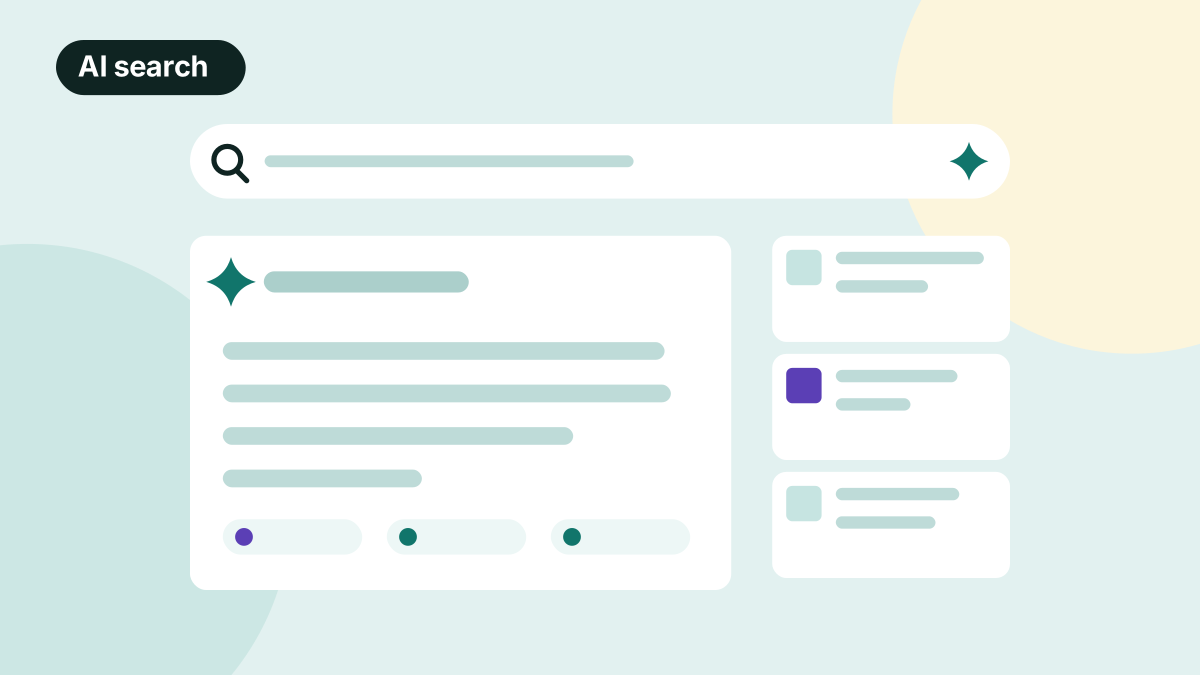
Since ChatGPT opened to the public at the end of November 2022, almost every client call has picked up a version of the same question. If people start asking a machine and getting one answer back, what happens to my listing?
It is a fair question and it is early. On January 23, 2023 Microsoft confirmed another multiyear investment in OpenAI and said it intends to put these models across its products, which makes its search engine the obvious place to start. On February 2, on its earnings call, Google told investors that people will be able to use its language models directly as a companion to search in the coming weeks and months. As of early February 2023, nothing has actually shipped into the results a customer sees.
So this is not a post about what to change on Monday. It is a post about what a single answer would change, what it would not, and which of the two lists your money should sit on.
What would actually change
Start by being honest about the thing people say is going away. For a local business, ten blue links have not been the main event for years. Somebody types “dentist near me open saturday” on a phone, and the screen gives them a map, three profiles, hours, a star rating and a call button. The links start below all of that, and plenty of people never reach them.
A chat answer is a harder version of the same squeeze. Instead of three profiles, one answer names one or two businesses and explains why. The question stops being where you rank and becomes whether you get named.
That distinction matters because ranking and being named are fed by different things. Ranking rewards proximity, categories and a profile in good order. Being named rewards whatever a model can find, verify and repeat about you: the same facts in several places, reviews that describe specifics, a page that answers the actual question rather than circling it.
What we are not doing about it
Three things clients have already asked us for since ChatGPT opened, and we have turned down.
- Rewriting the site for a chatbot. Nobody, including the people building these systems, could say in early 2023 what phrasing gets picked up. Writing for a guess is how sites ended up stuffed with keywords a decade ago.
- Buying “chat optimization” from anyone. The offers have already started. There is no admin panel, no submission form and no ranking report behind them.
- Generating fifty service pages with a model. Google spent the second half of 2022 running helpful content updates aimed at pages written to fill a search result rather than to be read, and those updates weigh on the whole site, not just the thin pages. Cheap volume is the one move that can actively cost you.
What looks like it will matter
If an answer has to be assembled from sources, then the work is making your business easy to assemble correctly.
- Facts that agree with each other. Name, address, phone, hours, services, insurance accepted, parking, whether you see children. If your site says one thing, your profile says another and a directory says a third, you are the business a machine leaves out because it cannot resolve the conflict.
- A profile that is genuinely filled in. Categories, services with real descriptions, current photos, holiday hours, answered questions. This is already the most read page you own.
- Pages that answer one question each. Not “Services”, but what an implant costs to plan, what happens at an emergency visit, whether you take a specific plan. Answer in the first two sentences and then explain.
- Reviews with substance. A review that says “quiet office, they fit my son in on a Saturday” carries information. Five stars and no text does not. How you ask shapes what you get.
- Structured data that matches the page. None of this news made it more important, but it is the cheapest way to state your facts in a form nothing has to interpret.
None of that is new. It is the same list we would have given you in the fall of 2022, which is the point.
The risk worth watching
The real risk is not being written out of the answer. It is the click that never happens because the answer was enough.
That has been creeping for years through snippets, and through profiles that let someone call you without ever reaching your site. Most of the owners we work with still measure sessions, so the traffic chart looks like a decline while the phone rings the same amount.
Fix the measurement before the argument arrives. Track calls from the profile and calls from the site separately, record how many turn into booked appointments, and hold the year against that number rather than against traffic. If the shape of search changes in spring 2023, that is the only reporting that will tell you the truth about it.
What to do this month
- Pick your ten most common customer questions and make sure each has a page or a section that answers it plainly in the first two sentences.
- Run your name, address, phone and hours across your site, your profile and the three directories that matter in your field, and make them identical.
- Fill in the services on your profile properly, with descriptions, and add photos taken this year.
- Ask for reviews in a way that invites a sentence about what happened, not just a rating.
- Set up call tracking that separates profile calls from site calls, so you can see a click decline and a steady phone at the same time.
- Then stop reading about it for a few weeks. As of early February 2023 there is nothing shipped to optimize for.
The unglamorous version of preparing for this is doing local SEO properly and keeping your profile accurate, because both feed whatever comes next. We have started calling the rest of it AI search visibility, and for now it mostly means making your business simple to describe correctly. We will write again when something real appears in the results.
You made it to the end. Now let's get you more customers.
AI Search Visibility is part of what we set up and run every day, along with the search, ads and follow-up around it. Tell us about your business and we will send back what to fix first. Platforms change every year, so we will check what still holds for you today.
- A free consult. A real conversation about your business, your area and what is not working yet.
- An honest evaluation. Where you stand in search, ads and follow-up next to the businesses you lose customers to.
- A plan you keep. What we would fix first and why. It is yours whether or not you work with us.
Form not loading? Email hello@beyaoshy.com and we will reply within one business day.