Skip to content

Chiropractor marketing for the patient who was told to come see you

Most new patients arrive because someone recommended chiropractic, then look you up before they call. That second step is where practices lose them: thin reviews, a phone that rings out at 10 am, ads that a state board would flag. We build the part that happens after the recommendation, and keep it inside the rules that health care advertising carries.

Taking on new chiropractic practices now

Reviewed by Niomi Ascot on

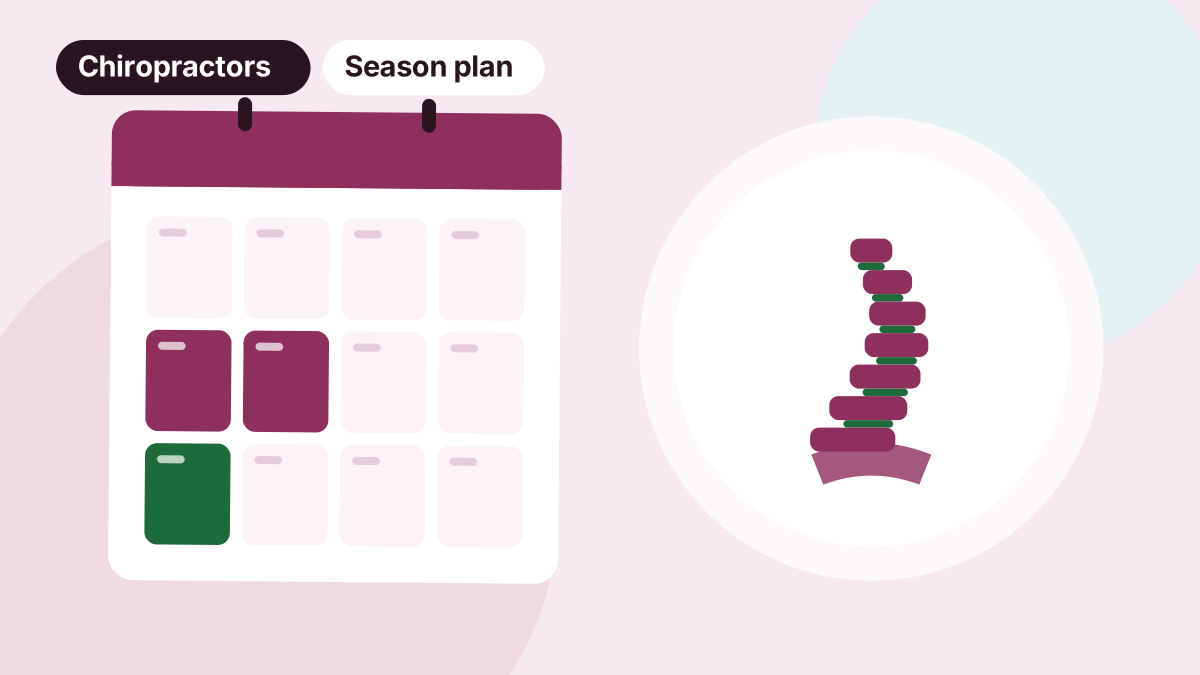
The chiropractic year runs on deductibles, snow and school bags

The swings are smaller than in the trades, but they are predictable, and most of them are about money rather than weather. The month ratings are how the year usually runs for a practice; the reasons behind them are sourced below.

Demand through the year for chiropractic practices
  1. January: Peak
  2. February: Busy
  3. March: Busy
  4. April: Steady
  5. May: Steady
  6. June: Steady
  7. July: Slow
  8. August: Busy
  9. September: Steady
  10. October: Busy
  11. November: Busy
  12. December: Busy
Early December
Flexible spending accounts are generally "use-it-or-lose-it", the IRS says, with any carryover capped at $680 for 2026 plan years. Remind current patients before the holiday weeks empty the schedule.
January
Deductibles reset on calendar-year plans, so insured patients face full cost again, while resolutions bring new ones in. In the North, snow shoveling sends about 11,500 people a year to emergency rooms, and the lower back is the most injured area at 34% (Nationwide Children's Hospital).
Mid-March
Plans that allow a grace period give up to two and a half months after the plan year ends, so leftover FSA balances on calendar-year plans run out around March 15.
August
Back to school. The American Chiropractic Association's rule of thumb is a loaded backpack at no more than 10% of a child's body weight: a useful hook for parents who are already patients.
October
National Chiropractic Health Month, held each October by the ACA. It gives local press and community events a reason to say yes.

Where new patients actually come from

In order of how much they matter for a typical practice. The first one is not a marketing channel at all, which is the point: most of the work is making sure the recommendation survives the search that follows it.

A recommendation from someone they trust
Gallup and Palmer College found that 74% of chiropractic patients had someone recommend chiropractic before their first visit. The referral starts the search; it does not finish it.
Your Google profile and the map pack
Where the referred patient checks you, and where "chiropractor near me" searchers decide. BrightLocal's 2026 survey found 47% of consumers will not use a business with fewer than 20 reviews, and 74% only care about reviews from the last three months.
Local Services Ads
Google has a Chiropractor category with the Google Verified badge at the top of the page. Health care runs a reduced version: every lead is a phone call, with no messages, no booking, no call recordings and no lead credits.
Search ads for conditions
Sciatica, headaches, neck pain after a crash: searches the map pack does not always catch. Google treats health conditions as a sensitive category, so plan these campaigns without remarketing lists or Customer Match.
Personal injury intake
About 9% of chiropractors' reimbursement comes from personal injury nationally (NBCE 2025), far more in some Florida and Texas practices. It is the most regulated channel on this list; see the rules further down.
Facebook and Instagram
Useful for workshops, reactivation offers and staying visible to past patients. Since January 2025 Meta has limited the conversion events health and wellness advertisers can send it, so judge these campaigns on booked visits in your own system, not on what the ad platform reports.

Why we start with tracking and reviews, not ads

For a home service company we would usually lead with being found. For a practice, the order changes, because the patient is already on the way to you and the rules decide what tools you are allowed to use.

Clear

Knowing which work produced which jobs.

Ad pixels on intake forms, booking widgets or patient portals can expose patient information. A June 2024 court ruling narrowed federal guidance only for public pages; intake and portal pages are still covered. So measurement moves into call tracking and the CRM, set up first.

Chosen

Being the one they pick once they have found a few.

The referred patient checks you before calling. Fewer than 20 reviews loses almost half of them, and replies have to work without ever confirming the reviewer is a patient: federal regulators settled with one dental office for $23,000 over details in its Yelp replies.

Kept

Turning one job into the next one and the referral.

Recent chiropractic patients averaged 11 visits in a year in Gallup's 2015 study. Rebooking and reactivating the patients you already have is cheaper than finding new ones, and messages about your own services to your own patients are allowed.

Found

Being the company that shows up when someone searches.

Local Services Ads verification for health care needs your NPI, provider and practice checks and malpractice insurance, and Google puts the average at three to four weeks. Search campaigns go live alongside it, built to work without remarketing.

Weeks 1 to 3

Every tag on the site audited, third-party pixels removed from intake, booking and portal pages, call tracking set up, and one definition agreed for a new patient: a booked exam that showed.

Weeks 2 to 6

Site and Google profile copy reread against your state board's advertising rule, disclosures added to any offer, a review request for every patient (not only the happy ones) and a reply routine that never names care.

Weeks 3 to 8

Local Services Ads application with NPI verification, profile categories, services and real photos of the office and the team.

Weeks 6 to 12

Condition search campaigns, a lapsed-patient reactivation sequence, and missed-call handling so a call during adjustments still reaches a person.

The practices we do our best work for

Half the profession works in solo offices, according to the NBCE's 2025 practice analysis, and the owner is also the doctor, the marketer and the person who signs payroll. That is who this is built around.

The solo or two-doctor office with open slots

The table is free on Tuesday afternoons and the schedule fills only when a patient refers a friend. A cleaner Google profile, a steady review rhythm and live call handling usually move this practice first.

The cash or membership practice

Growth here is retention: rebooking reminders, lapsed-patient outreach and referral asks. Messages to your own patients about your own services are allowed under HIPAA's marketing definition, so the CRM can do most of the work.

The insurance-based practice watching the deductible cycle

Patients who have met their deductible want to finish care before it resets in January. Timing reminders to the plan year, and showing your networks plainly, is where the effort pays.

The personal injury practice in Florida or Texas

Demand is real and time-bound, but only advertising aimed at the public is lawful for early contact. If that is how you want to grow, we can help. If you expect lists of crash victims, we are the wrong team.

Who we would point elsewhere. Practices that want cure claims, "best chiropractor in the city" headlines or rewards for five-star reviews. Those run straight into state boards, the FTC and Google's own policies, and we will not write them. The same goes for a practice that cannot answer its phone yet: health care Local Services Ads leads are calls only, so we would fix the phone first.

Local Services Ads, search ads or your own profile

Three ways a practice pays for new-patient calls, side by side. Most practices end up using all three for different searches; the health care rules change what each one can do.

QuestionLocal Services AdsGoogle search adsYour Google profile and site
How you payPer lead, against a weekly budgetPer clickNo media cost; time to keep it current
What a lead isA phone call only: no messages, booking or recordings in health careCalls, forms and bookings from your own landing pageCalls, website visits and direction requests
Bad leadsNo lead credits for health careControlled with keywords and negativesNothing to refund; quality follows your categories and services
Before you startNPI verification, provider and practice checks, malpractice insurance; about three to four weeksAn account and landing pages; daysA verified profile with the right categories
Targeting limitsGoogle matches by category and areaHealth is a sensitive category: no remarketing lists or Customer MatchNone, but review replies must never confirm someone is a patient
Best at"Chiropractor near me" searches, when someone answers liveCondition searches such as sciatica or neck pain after a crashCatching the referred patient who checks you before calling

Google began moving Local Services Ads into Google Ads in August 2026, starting with home services, with more advertisers following. Expect the setup screens to change; the health care limits above are what Google's own help pages state today.

What a new patient lead costs in this category

Published benchmarks for the categories chiropractors fall into. They are medians across many advertisers, not a promise and not our results. A practice with patients averaging 11 visits a year should judge cost per lead against a course of care, not one adjustment.

$67.36
Median cost per lead for Google search ads in Health & Fitness, April 2025 to March 2026
WordStream by LocaliQ, 2026
74%
Of chiropractic patients had someone recommend chiropractic before their first visit
Gallup and Palmer College, 2018
11 visits
Average in the past year among recent chiropractic patients
Gallup, 2015
47%
Of consumers will not use a business with fewer than 20 reviews
BrightLocal, 2026
Median cost per lead, by channel and category
  • Google search, Health & Fitness (2026)$67.36
  • Google search, Healthcare, all specialties (Oct 2024 to Sep 2025)$66.02
  • Google search, all industries (2026)$66.69
  • Facebook lead ads, Health & Fitness (2026)$27.11

Facebook lead form leads cost less and usually need more follow-up before they book; search leads arrive closer to a decision. Sources: WordStream by LocaliQ; LocaliQ; WordStream by LocaliQ.

Our plans are affordable for a solo practice, and they are scoped to the hours and the budget you actually have rather than to a package. The free plan shows what we would do first before any money changes hands.

Get your free plan

Between the first adjustment and the tenth: where a care plan stalls

A practice pays to bring a new patient through the door once and is paid over a course of care. Most of what it loses goes missing between visits: at the front desk, in the reminder and in a well-meant thank-you that breaks a federal rule.

The patient feels better after visit three and stops booking

Adults who had seen a chiropractor in the previous year reported 11 visits on average in Gallup's 2015 survey for Palmer College, a self-reported mean that a few frequent patients can pull up. Even so, the revenue from a new patient sits in the visits after the first, and in our experience the plan stalls at the point where the pain eases and nobody has booked the next date.

The fix. Book the next visit on the table, before the patient stands up, and have the doctor say why: "Your range of motion is coming back, so I'd like to see you Thursday and again next Tuesday to hold it." Put both dates in the system and on a card or text. Every Friday, list active plans with nothing booked in the next 14 days and call those patients before Monday.

One reminder, sent the morning of the visit

The closest evidence is medical, not chiropractic. In a trial of 54,066 primary care patients at Kaiser Permanente Colorado, those reminded three days and one day before missed 4.4% of visits, against 5.8% with only the three-day reminder and 5.3% with only the day-before one. A UK clinic that let patients cancel by replying to the text saw missed visits fall from 14.42% to 12.18% of bookable appointments, a single-site result that points the same way.

The fix. Send two reminders, one three days out and one the day before, and make both answerable: "Reply 1 to confirm, 2 to move your visit." Have the front desk move anyone who replies 2 the same hour and offer the freed slot to patients waiting for an earlier time. Call anyone still unconfirmed at noon the day before.

A no-show fee that treats Medicare patients differently

CMS allows a missed-appointment charge to a Medicare patient only when the same policy and the same amount apply to every patient, and the charge is never billed to Medicare. Colorado's Medicaid agency states that federal and state policy bar charging Medicaid members for missed or canceled visits at all, and other states need checking one by one. A fee waived for some patients and enforced for others is the version that causes trouble.

The fix. Write one short policy with one notice period and one amount, show it on the booking page and in every reminder, and apply it to every patient. The one exception is Medicaid members, whom federal and state Medicaid policy bars you from charging; do not waive the fee case by case for anyone else. Check your state's Medicaid rules and have counsel read the policy before it starts.

The referral thank-you that is worth too much

HHS's Office of Inspector General treats gifts to Medicare or Medicaid patients worth no more than $15 per item and $75 per patient a year as nominal, and never cash or a general-purpose gift card. A free adjustment or a cash card for each new patient a patient sends is the kind of reward that can also raise Anti-Kickback questions. Practices that see only private-pay patients fall outside the OIG policy, though state rules may apply.

The fix. Thank referring patients with a handwritten card and, if you want, a small item under those limits, the same for every patient. Do not tie a discount or a free visit to a referral without counsel's written view. Ask for referrals when a patient says the care is working: "If someone you know is dealing with this, we'd be glad to see them."

A phone vendor or AI that handles patient calls without the paperwork

A practice that bills insurance electronically is usually a HIPAA covered entity, and any outside service that receives or stores patient information for it is a business associate that needs a written agreement first. Since January 1, 2026, Texas HB 149 has required providers who use AI in relation to treatment to tell patients so. California's AB 3030 covers clinics and physician offices using generative AI for clinical messages, with booking excluded; whether it reaches a chiropractic office is a question for counsel.

The fix. Before an answering service or AI agent takes a patient call, sign a business associate agreement and ask which other companies process the recordings. Open each automated call with "This is the practice's automated scheduling assistant," keep it to booking and hours, and send anything about pain, symptoms or care to the front desk or the doctor. Ask counsel whether the Texas or California rule reaches your office before the assistant takes a call.
Personal injury patients come with their own rules

A practice that takes car accident patients is working under rules most other marketing never meets. They differ by state, and the penalties are criminal rather than administrative, so this is the part of the plan we write with your attorney’s advice in mind, not around it.

Florida. Under Florida Statutes 817.234, nobody may solicit a person involved in a motor vehicle accident by any means other than advertising directed to the public within 60 days of the crash, and a health care practitioner may never solicit by phone or in person at the patient’s home, even after that. Personal injury protection pays medical benefits only if care starts within 14 days of the accident, and the limit is $2,500 unless a physician, dentist, physician assistant or advanced practice nurse finds an emergency medical condition, which raises it to $10,000. Chiropractors can provide the initial care but cannot make that finding. The practical result: speed matters, and the only lawful way to be first is to be easy to find and quick to answer.

Texas. Texas Penal Code 38.12 makes it an offense for a chiropractor to send an accident victim a written or phone solicitation before the 31st day after the accident. Repeat offenses are a felony.

California. The state board’s rules list using “cappers or steerers” to bring in patients as unprofessional conduct.

What that leaves is plenty: search and map visibility for the searches people make after a crash, a phone answered on the first ring, clear information about how billing works with auto insurance, and relationships with attorneys built on referrals rather than lists. That is the version of personal injury marketing we run.

Five things that cost practices patients, or a letter from the board

A free exam and X-ray offer with no disclosures
In Florida that ad needs the statutory 72-hour refund statement in capitals and a line that X-rays are given only if medically necessary. Other states have their own versions. Read your board's rule before the offer runs, not after.
"Best chiropractor in town"
Florida's board treats claims about quality or superiority over other chiropractors as misleading, and the FTC expects evidence behind health claims. Specific, checkable facts work better anyway: same-day appointments, evening hours, the techniques you use.
Pixels on the intake form
Meta and Google tags on booking widgets, intake forms or portals are where patient data leaks. Meta also stopped accepting lower-funnel health events in January 2025, so the pixel no longer earns the risk on those pages.
Answering a bad review with the patient's story
Never confirm the person was treated, never mention care. A short, warm reply and an invitation to call the office is the safe version, and it still counts as a response.
Letting paid calls ring out
A health care Local Services Ads lead is a call with no recording and no credit. If the front desk is with a patient at 10 am, that lead is paid for and gone. Missed-call handling is part of the ad budget, not an extra.

What you get in the free plan

Every practice that reaches out gets a free consult, an honest look at where it stands and a written plan it keeps, whether or not it hires us. For a chiropractic practice, it covers:

Get your free plan
  • Where you appear for "chiropractor near me" and two condition searches in your area, and who holds the map pack and the Local Services Ads slots today.
  • Your Google profile against what patients check: review count, how recent the last three months look, and how replies are written.
  • A check of the tags on your intake and booking pages, and whether calls are being tracked at all.
  • Your current offers and headlines read against your state board's advertising rule.
  • The first 90 days, in order, with what we would leave alone.

Questions practice owners ask us first

Can you guarantee a number of new patients a month?

No, and an agency that does is guessing. Lead costs vary by area and season, and health care Local Services Ads have no lead credits. What we commit to is what gets measured each month: calls answered, exams booked, exams that showed, and what each one cost.

Are Local Services Ads worth it for a chiropractor?

Often, if the phone is answered live. The Chiropractor category carries the Google Verified badge, but health care leads are calls only, with no messages, booking, recordings or credits, and verification needs your NPI and malpractice insurance. How we run Local Services and search together.

Will your tracking get my practice in HIPAA trouble?

Not the way we set it up. No third-party pixels on intake, booking or portal pages, and call and form data kept in tools that sign a business associate agreement. The June 2024 court ruling narrowed federal tracking guidance for public pages only, so the pages that collect patient details are still covered.

Can I run Facebook ads for my practice?

Yes, for awareness, workshops and reactivation. Since January 2025 Meta limits the conversion events health and wellness advertisers can send, so we measure Facebook campaigns by booked visits in your CRM rather than by the platform's own numbers.

Can I advertise a new patient special?

Usually, with your state's disclosures. Florida requires a 72-hour refund statement on free or discounted offers, and California restricts waiving co-pays as a marketing tool unless the insurer is told in writing. We check the offer against your board's rule before it runs.

How do we get more Google reviews without breaking the rules?

Ask every patient, by text after the visit, with the direct link. No discounts or gifts for reviews, and no filtering so that only happy patients get asked: both break Google's policy and the FTC's 2024 review rule. How we run review requests.

Can you bring in personal injury cases?

Through advertising directed to the public, yes. Texas makes it a crime for a chiropractor to solicit an accident victim directly before the 31st day, and Florida bans it within 60 days and bans phone or in-home solicitation by practitioners at any time. We work inside those lines.

How much of my time will this take?

About an hour a month once it is running, plus approving anything that speaks for the practice. NBCE's 2025 survey found chiropractors already spend about 7 hours a week on business management, including marketing; the aim is to take hours off that, not add to it.

See what a referred patient sees when they look you up

Tell us the practice, the city and whether you are mostly cash, insurance or personal injury. You get back where you rank for the searches that matter, how your profile and reviews read to someone who was just told to call you, and the first changes we would make.

  • A free consult. A real conversation about your business, your area and what is not working yet.
  • An honest evaluation. Where you stand in search, ads and follow-up next to the businesses you lose customers to.
  • A plan you keep. What we would fix first and why. It is yours whether or not you work with us.

Form not loading? Email hello@beyaoshy.com and we will reply within one business day.

Sources

The figures on this page come from these published sources, checked on October 3, 2026. Benchmarks are averages across many advertisers; your market will differ, which is what the free plan is for.

Agencies with chiropractic practices among their clients: see the partner model.