Hurricane season opens June 1: get restoration phones ready
What a coastal restoration company should fix before June 1: night phone cover, storm pages, service areas and Florida claim wording, in the right order.
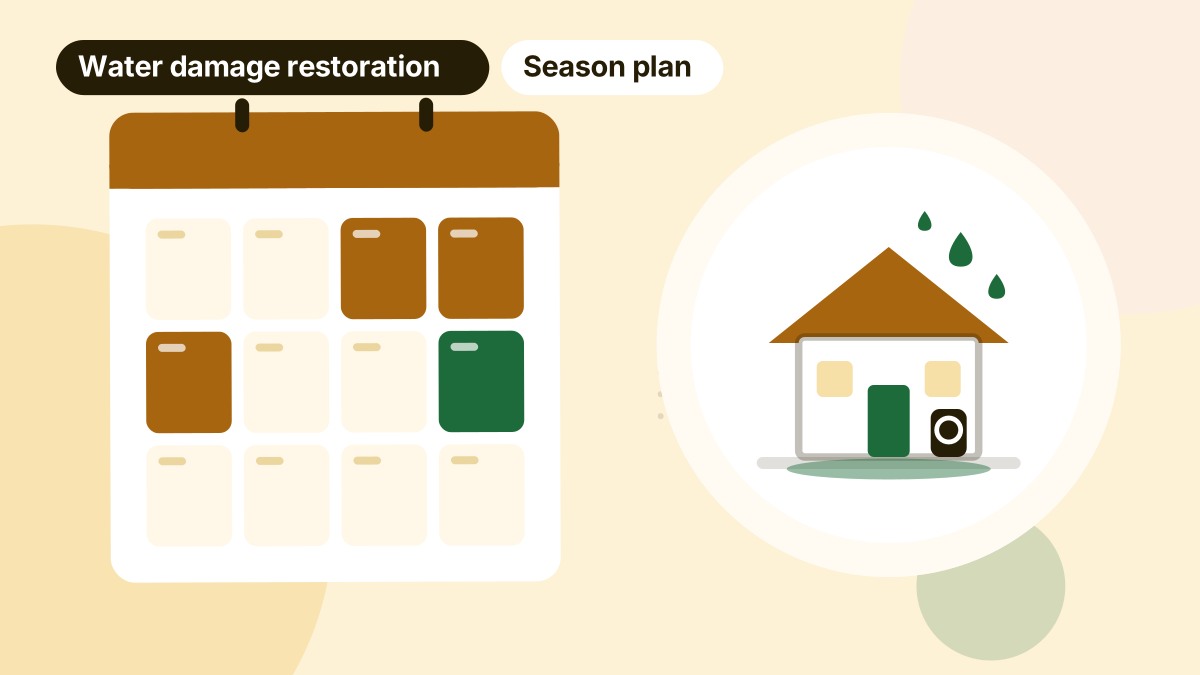
The Atlantic hurricane season opens on June 1, three weeks from today, and for a restoration company on the Gulf or Atlantic coast this is the last calm stretch before the phone stops being predictable. The eastern Pacific season opens on Friday, May 15. None of that means June will be busy. It means whatever you have in place by then is what you will be working with when the first storm does come ashore.
Here is how we would spend the weeks between now and Memorial Day.
Read the season as a business calendar
NOAA’s National Hurricane Center publishes the climatology, and an owner can read it as a staffing plan:
- The Atlantic season runs from June 1 to November 30.
- The first hurricane of a season tends to form in early to mid-August.
- Most activity falls between mid-August and mid-October.
- The season peaks on September 10.
So June is rarely the rush. It is the deadline for being ready for one. A company that spends June and July on its phones, pages and profile walks into August prepared. A company that waits for a named storm in the forecast ends up writing a landing page while the trucks are being loaded.
Fix the phone before anything else
The EPA’s homeowner guide on mold and moisture says water-damaged areas and items should be dried within 24 to 48 hours to prevent mold growth. After a storm, homeowners and property managers know that clock is running, and they work down the list until someone picks up. In a storm week the company that answers gets the job, and the company with a full voicemail box gets a missed-call notification.
Three decisions to make now, while there is still time to test them:
- Who answers at night. The tech on rotation, a staffed call service, or an AI voice agent that takes the address, the kind of damage and the insurance company, then pages whoever is on call. Choose one, then ring it at 11 p.m. from a number it does not recognize.
- What happens when every line is busy. In a real storm the calls arrive together. A caller who gets a busy signal should receive a text within minutes with a way to book, rather than silence.
- How calls get tagged. Water, sewage, mold, fire: tag each call as it comes in, so the season can be judged afterward on revenue and not on how loud the phones were.
Florida claim wording has moved on
If you work in Florida, read your storm pages against section 627.7152 of the Florida Statutes before June. For residential and commercial property policies issued on or after January 1, 2023, a policyholder may not assign post-loss insurance benefits, and an attempt to do so is void. Older policies that still allow an assignment cap an emergency assignment at the greater of $3,000 or 1 percent of the Coverage A limit.
Plenty of storm pages still promise that the homeowner signs one form and the company handles the insurer from there. For most current Florida policies, that promise describes something the statute does not allow. Replace it with what you actually do: arrive, stop the damage, document it with photos and moisture readings, and work alongside the adjuster.
Catastrophe programs, and the jobs that carry your own name
Large storms bring the insurance networks into a market in force. Contractor Connection, for example, describes itself as a managed repair network of 5,000 general and specialty contractors handling 500k assignments a year, with catastrophe response among the services it lists. Program assignments can fill a season, but they arrive with program pricing and estimate rules. A homeowner who found you directly does not.
Direct jobs depend on whether a homeowner can find and trust you before the storm. The insurers’ own figures show what each one is worth: ISO data published by the Insurance Information Institute puts the average water damage and freezing claim at $15,400 for 2019 to 2023, and the average fire and lightning claim at $88,170. One direct loss of either size pays for a good deal of May preparation.
Profiles and pages before the first named storm
Search needs lead time too, because Google takes time to review an application and reviews take time to earn.
- Service areas, not new addresses. A Business Profile can list up to 20 service areas. Google does not accept a virtual office as a location, so turn down anyone offering a listing in every coastal town you might drive to after a storm.
- Storm pages written now. One page for storm water inside the home and one for mold after water damage, each with your own job photos, ready to point ads at the day a storm gets a name.
- Reviews through the summer. BrightLocal’s 2026 Local Consumer Review Survey found 74% of consumers only care about reviews written in the last three months. Ask on every job from June onward, so the profile reads as current when the August and September calls arrive.
- Local Services Ads paperwork filed. Google says screening takes three to four weeks on average once documents are in, and its Water damage services category asks for IICRC certification and liability insurance among other checks. An application filed this month should clear well before August.
What to do this month
- Ring your own night line from an unfamiliar number and fix whatever you hear.
- If you work in Florida, read every storm and insurance page for assignment-of-benefits promises and rewrite them.
- Draft the storm water and post-storm mold pages with your own photos, ready to switch on.
- Check your service areas, and retire any profile at an address nobody works from.
- File or renew your Local Services Ads documents so screening finishes before August.
- Agree a review request routine with your crews for every job this summer.
Hurricane season tends to reward the restoration companies that did their preparation in May rather than in the week a storm was named. Our page for restoration companies covers how we plan around both the freeze and the storm peak, and our AI voice agents are one way to make sure a 2 a.m. call gets answered when every tech is already on a job.
Written May 11, 2026, and kept as written. Platforms, features and policies mentioned here are described as they stood at the time.
The team that wrote this runs marketing for home service companies.
This is recent. How it applies to you depends on your market, so we will check where your business stands today and tell you what to do first.