Most of Utah fits on one road
Drive I-15 from Brigham City down to Santaquin and you have passed most of the customers in this state. The populated part of Utah is a strip pinned between the Wasatch Range on one side and the Great Salt Lake and the Oquirrhs on the other, and it is not wide. In the Salt Lake Valley you can cross from one edge to the other in about twenty minutes when nothing is backed up.
Owners here usually read that compression backwards. A small valley sounds like a market one business can cover. The opposite is true. Because the map ranks on distance from whoever is searching, packing thirty cities into a short corridor means there is nearly always someone closer to your customer than you are. A practice in Murray is losing searches to Midvale, Taylorsville, Holladay and West Jordan, all of them minutes from the same person. The radius you genuinely own here is smaller than it would be in a state where the next town is forty miles off.
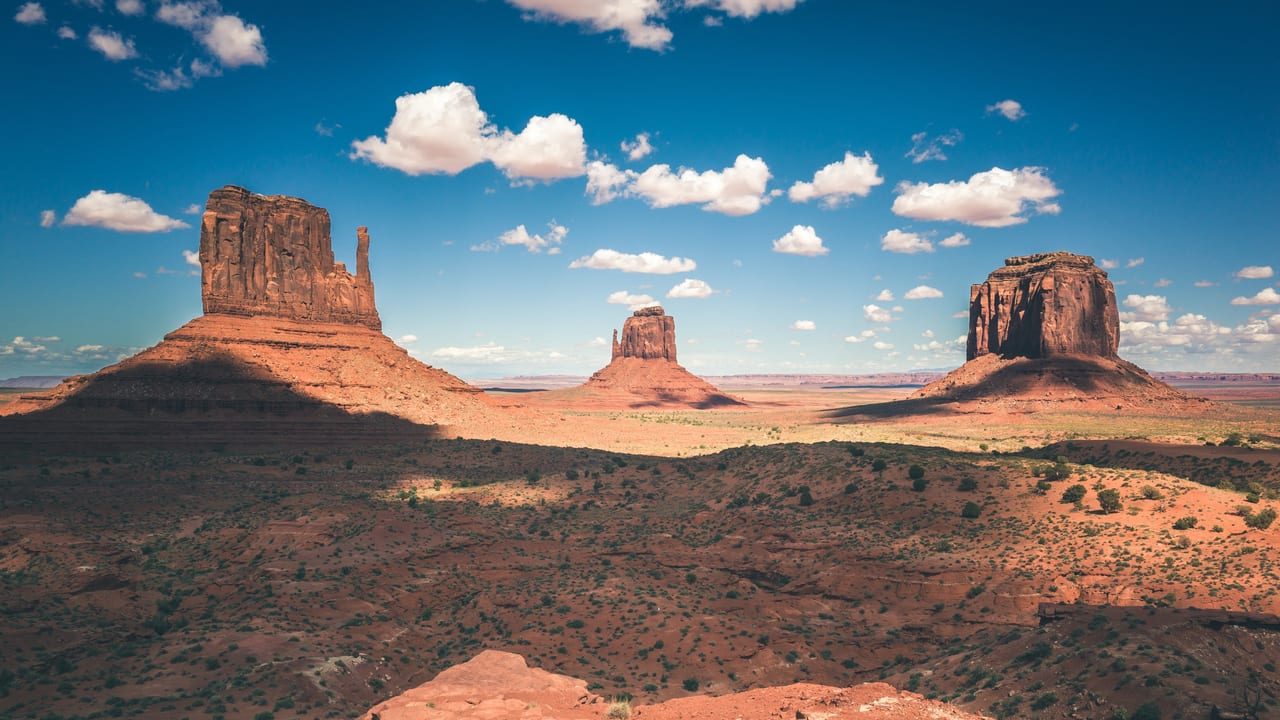
Then Utah does the opposite thing. Step off the corridor and the distances get long in a hurry. St. George sits roughly four hours down I-15, close enough to Las Vegas that the weather, the buyers and the busy season belong to a different market entirely. Moab is close to four hours out, the last half hour south off I-70. Logan is behind a canyon in a valley of its own. Vernal is out past the Uintas. None of these are suburbs of anything, and a campaign that treats them as extensions of a Salt Lake account underperforms in a way that looks like bad execution and is really just bad geography.
What a numbered address costs you
Utah runs on a grid. Most addresses in the state are coordinates measured out from a central point, which is why a perfectly ordinary address here looks like 3300 South 700 East and why people give directions in blocks rather than street names. It is a fine system to live with and an awkward one to be listed under, because there are several defensible ways to write the same address down.
Google does not know that 3300 S 700 E, 3300 South 700 East and E 3300 S are one place unless everything agrees. We regularly find a business filed under three variants across its profile, its site footer, its directory listings and whatever a previous developer typed into the schema. The map treats that as ambiguity, and ambiguity costs positions. Fixing it is not interesting work, but in a corridor where the next competitor is four minutes away it is often the single change that moves the most. That is the unglamorous half of local SEO, and it comes before anything creative.
Places people search by name behave differently again, and in a state addressed in coordinates that is worth more than it sounds. Nobody arranges to meet at 2100 South and 1100 East. They say Sugar House. The same goes for Historic 25th Street in Ogden, the 9th and 9th cross in Salt Lake, Kimball Junction above Park City and Bluff Street through St. George. Those names carry search volume the grid never will, and they belong in the profile description, on the service pages and in the review requests rather than living only in the address field. Inside a named district, a Google Business Profile with current photos, correct hours and recent reviews beats a better business that has not touched its listing since the day it opened.
Several calendars running at once
A budget spread evenly across twelve months will be wrong in all of them. Utah has more overlapping seasons than most states, and they do not line up:
- The ski calendar. Park City, the Cottonwood canyons and the Wasatch Back do a large part of the year between December and early April, then empty out for mud season.
- The student calendar. Provo and Orem change size when BYU and Utah Valley University are in and out of session. August is quiet, September is not.
- The southern calendar. Washington County is busiest when the north is coldest. Winter residents arrive, the weather is pleasant, and summer is the slow stretch because it is too hot to be outdoors.
- The benefits calendar. Dental benefits reset in January and expire in December, which hands dental practices two of their strongest months whether or not anyone plans for them.
- The weather calendar. Cold air settles into the valleys for stretches in midwinter and keeps people inside, and exterior trades on the Front get a booking window in September and October that closes with the first real snow.
Sunday sits on top of all of it. A large share of businesses in this state are closed that day and a large share of customers are not shopping. If you close, say so plainly on the listing and the site, because the alternative is reviews from people who drove over for nothing. If you open, that is a real competitive position in most of Utah and it should be visible everywhere rather than buried.
For most businesses along the corridor the order of work goes the same way. The profile and the address data first, because that is what the map actually runs on. Reviews running continuously underneath, because in a state where people ask a neighbor before they ask Google, the written version of your reputation has to match the spoken one. Paid search timed to the weeks demand really moves instead of spread flat. The website whenever it is the genuine bottleneck, which in Lehi and Draper is early, because that audience expects to book without picking up a phone. Agencies reselling in Utah buy the same build as white label work.
Where to begin here
Not with a proposal. Tell us the business and the exact address, written the way it appears on the door, and we will go and find every place on the web where it is written differently: the profile, the site footer, the schema a previous developer left behind, the directories, the insurance and association listings, the suite number nobody removed after the move.
That list is longer than most owners expect, and it is the cheapest item on any plan in this state, because in a corridor where the next competitor is four minutes away the map is choosing between you on confidence. Should it turn out you can do the work yourselves, that is what we will tell you.